
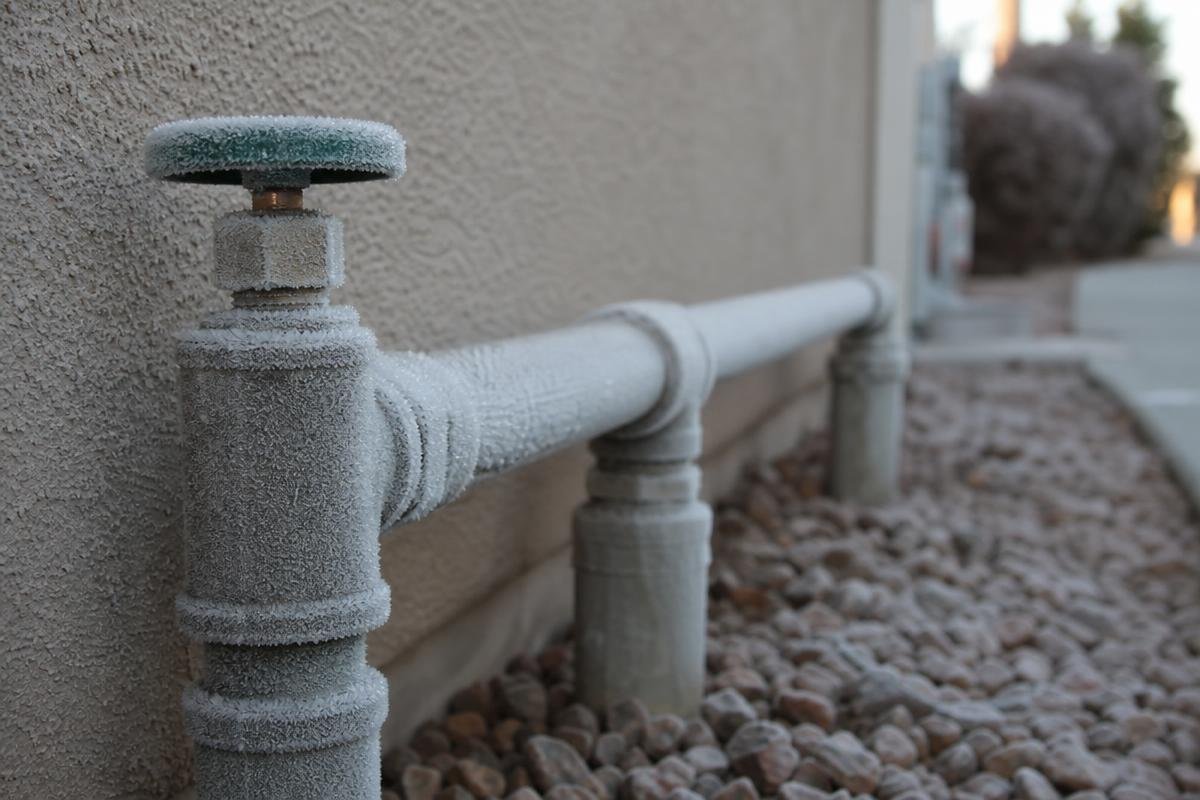
Las Vegas doesn’t freeze often, but when it does, it catches a lot of homeowners off guard. Frozen pipes can go from a minor inconvenience to a burst line and thousands of dollars in water damage in less than an hour. At Bumble Breeze, we respond to frozen pipe emergencies across Las Vegas and the surrounding Clark County area, and we want you to know exactly what to do before we arrive. Pipes frozen right now? Every minute counts. Shut off your main valve and get help fast.
Key Takeaways
- Las Vegas averages roughly 25 nights below freezing each year, making frozen pipes a real and recurring risk for local homeowners.
- The first 30 minutes after discovering frozen pipes are critical. Acting fast can prevent a burst line and major water damage.
- Higher-elevation neighborhoods near the Spring Mountains face colder overnight lows and higher freeze risk than the Strip corridor or eastern valley.
- Never use an open flame to thaw a frozen pipe. A hair dryer on low heat or warm towels are safer options.
- If a pipe has already burst, shut off your main water supply immediately and call a licensed plumber before attempting any repairs.
Can Pipes Really Freeze in Las Vegas?
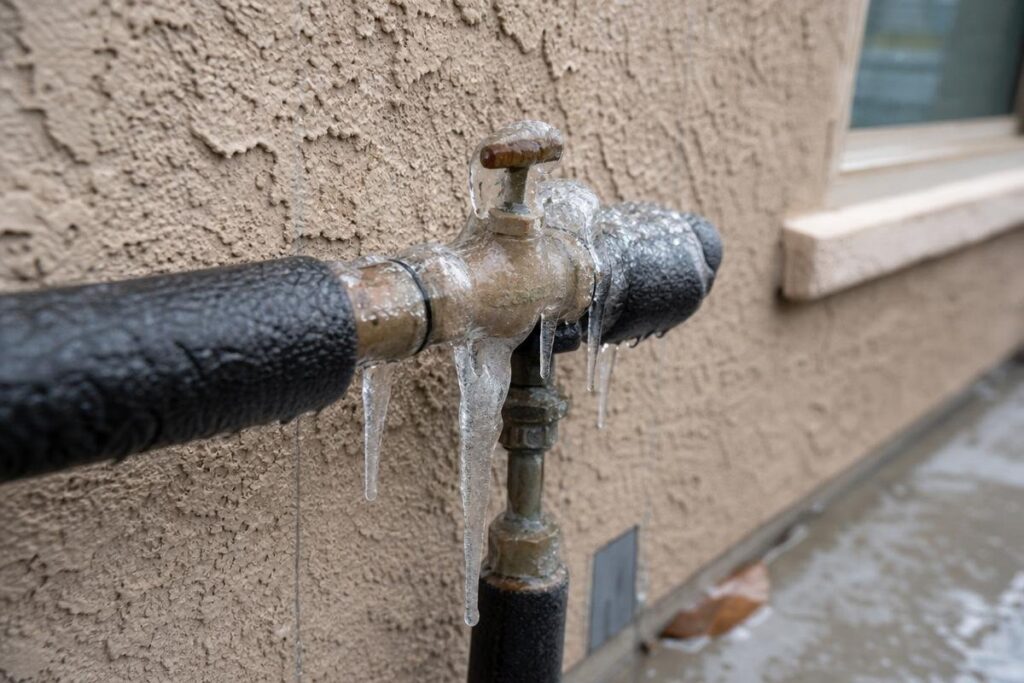
Yes, pipes can absolutely freeze in the desert. Summerlin and the northwest valley regularly drop well below 32°F on January and February nights, sometimes into the mid-teens during a sustained freeze. Homes built for 115-degree summers have almost no cold-weather pipe protection designed into them, which is what turns a cold night into an expensive emergency.
That combination is a real problem. Pipes in garages, exterior walls, and uninsulated attic runs are completely exposed when temperatures plunge overnight. A freeze event can also cause hidden damage you won’t notice until water is already soaking into your walls or slab. This guide walks you through exactly what to do in the first 30 minutes so you can stop the damage before it gets expensive.
Why Do Pipes Freeze in Las Vegas? (It’s Not What You Think)
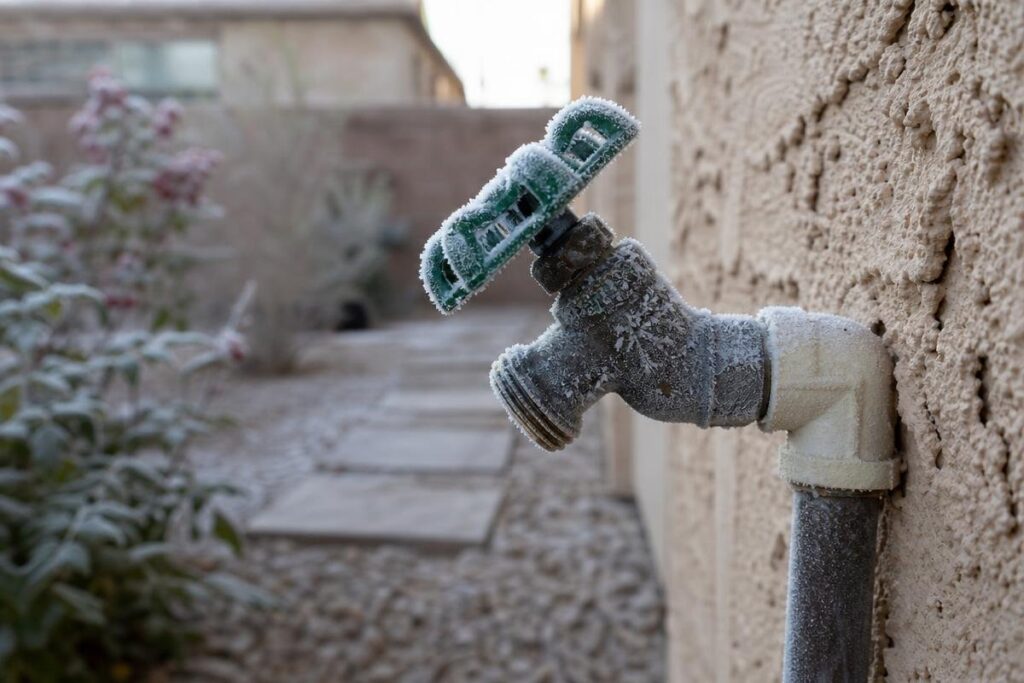
Most people assume frozen pipes are a Chicago problem, not a Clark County one. That assumption is exactly why so many homeowners here get caught off guard every January and February. Las Vegas sits at roughly 2,000 feet elevation in the Mojave Desert, and overnight temperatures can drop into the mid-teens during a winter cold front, even when the afternoon felt perfectly comfortable.
Homes in colder climates are built to handle freezing temps. Thick insulation, sealed wall cavities, insulated pipe chases. Valley homes were not built that way. Single-wythe block construction and stucco over minimal insulation leave supply lines on exterior walls with almost no thermal buffer. That is the real freeze risk here, not the temperature itself, but the fact that your home was never designed to fight it. If you want to close that gap, our home insulation tips for Las Vegas homeowners are a good place to start.
The Desert Cold Snap Problem
The valley averages about 25 nights per year below 32°F. That sounds manageable until a sustained freeze pushes overnight lows into the teens for two or three nights in a row. The 2019 and 2023 freeze events did exactly that.
At Bumble Breeze, our phones rang nonstop with burst-pipe calls during both, and our techs worked back-to-back same-day dispatches from Aliante down through Rhodes Ranch. Higher-elevation neighborhoods consistently record colder overnight lows than the Strip corridor or lower Henderson, so your specific location absolutely matters.
Daytime highs bounce back fast here. That rapid swing from cold nights to mild afternoons is actually harder on pipes than a deep sustained freeze, because fittings and joints expand and contract repeatedly under stress.
Which Pipes Are Most at Risk in Las Vegas Homes
Not every pipe in your home carries the same risk. These five locations are where we see the most freeze damage in Clark County:
- Garage utility lines running along uninsulated walls with no heat source
- North-facing exterior wall supply lines in homes built before 1990, where insulation is minimal or absent
- Irrigation and hose-bib supply lines that cannot be fully drained before an overnight temperature drop
- Attic pipe runs in single-story ranch homes common across North Las Vegas and Centennial Hills
- Exposed belly-board plumbing in mobile and manufactured homes, which have almost no insulation underneath
Knowing where your vulnerable pipes are is the first step toward keeping them from freezing. The next step is knowing the warning signs before a pipe lets go.
How to Tell If Your Pipes Are Frozen Right Now
You turn on the faucet and nothing comes out. Or maybe just a trickle. That’s your first clue. Frozen pipes don’t always announce themselves with a dramatic burst. Sometimes the only sign is silence from a tap that should be running.
The 4 Warning Signs to Check First
Work through this list fast. Every minute counts when ice is building pressure inside a pipe.
- No flow or severely reduced flow from a faucet on an exterior wall or in the garage. If only one faucet is affected, the freeze is likely isolated to that line.
- Visible frost or condensation on an exposed pipe under a sink, in the garage, or along an exterior wall. Frost on the outside means ice on the inside.
- A bulging or deformed pipe section. Ice expands with enormous force. A pipe that looks swollen or misshapen is under serious pressure right now.
- A strange smell from a faucet or drain. Frozen drain vents can trap sewer gas inside the line. If something smells off near a fixture that won’t flow, that’s a warning sign most homeowners miss.
No frost visible? That doesn’t mean your pipes are fine. Most supply lines in Clark County homes run inside walls where you’ll never see frost from the outside.
How to Locate the Frozen Section
Start at the faucet with no flow. Work backward toward the water main. In most single-story ranch homes, check the garage first. Pipes there are fully exposed to outside air and freeze before anything else. Next, open under-sink cabinets on exterior walls. Then check attic access if your home has overhead supply runs, which is common in older Summerlin and Spring Valley builds.
Under-slab lines rarely freeze here, but a hard freeze can stress fittings and joints through ground movement. If you notice wet flooring or a warm spot on the slab after a freeze event, read up on slab leak symptoms in Henderson and Las Vegas homes before assuming the problem has passed.
The First 30 Minutes: A Step-by-Step Action Plan
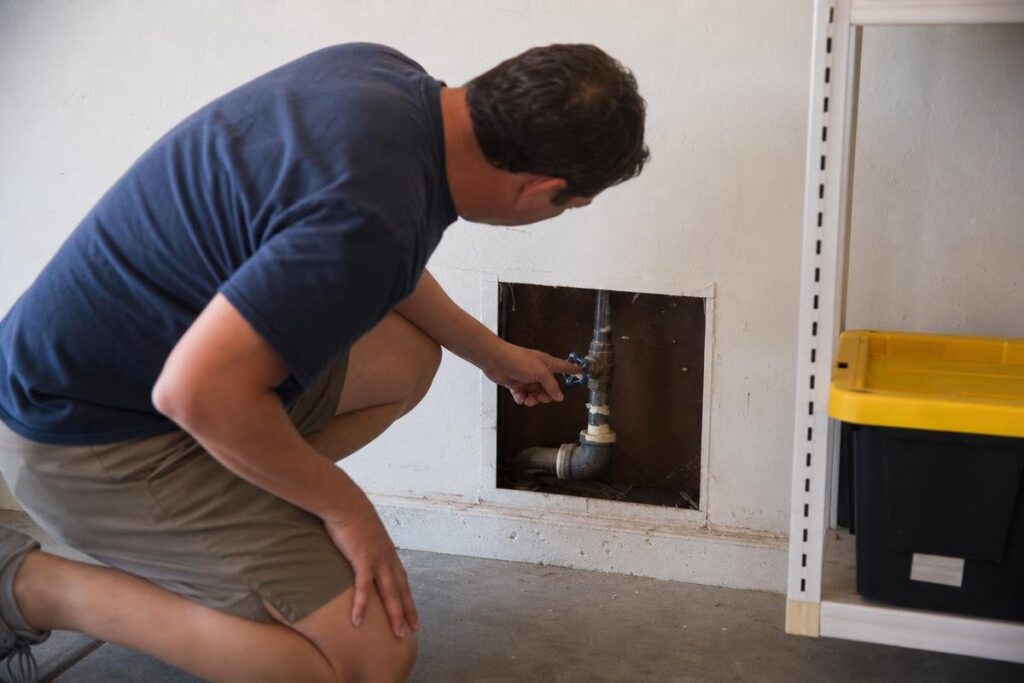
You suspect your pipes are frozen. Stay calm. What you do in the next 30 minutes can be the difference between a quick fix and a flooded room. Follow these steps in order.
Minutes 0-5: Shut Off the Water and Assess
Your first move is the main water shut-off valve. In most Clark County homes, it sits near the street-side water meter or inside the garage. Find it now, before you need it in a panic. Older homes in the valley often have gate valves that are stiff or partially seized, so turn slowly and steadily.
- Shut off the main valve. This stops water pressure from forcing a cracked pipe open further.
- Open the affected faucet fully. Turn both hot and cold handles. This relieves pressure and gives melting ice somewhere to go.
- Look for active water damage. Check for wet drywall, water on the floor, or ceiling drips. If you see any of those, the pipe may already be cracked.
Also check your water heater. Frozen supply lines feeding the water heater are one of the most common calls we get during a winter cold front. If you notice no hot water alongside the freeze, our water heater repair service can handle that alongside the pipe issue.
Minutes 5-20: Safe Thawing Techniques That Actually Work
Once the water is off and you have confirmed no active flooding, you can attempt to thaw the frozen section. Use these methods in order of preference, and always work from the faucet end back toward the ice, never starting in the middle of the freeze.
- Hair dryer on low heat. Start at the faucet end and move slowly back toward the frozen section so melting ice has an open path to drain. Keep the nozzle moving to avoid overheating one spot.
- Warm wet towels. Soak towels in hot water and wrap them around the pipe. Replace them every few minutes as they cool. This is the safest method for pipes tucked into tight cabinet spaces.
- Portable space heater. Aim it at the cabinet or wall cavity. Keep it at least 12 inches from any surface. Never leave it unattended.
Never use an open flame, propane torch, or heat gun at full blast. These can ignite wall insulation and cause a house fire. PVC and CPVC pipes are far more heat-sensitive than copper, so use the lowest effective heat setting and be patient. A fully frozen run can take 30 to 45 minutes of steady, gentle heat to clear.
Minutes 20-30: When to Stop and Call a Licensed Plumber
Thawing frozen pipes yourself works in straightforward situations. But some scenarios require a certified plumber with pipe-locating equipment and proper access tools.
Stop what you are doing and call us if any of these apply:
- You cannot locate the frozen section
- The pipe runs inside a wall, ceiling, or attic with no access point
- You see a visible crack, split, or pinhole in the pipe
- Water pressure does not return after 20 minutes of careful thawing
- You smell gas or notice any structural damage
Attic supply runs are common in single-story ranch homes across the valley, and they need a different approach than wall-cavity lines. Our team can reach those lines safely, without unnecessary demolition. Call today and we will walk you through next steps before any work begins.
Not sure if your pipes are actually frozen or already cracked? Schedule a same-day inspection and let a certified plumber diagnose it before pressure returns.
Do Frozen Pipes Always Burst? Understanding the Real Risk
No, frozen pipes do not always burst. But the risk is real, and in the Clark County area it is higher than most homeowners expect. Here is why: our freeze events follow a sharp pattern. Mild afternoons drop into the mid-teens overnight with almost no warning. That sudden temperature swing is exactly the freeze pattern most likely to cause a burst.
What Actually Causes a Pipe to Burst
Ice itself does not split the pipe. What actually happens is that ice forms a blockage, and pressure builds up in the water trapped between that blockage and your closed faucet. When that pressure spikes high enough, the pipe gives way at its weakest point.
The material matters a lot here. Copper lines are more resilient. They may bulge and hold. PVC lines, which are common in homes built across the valley from the 1980s through the 2000s, are more likely to crack at a fitting. If your home has PVC supply lines on a north-facing wall with little insulation behind it, your risk goes up considerably during a hard overnight freeze.
Signs a Pipe Has Already Cracked
A cracked pipe may not show water right away. If the ice plug is still in place, it is actually holding the water back. The damage reveals itself at thaw. That is why restoring full water pressure before doing a visual inspection is risky. Watch for these four warning signs after flow returns:
- A spray or drip from a fitting or along a straight run of pipe
- A wet spot appearing on drywall 10 to 20 minutes after water is restored
- A sudden drop in water pressure once flow comes back
- A hissing sound coming from inside a wall
If you notice any of these, shut the water off again immediately. Our professional leak detection service can locate hidden damage before it soaks into your walls or works its way toward the slab. Catching it early is far less costly than dealing with water damage after the fact. Think your pipe may have cracked during a freeze? Call our team at (702) 674-9775 before you restore full pressure. We will find the problem fast.
How to Prevent Pipes from Freezing Before the Next Cold Snap
Freeze events in the Clark County area arrive fast and leave little time to prepare. A few simple steps this weekend can keep your pipes safe when overnight lows dip into the mid-teens or lower. Prevention costs almost nothing compared to a burst pipe and the water damage that follows.
Quick Fixes You Can Do This Weekend
These five steps take a few hours and cost very little. Do them before temps drop below 35°F.
- Disconnect and drain hose bibs. Shut off the supply valve inside, then open the bib outside to let any remaining water drain out.
- Open cabinet doors under sinks on exterior walls. This lets warm indoor air reach the pipes behind them overnight.
- Let a cold-water faucet drip on exterior walls when temps will drop below 28°F. Moving water resists freezing.
- Wrap exposed garage and attic pipes with foam insulation sleeves. You can find them at hardware stores across the valley for under $20.
- Seal gaps around pipes entering through exterior walls with expanding foam. This also cuts summer cooling costs, which is a bonus worth noting if you want to improve your home’s insulation for year-round savings.
Longer-Term Upgrades Worth Considering
Self-regulating electric heat cable is the right fix for garage runs and attic pipe sections that foam alone cannot protect. A licensed plumber can install it in a few hours, and it adjusts its output automatically based on ambient temperature.
A smart thermostat set to hold a minimum of 55°F when your home is vacant can prevent a freeze event entirely. That single setting has saved homeowners thousands in water damage repairs.
Homes built before 1975 in older parts of the valley are the most likely to still have galvanized steel supply lines. Those pipes are more freeze-vulnerable and more burst-prone than copper or PEX. If your home falls in that category, schedule a repiping consultation before next winter. Our certified plumbers can assess what you have and give you upfront, honest pricing before any work begins.
What Happens in Las Vegas During a Hard Freeze: A Local Plumber’s Perspective
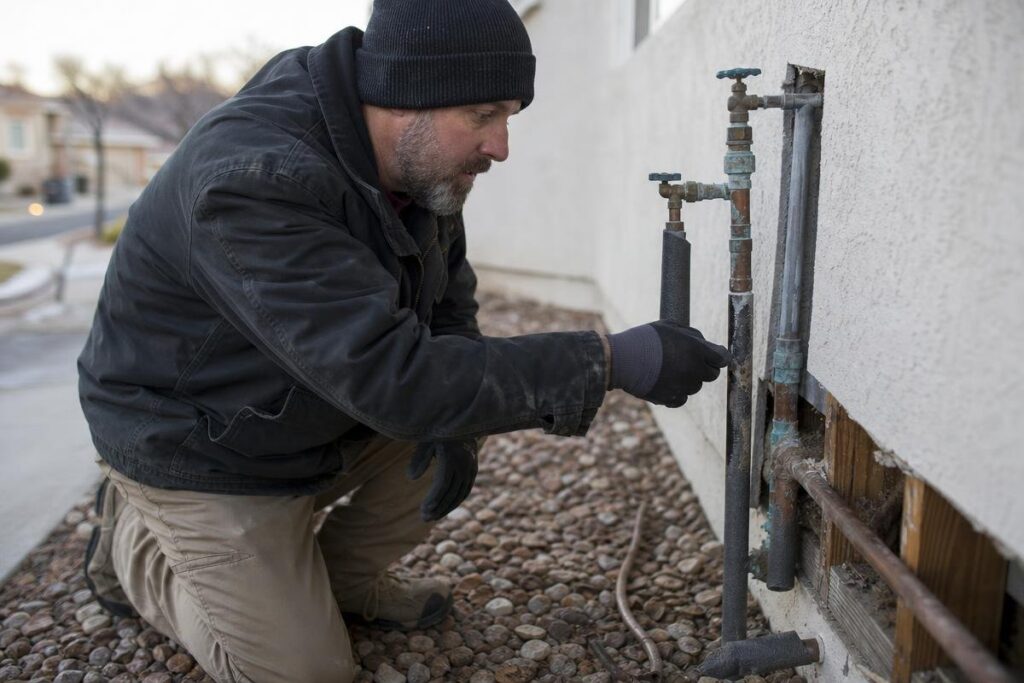
Not every part of the valley freezes equally. The northwest corridor, including areas near the Spring Mountains, sits at a noticeably higher elevation than the Strip or the eastern valley. On a hard freeze night, those neighborhoods can drop several degrees colder than other parts of Clark County. That difference matters a lot to your pipes.
Hard water makes the situation worse. Our water here averages around 278 ppm calcium carbonate, which is among the highest in the country. That mineral buildup narrows the inside of your pipes over time. Less water volume means less thermal mass, and that means a pipe can freeze faster than you’d expect. If you want to understand exactly what that scale is doing inside your plumbing, our post on Las Vegas tap water hardness and what it means for your home covers it in detail.
We also see a wide range of home construction across the valley. Older block homes with minimal wall insulation, manufactured homes, and newer stucco builds all have different pipe vulnerability profiles. During a freeze event, our certified plumbers, including techs like Brandon and Jamal who customers regularly ask for by name, get dispatched across Clark County to handle frozen pipe calls and burst pipe repairs.
Our team is based at 4755 W University Ave and serves Spring Valley, the northwest valley, and surrounding Clark County communities. We know the construction styles here, and we know which pipe layouts tend to cause trouble first. If your furnace needs attention at the same visit, we can handle that too. One call covers it.
Frequently Asked Questions
Will frozen pipes thaw on their own without any help?
Yes, they can thaw on their own as indoor temperatures rise, but waiting is risky. Pressure builds inside a cracked pipe during uncontrolled thawing, and when it releases, you may not have time to shut the water off. Take action early rather than hoping for the best.
How quickly can pipes freeze in Las Vegas temperatures?
At 20°F, an uninsulated pipe in an unheated garage can freeze in as little as 4 to 6 hours. Freeze events here tend to hit their lowest point between 3 and 6 a.m., so a pipe that felt fine at midnight can be solid ice by sunrise. Rarely used lines, like a guest bathroom that sits dry for weeks, freeze faster than active ones.
Is it safe to turn the water back on after a freeze?
Not until you inspect every accessible pipe for cracks, splits, or bulges. Open the faucet first so pressure builds gradually. If you hear hissing, see dripping, or notice a wet spot on the wall within a few minutes, shut the supply off and schedule a professional leak detection before anything else.
What should I do if a pipe bursts after thawing?
Shut off the main supply immediately. Open all faucets to drain remaining pressure. Photograph the damage before you clean anything up, since your homeowner’s insurance will want documentation. Then call for same-day assessment and repair.
Can I use a propane torch to thaw a frozen pipe?
Never. Open flame is one of the leading causes of house fires during thawing attempts. Use a hair dryer, warm wet towels, or a space heater kept at a safe distance from the pipe. Slow and steady is the only safe approach.
How much does it cost to repair a burst pipe in Las Vegas?
Costs vary widely depending on pipe location, material, and how much damage occurred before the water was shut off. A pipe inside an accessible garage wall costs far less to reach than one buried under a slab or hidden behind tile. If your water heater supply line was involved, you may also want to look into water heater repair as part of the same visit. We provide upfront, honest pricing before any work begins, so you know exactly what you’re looking at.
A frozen pipe can go from a minor inconvenience to a flooded room in minutes once it thaws. If you still have no water flow, see a crack or bulge, or just want a licensed set of eyes on the situation before you restore pressure, call Bumble Breeze at (702) 674-9775. Our certified plumbers serve the greater Clark County area and know the specific pipe layouts and construction styles common in this valley. No surprises. We’re not happy until you’re happy.
Ready to Get Started with Bumble Breeze Plumbing, Heating & Air?
Call (702) 674-9775 any time your pipes freeze or you want a certified plumber to assess your home’s freeze risk before the next cold snap hits. Our team serves Clark County and knows the specific pipe layouts common across the valley. No surprises. We’re not happy until you’re happy.