
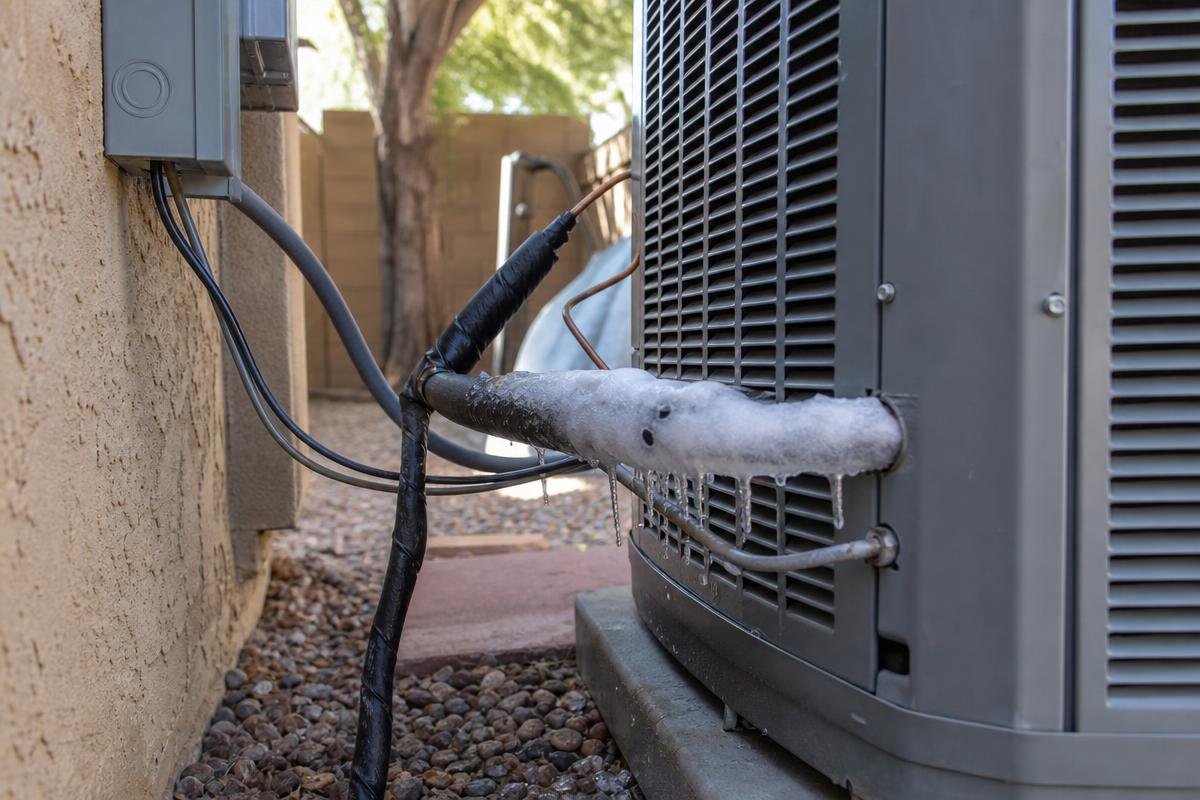
A frozen AC in Las Vegas sounds like a contradiction, but it happens more often than you’d think, especially during the brutal stretch from May through October when your system runs almost nonstop. Ice on your coils means your home stops cooling, and the longer you leave it running, the worse the damage gets.
At Bumble Breeze Plumbing, Heating & Air, we diagnose the real cause fast, whether it’s a clogged filter, low refrigerant, or blocked airflow, and we give you upfront, honest pricing before any work begins. AC iced over? Get a same-day diagnosis from our NATE-certified Las Vegas technicians.
Key Takeaways
- An AC freezing up in Las Vegas is usually caused by restricted airflow, low refrigerant, or dirty evaporator coils.
- Las Vegas AC systems run far longer than average, which means filter clogs and refrigerant issues show up faster here than in most cities.
- Turning off your AC and letting it thaw completely is the safest first step before calling for service.
- Homes built before 2010 with R-22 refrigerant systems face a higher freezing risk and may need a full system evaluation.
- Ignoring a frozen AC can damage your compressor, turning a simple repair into a costly replacement.
What a Frozen AC Looks Like in a Las Vegas Summer
It’s 108°F outside, your AC has been running all day, and now warm air is blowing from your vents. You walk outside and see ice coating the unit. That’s not a glitch. That’s your air conditioner freezing up, and in the middle of a Nevada summer, it’s a serious problem.
Ignoring a frozen AC doesn’t just mean a warm house. It can mean compressor failure, water damage from melting ice, and indoor temps that climb fast. Compressor repairs alone can run into the thousands. This is not something to wait out.
Our valley’s climate makes this more common here than most homeowners expect. AC systems across the valley run for extended duty cycles from late spring through early fall. That runtime, combined with Mojave dust, pushes systems toward freezing faster than in most U.S. cities. We cover exactly why that happens in our breakdown of why AC units here fail faster than the national average.
This article walks you through the causes, a safe thaw process, and the warning signs that mean it’s time to call a certified technician.
Why Does an AC Unit Freeze Up in the First Place?
An AC freezes up when the refrigerant inside the evaporator coil drops below 32°F, causing moisture in the air to freeze on the coil’s surface. That thin layer of ice sounds minor, but it creates a fast-moving problem that can shut your system down completely.
The Physics Behind a Frozen Coil
Your evaporator coil works by absorbing heat from the warm air your blower pulls across it. That steady flow of warm air keeps the refrigerant pressure balanced and the coil temperature above freezing. When that airflow slows down, or when refrigerant levels drop too low, the coil gets colder than it should. Moisture in the air hits that cold surface and freezes solid.
Here is where it gets worse. That layer of ice blocks airflow even further. Less airflow means the coil gets colder. A colder coil grows more ice. The cycle keeps feeding itself until you have a solid block of ice around your evaporator coil and no cool air coming through your vents at all. If you are dealing with a frozen AC unit, AC repair in Las Vegas is usually the fastest way to stop that cycle before it damages your compressor.
Why Las Vegas Homes Are Especially Vulnerable
Most AC systems are designed to run in cycles, not continuously for five or six months straight. Across Clark County, units routinely run 16 or more hours per day from late spring through early fall. That kind of runtime accelerates wear on blower motors and refrigerant lines faster than most manufacturers plan for.
Mojave Desert dust makes the problem worse. A standard 1-inch filter that lasts 90 days in a mild climate can clog in 30 days here during peak cooling season. On top of that, many homeowners set their thermostats to 68 or 70°F when outdoor temps hit 110°F. That 40-degree gap pushes systems right to the edge of their design limits, and a frozen evaporator coil is often the first sign something has gone wrong.
The Most Common Reasons Your AC Is Freezing Up
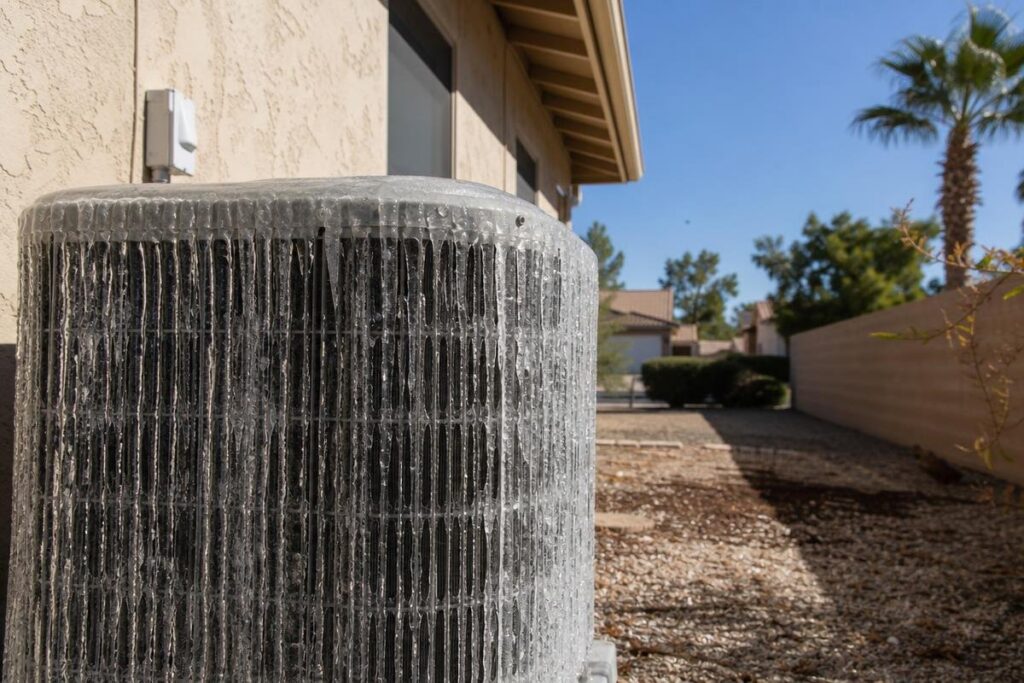
Your air conditioner freezing up is not a random event. There are four specific mechanical reasons it happens, and each one gets worse the longer you ignore it. We see these problems constantly in homes across the southwest valley and the 89113 and 89148 zip codes, especially during the months when systems run through extended duty cycles.
Restricted Airflow: Dirty Filters and Blocked Vents
A dirty air filter is the number-one cause of a frozen AC unit in the valley. Your evaporator coil needs a steady flow of warm air to stay above freezing. When a clogged filter chokes that airflow, the coil drops below 32°F and ice starts forming. In the Mojave, fine alkaline dust loads a standard 1-inch filter in as little as 30 days during peak summer, so a filter that looks fine after two months is almost certainly restricting your system.
Blocked or partially closed supply and return vents compound the problem fast. Do a quick check: hold your hand near every vent in the house and feel for weak or absent airflow. Closed vents in unused rooms feel like a fix but actually starve the system of the return air it needs. Older homes in early Summerlin communities often have original ductwork with accumulated debris and small leaks that quietly reduce airflow year after year.
Even a clean filter won’t restore full airflow in those cases, and that’s when professional air duct cleaning in Las Vegas makes a real difference.
Low Refrigerant Levels
Refrigerant, typically R-410A or R-32 in modern systems, absorbs heat from your indoor air. When levels drop due to a leak, coil pressure falls and the coil temperature drops well below freezing. You might notice a hissing or bubbling sound near the refrigerant lines, ice forming on the copper lines outside the unit, or the system running constantly without actually cooling your home. Those are all signs of the same problem.
Topping off the refrigerant without finding and fixing the leak is only a temporary fix. The system will freeze again. Homes built before 2010 in central Las Vegas and older Henderson neighborhoods may still be running R-22 systems. R-22 has been phased out, making recharges expensive and system replacement a more practical option in many cases. If you suspect a refrigerant issue, scheduling AC repair in Las Vegas before the next hot day is the right call.
Ice keeps coming back after a recharge? Get a free estimate on a permanent leak repair from our certified team.
A Dirty or Damaged Evaporator Coil
Even with a clean filter, dust and grime build up on the evaporator coil over time. That layer of buildup acts as insulation, blocking the heat exchange the coil needs to function. The coil stays too cold, moisture in the air freezes on contact, and you end up with a block of ice where airflow should be. During monsoon season from July through September, humidity spikes combine with alkaline dust to accelerate coil fouling faster than any other time of year.
Bent fins or corrosion on a damaged coil make the problem worse and reduce efficiency even when the system is not fully frozen. Routine AC maintenance in Las Vegas includes a coil inspection and cleaning that catches this before it turns into a full freeze-up or a compressor failure.
Blower Motor or Fan Problems
The blower motor pushes warm air from your home across the evaporator coil. If the motor is failing or the fan is running slower than it should, that warm-air flow drops and the coil gets too cold. You might hear the system running but feel almost no air coming from your vents, or notice the system cycling on and off more frequently than normal. Both are warning signs the blower is struggling.
Ignoring a weak blower motor leads to repeated freeze-ups and puts extra strain on the compressor, which is the most expensive part of your system to replace. If the airflow feels off and your filters are clean, a failing blower motor is a strong possibility. Our team can diagnose it quickly. AC repair in Las Vegas for a blower issue is a straightforward fix when caught early, and a much bigger problem when it is not.
How to Safely Thaw a Frozen AC Unit: Step-by-Step
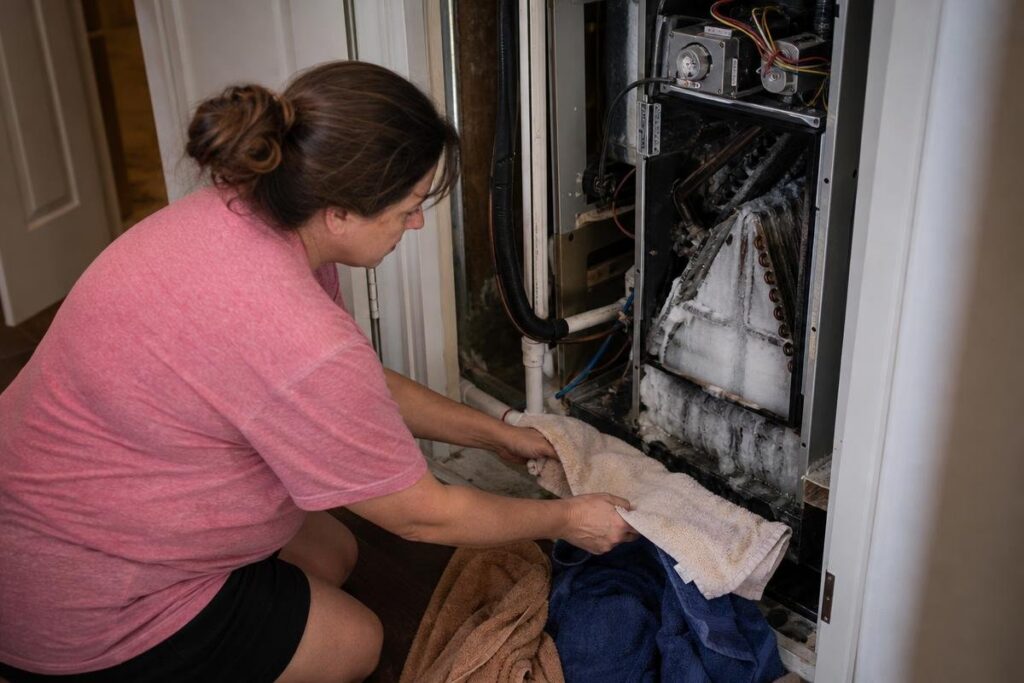
A frozen AC unit is stressful, especially when temperatures across the valley are pushing past 110°F. The good news is that thawing your system safely is something you can do yourself. Follow these steps carefully and you can avoid making a bad situation worse.
Step 1: Switch Off Cooling Mode
Do not shut the system off completely at the breaker. Instead, switch your thermostat from “Cool” to “Fan Only.” This keeps the blower running so it circulates warm air across the frozen coil and speeds up the thaw. Never chip at the ice with a screwdriver or any sharp object. The coil fins are thin aluminum and bend easily, which creates a whole new problem.
Step 2: Protect Your Home While It Thaws
Depending on how much ice has built up, thawing can take anywhere from one hour to a full day. Lay towels around the base of your indoor air handler to catch dripping water. Check your condensate drain pan too. If it is overflowing, your condensate drain line may be clogged, which is a common companion problem with a frozen AC unit. If the pan keeps filling up, Bumble Breeze Plumbing, Heating & Air’s drain cleaning service in Las Vegas can clear it fast before water backs up into your ceiling or walls.
Step 3: Check and Replace the Air Filter
Once the ice has melted, pull out your air filter before you restart anything. If it looks gray, matted, or you cannot see light through it, replace it right now. In the Mojave Desert’s fine alkaline dust, a 1-inch filter can clog in as little as 30 days during peak cooling season. A 4-inch media filter gives you a bit more runway at 60 to 90 days, but check it monthly regardless.
Step 4: Restart and Monitor
Switch the thermostat back to “Cool” and give the system 30 minutes to run. Check airflow at every vent and confirm the house is actually dropping in temperature. If ice starts forming again within a few hours, the root cause is still there and a DIY fix will not solve it. That is the point to call for AC repair in Las Vegas before the problem gets worse.
How to Prevent Your AC From Freezing Up Again
Maintain Airflow With Regular Filter Changes and Duct Checks
The Mojave Desert’s fine alkaline dust clogs filters fast. During peak cooling season, replace 1-inch filters every 30 days, not every 90. A clogged filter starves your system of airflow, and restricted airflow is one of the fastest paths to a coil freezing solid.
Walk through your home and check every supply and return vent. Even partially closing vents in unused rooms can drop system airflow enough to cause freezing. If your ductwork is older, consider air duct cleaning in Las Vegas to clear out years of accumulated dust and debris that quietly choke your system.
Schedule Annual AC Maintenance Before Summer
Book your AC maintenance in Las Vegas in February or March. Appointment slots fill quickly before the cooling season ramps up, and you want a technician checking refrigerant levels, cleaning evaporator coils, testing the blower motor, and clearing the condensate drain before the heat arrives, not after your air conditioner freezes up on a 110-degree afternoon.
We give you upfront, honest pricing before any work begins, so there are no surprises when the technician is done. A maintenance visit catches small problems while they are still small.
Watch Your Thermostat Settings
Setting your thermostat below 70°F when outdoor temps are above 100°F pushes your system past its design limits. That temperature gap forces the unit into continuous operation, dropping coil temperatures to the point where moisture in the air freezes right onto them.
A smart thermostat installation in Las Vegas helps by optimizing cooling cycles and preventing the kind of aggressive low-temperature settings that stress your equipment. Keep the setpoint at 72°F or higher on extreme heat days and let the system run steadily rather than hard. Frozen AC problems are preventable. Schedule a tune-up with our team before summer hits. Call us at (702) 674-9775 and we will get you on the calendar.
When Should You Call an HVAC Professional for a Frozen AC?
Call a certified HVAC technician if your AC freezes up more than once, if you hear hissing near the refrigerant lines, or if the system still won’t cool after thawing and a filter change. Some frozen AC problems have simple fixes. Others signal a deeper issue that gets worse fast, especially during a Green Valley summer when your system is running through long, unbroken cycles.
Signs the Problem Is Beyond a DIY Fix
Las Vegas AC units face unique wear patterns that can turn a minor freeze into a full system failure within days. If you notice any of the following, stop troubleshooting and call a technician.
- Ice returns within a few hours of thawing, even after you’ve changed the filter
- Hissing, bubbling, or gurgling sounds near the indoor or outdoor unit, which often point to a refrigerant leak
- The system runs constantly but your home won’t cool below 80°F
- Water is pooling around the air handler or dripping from the ceiling
- Your system is more than 10 to 12 years old and has never had a professional coil cleaning
R-22 systems, common in Clark County homes built before 2010, are especially prone to low-refrigerant freezing now that R-22 has been phased out. If your unit is older and freezing repeatedly, replacement may be the smarter financial move.
What to Expect When We Arrive
At Bumble Breeze Plumbing, Heating & Air, we send certified technicians who diagnose the root cause, not just the symptom. Refrigerant work is handled only by EPA-certified professionals, as required by federal law, and our crews carry a Nevada state HVAC license. Our technicians will walk you through what they find, often with photos, and give you clear options before any work begins. Upfront, honest pricing. No surprises.
Our team is based at 4755 W University Ave near 215, so we reach most of the valley within the hour. With over 4,200 reviews averaging 4.7 out of 5 stars, customers consistently say our technicians stay until the job is done right. If you’re ready to stop guessing, schedule your AC repair in Las Vegas today. We’re not happy until you’re happy.
Las Vegas AC Freezing: What Local Homeowners Need to Know
Running an AC in the Clark County heat is nothing like running one in Phoenix, Denver, or anywhere else. The conditions here create a specific set of freezing risks that homeowners in the southeast valley and central areas deal with every summer. Knowing what makes this area different helps you stay ahead of the problem.
Desert Climate Conditions That Make Freezing More Likely
When temperatures push past 110°F, your system runs at or near full capacity for months. That kind of continuous runtime wears down blower motors and refrigerant components faster than almost anywhere in the country. For more on how the desert punishes your equipment, read our post on 5 Reasons Las Vegas AC Units Fail Faster Than the National Average.
Monsoon season adds another layer. From July through September, humidity spikes arrive fast and without warning. Homeowners in Green Valley and the southeast valley often notice a frozen AC unit during or right after a monsoon storm. Moisture in the air hits already-cold evaporator coils and freezes quickly, especially if airflow is even slightly restricted.
Flat-roof single-story homes are especially vulnerable. Attic temperatures in these homes can exceed 150°F in summer, putting the entire HVAC system under constant thermal stress and accelerating wear on every component.
Neighborhoods and Home Types Most at Risk
Homes built in the 1980s and 1990s in central Las Vegas, the North Las Vegas corridor, and early master-planned communities often still have their original ductwork. That ductwork has had decades to develop leaks and restrictions. Reduced airflow is one of the leading causes of a frozen AC unit, and aging ducts make it worse.
Pre-2010 homes are also likely running R-22 refrigerant systems. R-22 was phased out in 2020, and recharging those systems now costs significantly more than it used to. If your system is leaking R-22, our AC repair team can assess whether a repair still makes financial sense or whether a system replacement is the smarter move.
Frequently Asked Questions
How long does it take for a frozen AC to thaw?
Thawing time ranges from 1 hour to a full 24 hours, depending on how much ice has built up. Switching your thermostat to fan-only mode speeds the process by circulating warm air across the coil. Never use a hair dryer or heat gun on the fins. You can damage the coil permanently.
Can I run my AC if it’s frozen?
No. Running the compressor while the coil is frozen puts extreme stress on it. That can turn a minor repair into a full compressor replacement, which is one of the most expensive fixes in HVAC. Switch to fan-only or shut the system off completely and let it thaw.
Is a frozen AC covered by homeowners insurance?
Standard homeowners insurance typically does not cover AC repairs caused by lack of maintenance. However, if a frozen coil melts and causes water damage to your ceiling or walls, that water damage may be covered depending on your policy. Take photos before any repairs or cleanup. Your insurer will want documentation.
How much does it cost to fix a frozen AC in Henderson or Clark County?
Costs vary widely based on the root cause. A new filter costs a few dollars. A blower motor replacement runs several hundred. A refrigerant leak repair can exceed a thousand dollars, especially on older R-22 systems where the refrigerant itself is expensive and harder to source. We give you upfront pricing on AC repair before any work begins, so there are no surprises.
Can low refrigerant cause my AC to freeze up?
Yes. Low refrigerant drops the pressure inside the coil, which drops the coil temperature below freezing even when the air outside is 110 degrees. Refrigerant handling requires EPA certification, so this is not a DIY repair. If you suspect a leak, call a certified technician right away.
How often should I change my AC filter in Las Vegas to prevent freezing?
Check 1-inch filters every month and replace them every 30 days during cooling season. The desert’s fine alkaline dust clogs filters far faster here than in most other cities. If you use a 4-inch media filter, plan on replacing it every 60 to 90 days. A clean filter is the single cheapest step you can take to prevent your air conditioner from freezing up.
If your AC has frozen more than once, or if it froze and still won’t cool after thawing and a filter change, the root cause is still there. Our team at Bumble Breeze Plumbing, Heating & Air diagnoses the actual problem, not just the symptom, and gives you a clear answer with honest pricing before any work begins.
Call us at (702) 674-9775 or schedule online. We serve homeowners across Henderson, Clark County, and the surrounding area, and we’re based right here at 4755 W University Ave, Las Vegas, NV 89103. A frozen coil that keeps coming back is a warning sign. Don’t let it become a failed compressor in the middle of summer.
Ready to Get Started with Bumble Breeze Plumbing, Heating & Air?
Call (702) 674-9775 if your AC has frozen more than once or still won’t cool after thawing and a filter change. Our NATE-certified technicians diagnose the actual problem, not just the symptom, and give you a clear answer with honest pricing before any work begins.