
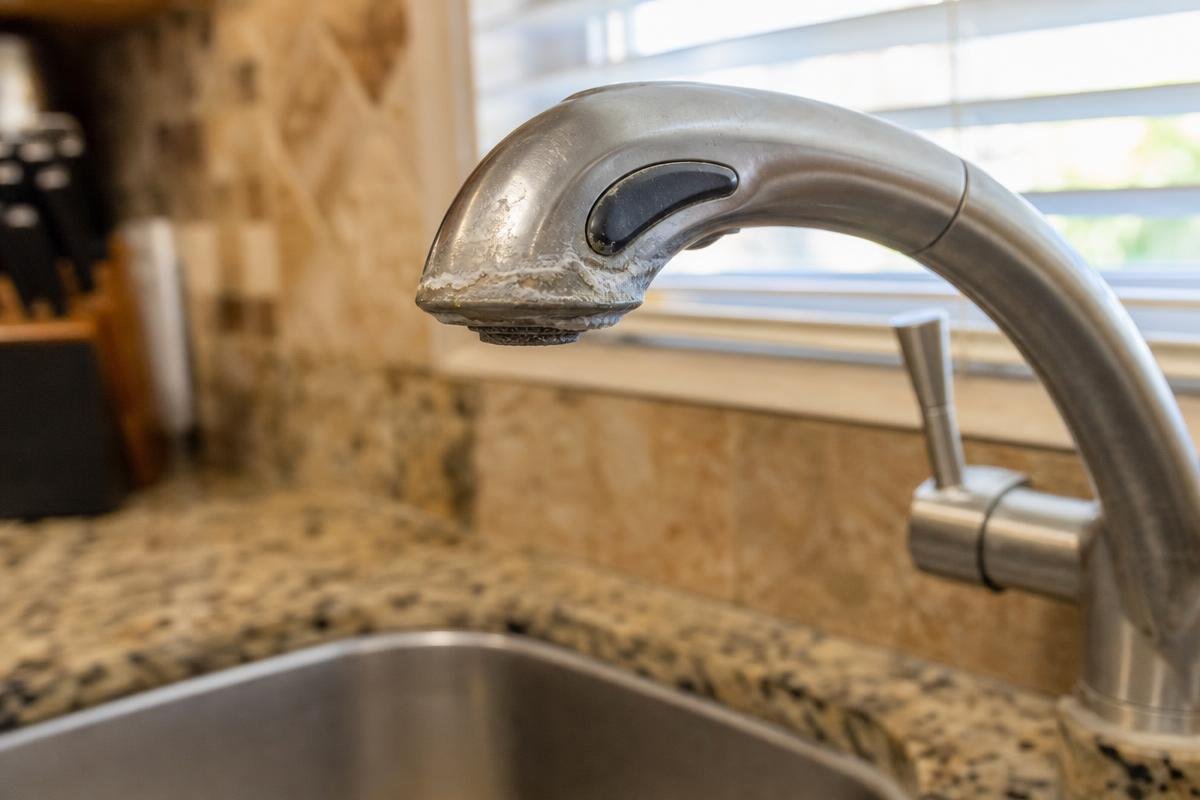
A lot of Las Vegas homeowners wonder if tap water is safe to drink, and it’s a fair question. The Southern Nevada Water Authority delivers treated Colorado River water that meets federal safety standards, but “safe” doesn’t always mean “great.” Tap water across the valley carries some of the highest hardness levels of any major U.S. city, and that mineral load affects everything from your drinking glass to your pipes.
At Bumble Breeze, our licensed plumbers help Clark County homeowners understand what’s actually in their water and what to do about it. Have questions about your home’s water quality? We’re here to help.
Key Takeaways
- Las Vegas tap water is technically safe to drink but ranks among the hardest in the country, with hardness levels reaching 22 GPG.
- Hard water won’t make you sick, but it accelerates scale buildup in pipes, water heaters, and appliances over time.
- Older homes built before 1986 in Las Vegas and Henderson may have lead-containing solder, which is a separate concern from hardness.
- The regional water utility publishes an annual water quality report that every Clark County household can access for free.
- A whole-home water softener or filtration system can address most of the real-world problems local tap water causes.
Is Las Vegas Tap Water Actually Safe to Drink?
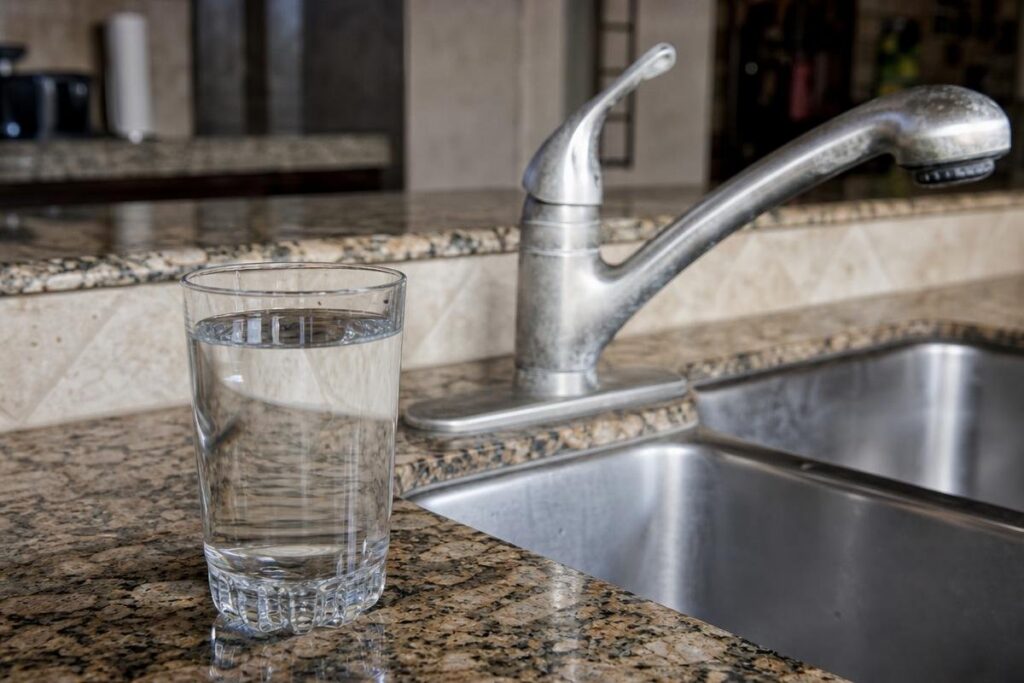
Local tap water meets every federal standard set by the EPA Safe Drinking Water Act. That means it is legal, treated, and monitored. But “legally safe to drink” and “good for your pipes, appliances, and health” are two very different things.
The overwhelming majority of the drinking water in the valley comes from the Colorado River through Lake Mead. The water is treated before it reaches your tap, but it carries some of the highest mineral concentrations of any large city. The sections below cover what that hardness and chlorine actually do inside your home, and what you can do about it.
Where Does Las Vegas Tap Water Actually Come From?
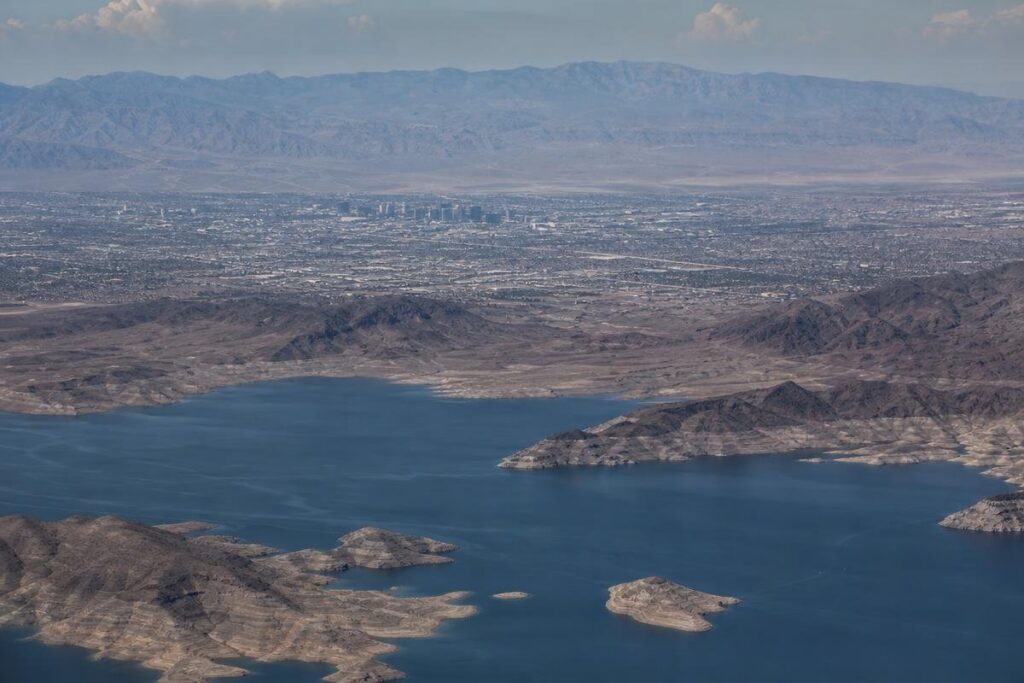
About 90% of the drinking water in the Las Vegas Valley flows from the Colorado River, stored in Lake Mead just east of the city. That single fact explains a lot about why your water looks, tastes, and behaves the way it does.
The Colorado River and Lake Mead Connection
The reservoir sits in a basin of calcium-rich limestone and sedimentary rock. As water moves through that geology, it picks up dissolved calcium, magnesium, and bicarbonates. By the time it reaches your tap, those minerals are already concentrated. That is the root cause of the hardness that defines local tap water, one of the highest readings of any large U.S. city.
The remaining 10% of local supply comes from groundwater wells managed across the valley. That mix shifts slightly by season, which is why your water may taste or feel slightly different at different times of year.
How the Utility Treats the Water Before It Reaches Your Tap
The regional supplier runs the water through a multi-step treatment process: coagulation, sedimentation, filtration, and disinfection. It uses chloramines, a chlorine-ammonia compound, rather than free chlorine for most of the distribution system. Chloramines stay stable over the long pipe runs needed to serve neighborhoods from Summerlin in the west to the older sections of the valley.
That stability comes with a trade-off. Chloramine off-gassing in poorly ventilated homes is a real concern, and it can affect indoor air quality over time. All regulated contaminants are tested within EPA maximum contaminant levels, and the utility publishes an annual Consumer Confidence Report so you can review the data yourself.
What ‘Hard Water’ Really Means, and Why Las Vegas Has Some of the Hardest in the Country
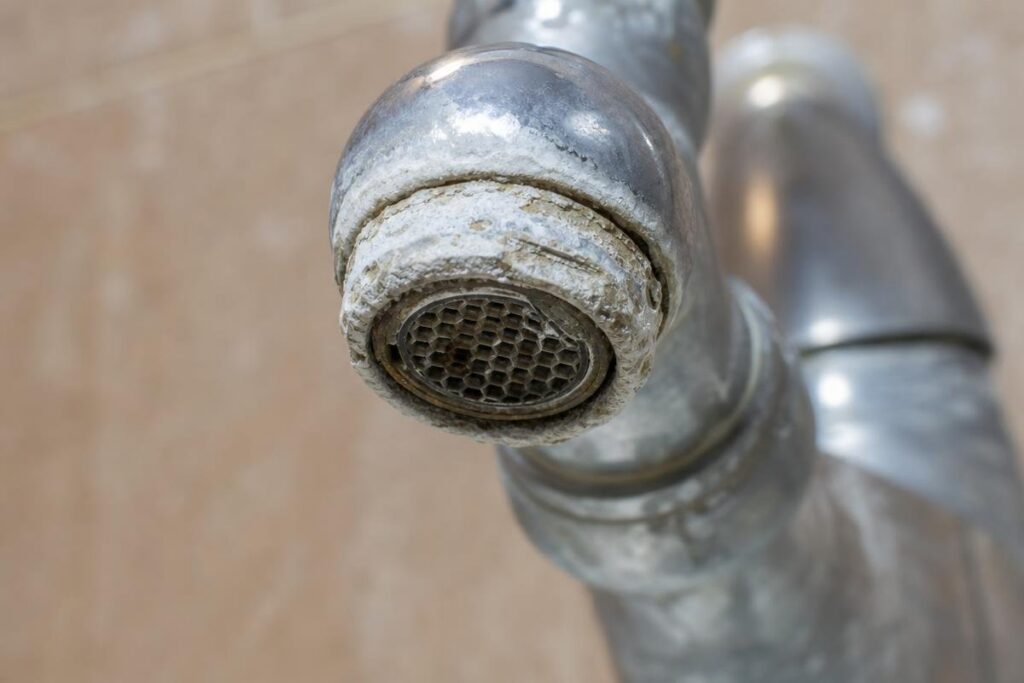
Hard water is simply water with high concentrations of dissolved calcium and magnesium. Those minerals are harmless to drink, but they leave behind solid deposits called scale wherever water flows, heats, or sits. Across the valley, that scale builds up fast because the water here is exceptionally hard.
How Water Hardness Is Measured
Water hardness is measured in grains per gallon (GPG). The USGS classifies anything above 10.5 GPG as “very hard,” and the national average sits around 10 GPG. Tap water across the valley typically tests between 16 and 22 GPG depending on the season and which distribution zone serves your street. That puts us firmly into “extremely hard” territory. The river water that feeds most of the region picks up calcium and magnesium as it moves through limestone and sediment, and that mineral load arrives at your tap intact.
What These Hardness Levels Mean for Your Pipes and Appliances
At that range, scale accumulates inside your pipes, water heater tank, and fixtures faster than most homeowners realize. Scale acts as insulation inside a water heater. The heating element has to work harder to push heat through that mineral crust, which drives up your energy bill and shortens the unit’s life. A water heater that lasts 10 to 12 years in a soft-water city may fail in 6 to 8 years here. That is a real cost, not a worst-case scenario.
Scale also narrows pipe diameter over time. Older Henderson subdivisions built in the 1970s and 1980s are especially prone to trouble, since galvanized supply lines from that era catch scale readily and lose flow. If you have noticed dropping water pressure in your home, mineral buildup in the supply lines is one of the most common causes in this area. For a closer look at what scale does to your fixtures and water heater over the long term, our water heater services page covers what to watch for.
Not sure how hard your water really is? Get a free water quality assessment from Bumble Breeze and know exactly what your home is dealing with.
Chlorine and Chloramines in Las Vegas Water: What the Levels Mean for Your Health
Your tap water has a noticeable smell or taste for a reason. The utility adds chlorine and chloramines on purpose, and that is actually a good thing. These disinfectants kill bacteria, viruses, and parasites before water reaches your tap. The question is whether the levels used across valley neighborhoods pose any real health concern.
Why Disinfectants Are Added and What the EPA Allows
The EPA sets a maximum residual disinfectant level of 4 mg/L for both chlorine and chloramines. The local supplier stays well below that ceiling, so by federal standards, the water is safe to drink.
That said, the desert heat and long pipe runs from treatment facilities near the reservoir to your tap accelerate chlorine off-gassing. That is why the taste and smell here can be stronger than what you might notice visiting family in a cooler, smaller city. It is not a safety issue. It is a distribution reality.
The Real Health Concerns: Disinfection Byproducts
The more nuanced issue is what happens when chlorine or chloramines react with organic matter inside pipes. That reaction creates disinfection byproducts, specifically trihalomethanes (THMs) and haloacetic acids (HAAs). The EPA sets legal limits at 80 ppb for total THMs and 60 ppb for HAAs. Local water reports confirm compliance with both.
The Environmental Working Group applies stricter, non-legally-binding health guidelines and flags our area’s THM levels as a concern worth watching. Both perspectives are fair. If you want to reduce exposure, a carbon block pitcher or under-sink filter cuts THMs and chloramine taste significantly.
One more thing worth knowing: chloramine off-gassing during hot showers in a closed bathroom is a real concern for anyone with asthma or respiratory sensitivities. If that applies to your household, check out our indoor air quality services for practical options.
What Contaminants Are Actually Found in Las Vegas Tap Water?
Hardness and chlorine get most of the attention, but valley homeowners often ask a bigger question: what else is actually in the water? The short answer is that local tap water meets all federal standards, but there are a few contaminants worth knowing about beyond the basics.
Regulated Contaminants: What the Utility Tests For
The regional water authority tests for more than 100 regulated contaminants under the Safe Drinking Water Act, including lead, arsenic, nitrates, copper, and microbial contaminants. All of them meet EPA maximum contaminant levels. Lead is not added at the treatment plant. The risk comes from older lead-containing solder or service lines inside the home itself. If your home was built before 1986 in older parts of downtown or Boulder City, that matters.
A pipe inspection can tell you what your plumbing actually looks like before you assume everything is fine. Every water customer in the valley receives access to the annual Consumer Confidence Report, which lists exactly what was found and at what levels. Reading it is the fastest way to understand your specific water quality picture.
Unregulated and Emerging Contaminants to Know About
This is where local water safety gets more complicated. PFAS, sometimes called “forever chemicals,” have been flagged by the Environmental Working Group at levels above their non-legally-binding health guidelines. The EPA finalized its first-ever PFAS maximum contaminant levels in 2024, and local utilities must now work toward compliance. Separately, perchlorate has been detected in some area water samples. Nevada’s long history of military and munitions testing in the desert is one likely source of that contamination.
Point-of-use filters certified by NSF International for specific contaminants are the most practical response for homeowners concerned about these issues. If you also have questions about how water quality connects to indoor air quality in Las Vegas, that is a conversation worth having with our team.
So Is Las Vegas Tap Water Safe to Drink Every Day?
For most households, the answer is yes. The water is disinfected, monitored, and compliant with federal law, so drinking it straight from the faucet will not make a healthy person sick. The daily wear you should worry about is on your home, not your body. That is where scale, disinfection byproducts, and aging pipes come into play, and it is why so many valley homeowners choose to filter and soften their water.
What Hard Water and Scale Do to Your Plumbing and Water Heater Over Time
As covered earlier, hardness across the valley runs high, and that mineral load does not just affect your drinking glass. It accumulates inside your pipes, appliances, and water heater every single day.
Scale Buildup in Water Heaters: A Local Problem
At these levels, sediment settles on the floor of a tank water heater fast. Without annual flushing, that layer can reduce heating efficiency by 20 to 30 percent within just a few years. You are paying more on your energy bill to heat water through a crust of calcium and magnesium.
That popping or rumbling sound your water heater makes? That is sediment being disturbed by the heating element. It is a clear sign the tank needs flushing or a professional water heater inspection before the damage gets worse. Tankless water heaters are popular in this area, but they are not immune. Scale coats the heat exchanger and triggers error codes, reduced flow, and early failure. Periodic descaling is not optional here, it is maintenance.
These conditions also shorten tank lifespan. A unit that might last 12 years in a softer-water city may need water heater replacement in 7 to 9 years without proper treatment.
How Scale Affects Drain Lines, Fixtures, and Appliances
Scale narrows drain lines from the inside over time. What looks like a slow drain or a clog is often mineral buildup restricting flow. Drain cleaning with hydro jetting is one of the most effective ways to clear that scale and restore full flow without damaging the pipe.
Dishwashers, washing machines, and ice makers accumulate scale faster here than in most U.S. cities. A whole-home water softener or point-of-entry filtration system is the most effective long-term fix for protecting every appliance in your home from that mineral load.
What Las Vegas Homeowners Can Do About Tap Water Quality Right Now
You have real options here, and the right one depends on what you’re trying to solve. Taste and health concerns call for a different fix than pipe protection. Most valley homeowners end up needing both.
Filtration Options: From Pitcher Filters to Whole-Home Systems
A pitcher filter certified to NSF/ANSI 53 or 58 will reduce chlorine taste, some heavy metals, and trihalomethanes. It’s a good starting point, but it does nothing for the scale building up inside your pipes and water heater.
For drinking water, an under-sink reverse osmosis system is the most popular upgrade in the valley right now. RO removes a broad range of contaminants including PFAS, nitrates, and dissolved solids. It dramatically improves taste, and most homeowners notice the difference immediately.
For pipe and appliance protection, a whole-home salt-based water softener is the real answer. At these hardness levels, a softener here is a practical necessity, not a luxury upgrade. Pair it with a whole-home carbon filter and you’re also addressing chloramines at the point of entry before water reaches every faucet and fixture.
- Pitcher filters: Good for taste, DIY install, no pipe protection
- Under-sink RO: Best for drinking water quality, requires a drain connection and dedicated faucet
- Whole-home softener: Protects all pipes and appliances, requires professional installation
- Whole-home carbon filter: Removes chloramines and THMs at entry, often paired with a softener
When to Call a Plumber vs. Handle It Yourself
Pitcher and countertop filters are straightforward DIY. A handy homeowner can usually manage an under-sink RO install too, but it does require a drain connection and a hole in the countertop for the dedicated faucet.
Whole-home softener and filtration systems are a different story. Improper installation can void equipment warranties and cause pressure problems throughout the house. A licensed plumber should handle those.
If your tap water runs brown, yellow, or orange, stop and call us before buying any filter. Discolored water signals pipe corrosion or sediment disturbance, and a drain and plumbing inspection can tell you what you’re actually dealing with. Homes with aging pipes may need a pipe condition assessment before any filtration investment makes sense.
How Las Vegas Water Quality Affects Your HVAC System and Indoor Air
Your tap water doesn’t just affect what you drink. In the desert, hard water and chloramines work their way into your HVAC equipment and the air you breathe every day. Most water quality articles stop at the faucet. We don’t, because our technicians see the damage firsthand across the valley.
Chloramine Off-Gassing and Indoor Air Quality
Chloramines volatilize when water heats up. That means every hot shower releases a small amount of gas into your bathroom air. In homes with poor ventilation, that gas builds up fast. People with asthma or respiratory sensitivities feel it first, often as throat irritation or a faint chemical smell.
The fix is simple but easy to skip. Run your bathroom exhaust fan during your shower and keep it running for at least 10 minutes after you finish. That one habit makes a real difference. If you’re noticing persistent indoor air quality concerns beyond the bathroom, the problem may be bigger than ventilation alone.
Desert heat also warms pipes faster than in cooler climates, which means chloramines off-gas more readily even before water reaches your showerhead. Clean ducts and a properly balanced ventilation system work together to pull that air out before it settles.
Hard Water and Your Swamp Cooler or Humidifier
Evaporative coolers are a staple across the valley during spring and fall. They’re affordable and effective, but they push large volumes of hard water through their pads all season long. Mineral scale builds up on those pads and inside the reservoir faster here than almost anywhere else in the country. Clogged pads cut cooling efficiency and can harbor bacteria if left unchecked.
Replace your evaporative cooler pads at least once per season, ideally at the start of spring. Whole-home humidifiers connected to forced-air systems face the same scale problem. Water panels and drum pads need annual replacement here, full stop. Hard water scale is one reason HVAC systems in this area wear out faster than the national average. If your cooler or humidifier hasn’t been serviced recently, schedule a check before the next shoulder season hits.
Frequently Asked Questions
Is Las Vegas tap water safe to drink straight from the faucet?
Yes. The water meets all EPA standards and is tested against more than 100 regulated contaminants. That said, “safe” and “optimal” are two different benchmarks. Safe means it won’t make you sick. Optimal means it’s free of the minerals, disinfectants, and trace compounds that affect taste, appliances, and long-term pipe health.
Why does my tap water smell or taste like chlorine?
The water utility uses chloramines to disinfect the water supply. Desert heat and warm pipes speed up off-gassing, so the smell is often stronger here than in cooler climates. A 30-second flush before filling a glass helps. A carbon-block under-sink filter eliminates it entirely.
What is the hardness level of Las Vegas tap water?
Tap water hardness in the valley typically runs between 16 and 22 grains per gallon, depending on the season and your distribution zone. The national average sits around 10 GPG. That gap is why you see white scale on faucets, showerheads, and inside appliances so much faster here than in other cities. For a deeper look at what that hardness does to your home, read our guide on hard water and what local residents should know.
Does Las Vegas tap water contain lead?
Lead is not added at the treatment plant. The risk comes from homes built before 1986 that may have lead-containing solder in their pipes. If your home is in a pre-1986 neighborhood in the northwest valley or near downtown, have your pipes inspected. A certified plumber can assess pipe condition and flag any concerns before they become a health issue.
Can hard water make you sick?
No. Calcium and magnesium are minerals your body actually needs. Hard water is not a health hazard. The real concern is what those minerals do to your plumbing, water heater, and appliances over time. Scale buildup is a home maintenance problem, not a medical one.
What is the best water filter for Las Vegas tap water?
For drinking water, an under-sink reverse osmosis system certified to NSF/ANSI 58 is the most effective option. For whole-home scale protection, a salt-based ion exchange softener is the standard solution. Many homeowners in the valley use both. They solve different problems and work well together.
How does hard water affect my water heater?
Scale settles on the heating element and tank floor, forcing the unit to work harder. In soft-water cities, a water heater lasts 10 to 12 years. Here, that lifespan often drops to 6 to 8 years without maintenance. Annual flushing and anode rod inspection make a real difference. If your unit is already showing signs of strain, our team handles drain cleaning in Las Vegas and full water heater service to keep things running efficiently.
Your home is working against harder water than almost anywhere else in the country. Scale builds fast, water heaters wear out early, and pre-1986 pipes may be hiding problems a filter alone won’t fix. Bumble Breeze’s certified plumbers serve Clark County homeowners from our office at 4755 W University Ave. We can assess your plumbing, recommend the right filtration setup, and handle everything from water heater maintenance to whole-home softener installation. Call us at (702) 674-9775 or book online to schedule an inspection.
Ready to Get Started with Bumble Breeze Plumbing, Heating & Air?
Call (702) 674-9775 to schedule a water quality assessment or softener consultation. Our certified plumbers can test your water, assess your pipes, and recommend the right filtration setup for your home. Stop letting hard water wear down your plumbing.