
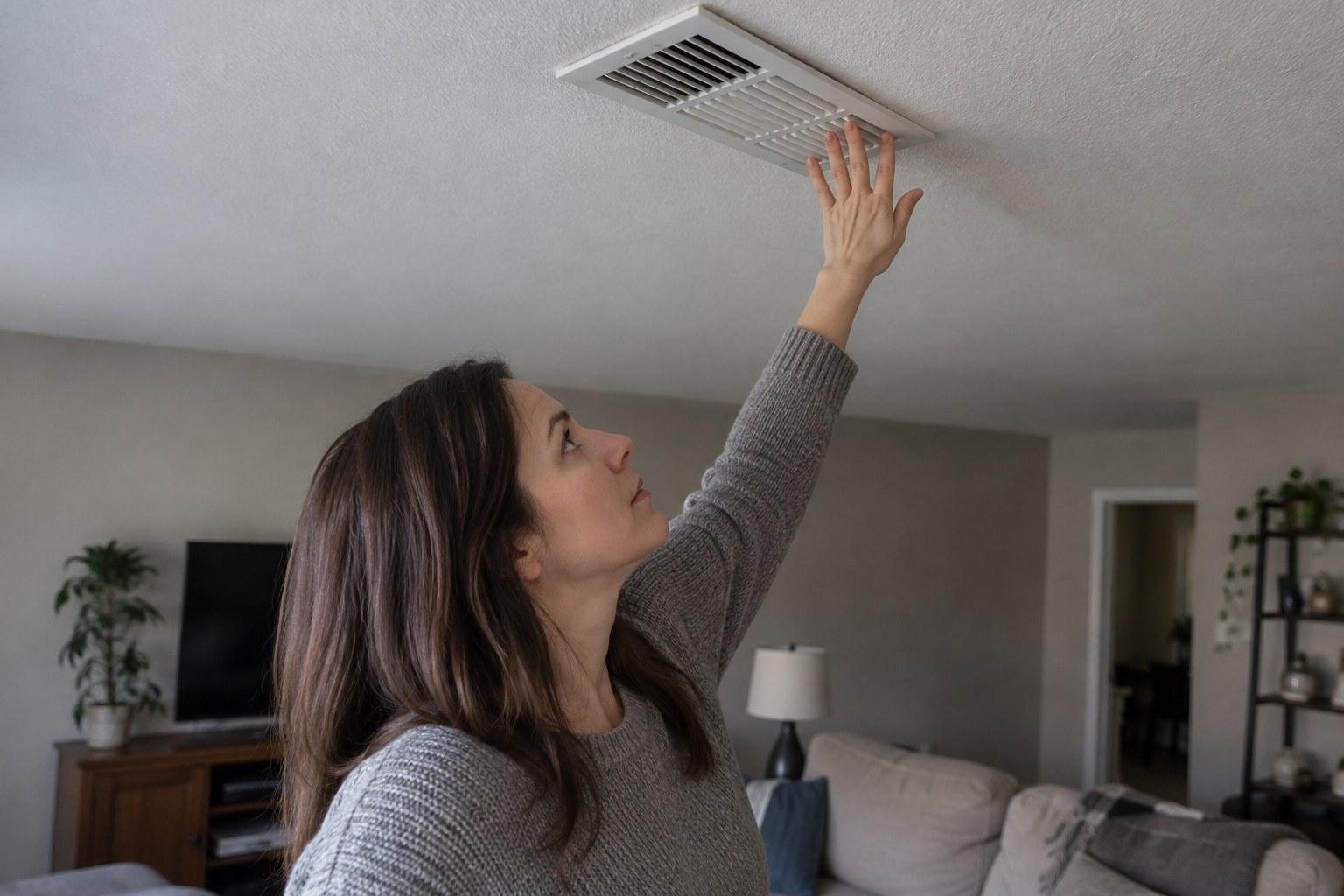
A heat pump blowing cold air on a chilly Las Vegas morning is frustrating, but it is not always a sign of a major breakdown. Sometimes the system is doing exactly what it was designed to do, and other times a setting, a dirty filter or a failing part is to blame. At Bumble Breeze Plumbing, Heating & Air, our licensed technicians troubleshoot heat pumps in homes across the Las Vegas Valley, from Summerlin to Henderson. Below, we break down the seven most likely causes, what you can safely check yourself, and when it is time to bring in a professional.
Still feeling a chill after checking the basics? Our team can track down the cause and explain your options before any work begins.
Key Takeaways
- Short bursts of cool air during a defrost cycle are normal, and the warm air should return on its own within several minutes.
- A thermostat set to “Cool,” “Fan On” or the wrong system type is one of the easiest causes to rule out before calling for service.
- Low refrigerant usually points to a leak, and refilling without fixing the leak only delays the next breakdown.
- Heavy ice that never clears, blocked outdoor coils or a stuck reversing valve need a trained technician rather than a do-it-yourself fix.
- A clogged filter is a quick, inexpensive fix, and desert dust means Las Vegas filters often need attention more frequently than the package suggests.
- Air that feels lukewarm is not always a fault, because heat pump supply air is naturally cooler than the air from a gas furnace.
Las Vegas winters are mild by national standards, but clear desert nights can still drop into the 30s, and the occasional cold snap pushes temperatures near or below freezing. Those are exactly the conditions that test a heat pump, since the outdoor unit has to pull heat from colder air and periodically clear frost from its coil.
Before you assume the worst, it helps to know what “cold air” really means. Heat pump supply air often feels cooler to the hand than the hot blast from a gas furnace, even when the system is heating properly. What you are looking for is air that feels clearly cool or room temperature for long stretches, or a home that will not reach the temperature on your thermostat.
Is It Normal for a Heat Pump to Blow Cold Air During Defrost?
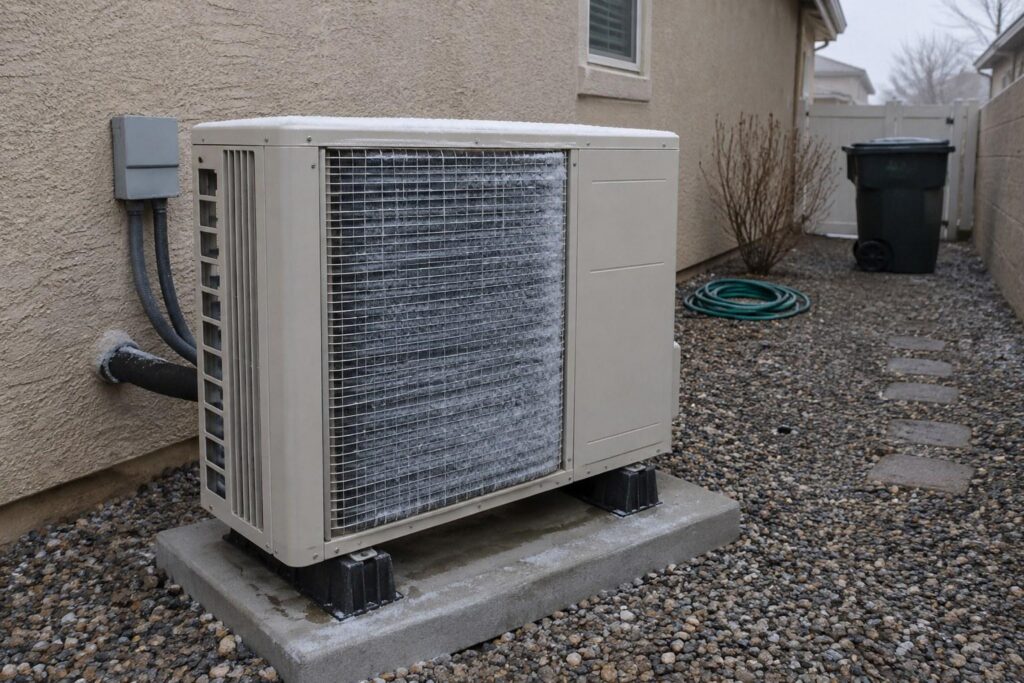
Yes. This is the first cause on our list, and it is the most common harmless one. When outdoor temperatures hover near freezing, moisture in the air can freeze on the outdoor coil. A layer of frost acts like insulation and keeps the coil from absorbing heat, so the system has a built-in defrost mode to melt it off.
What Happens During a Defrost Cycle
During defrost, the heat pump temporarily reverses direction and sends warm refrigerant to the outdoor coil to melt the frost. The outdoor fan usually stops, and you may hear a whoosh or see steam rising from the unit. Indoors, the air coming from your vents can feel cool for a few minutes unless your system turns on backup heat to temper it.
A typical defrost cycle lasts several minutes, and it may repeat periodically on cold, damp mornings. Once it ends, warm air should return without you doing anything.
When Defrost Is Not the Answer
If cool air lasts much longer than about 15 minutes, happens on mild afternoons, or repeats every few minutes, the defrost controls or sensors may not be working correctly. A faulty defrost board, a failed sensor or a bad timer can leave the unit stuck in defrost or cause it to skip defrost entirely, letting ice build up. Either situation calls for professional heat pump repair so the problem does not spread to the compressor.
Could Your Thermostat Settings Be the Problem?
The second cause is the thermostat, and it is the easiest one for you to check. Many service calls end with a simple settings fix, so it is worth a few minutes before you pick up the phone.
Check the Mode and Fan Settings
Make sure the system is set to “Heat,” not “Cool,” “Auto” with a low cooling setpoint, or “Off.” Next, look at the fan setting. If the fan is set to “On” instead of “Auto,” the blower runs constantly, including between heating cycles. That moves unheated air through your ducts and can feel like the heat has quit even though nothing is broken.
Confirm the Thermostat Is Configured for a Heat Pump
A newly installed or replaced thermostat may be set up for a conventional furnace and air conditioner rather than a heat pump. Heat pumps rely on a reversing valve signal, and if the thermostat sends it backward, the system can cool when you ask for heat. If your problems began right after a thermostat swap, the wiring or the installer settings are a strong suspect. Also check for dead batteries, a blank screen or a schedule that lowers the setpoint during the day.
Low Refrigerant From a Leak
Refrigerant is what carries heat from outdoors to indoors. Our third cause is a low charge, which means the system simply cannot move enough heat to warm your home. Heat pumps run a sealed refrigerant loop, so they do not “use up” refrigerant the way a car uses gas. If the level is low, there is a leak somewhere.
Signs of Low Refrigerant
- Lukewarm air that never gets truly warm, even after long run times.
- A hissing or bubbling sound near the indoor or outdoor unit.
- Ice on the refrigerant lines or on parts of the coil in unusual patterns.
- Higher NV Energy bills with no change in your habits.
Why a Recharge Alone Is Not Enough
Topping off refrigerant without finding the leak is a temporary patch. The charge will drop again, and running a heat pump low on refrigerant puts strain on the compressor, which is one of the most important parts in the system. Our technicians locate the leak, repair it and then restore the correct charge. You can learn more about why a refrigerant leak is a big problem for any heat pump or air conditioner. Handling refrigerant requires trained, certified professionals, so this is never a do-it-yourself job.
Think your heat pump has a refrigerant leak or a frozen coil? Talk with our team and we will help you figure out the next step.
Ice, Dirt or Debris on the Outdoor Unit
The fourth cause sits right outside your house. The outdoor unit has to breathe freely to pull heat from the air, and anything that blocks airflow across its coil reduces how much heat reaches your living room.
Heavy Ice That Will Not Clear
A light coat of frost is normal in winter. A solid block of ice around the coil, top panel or base is not. Heavy ice can come from a defrost problem, low refrigerant, a failing outdoor fan motor or water dripping onto the unit from a gutter or roof edge. Never chip at ice with tools, because the coil fins and refrigerant tubing are easy to puncture. Instead, switch the thermostat to “Off” or “Emergency Heat” if your system has it, and call for service.
Desert Dust, Leaves and Yard Debris
In the Las Vegas Valley, the outdoor coil collects a steady layer of fine desert dust, plus blown leaves, tumbleweed fragments and gravel from xeriscaped yards. Over time, that grime insulates the coil just like frost does. Keep at least two feet of clear space around the unit, trim nearby shrubs, and do not store items against it. For a deeper look at how local conditions wear on equipment, read about how Nevada’s dust and air affect your HVAC system.
Gently rinsing loose dirt off the coil with a garden hose, with the power turned off at the outdoor disconnect, is fine for most homeowners. Pressure washers can bend fins, and a thorough chemical coil cleaning is best left to a technician during routine heat pump maintenance.
Auxiliary and Emergency Heat Issues
The fifth cause involves your backup heat. Most heat pumps in our area have auxiliary heat, usually electric heat strips in the air handler. The system uses it to supplement the heat pump on the coldest mornings and to warm the air during defrost.
How Aux Heat Fits In
When auxiliary heat works properly, you may barely notice the defrost cycle, because the strips warm the indoor air while the outdoor coil clears. If the heat strips, their relays or their breaker have failed, every defrost cycle sends noticeably cool air through the house, and the system may struggle to recover on a cold night.
What You Can Check Safely
Look at your electrical panel for a tripped breaker labeled for the air handler or heat strips, and reset it once. If it trips again, stop and call a professional, since repeated tripping points to an electrical fault. Do not open the air handler or the panel cover. Also note that “Emergency Heat” on a thermostat runs the backup heat alone. It is useful as a stopgap if the outdoor unit fails, but it costs more to run, so it is not meant to be left on all winter.
Airflow Problems and Dirty Filters
The sixth cause is restricted airflow. It does not always produce cold air directly, but it can trigger safety controls, make air feel weak or cool at the vents, and cause other problems on this list.
The Filter Comes First
A clogged filter chokes the airflow across the indoor coil. When that happens, the system can overheat and shut off early, leaving you with short bursts of warmth followed by cooler air. In dusty Las Vegas homes, checking the filter monthly is a smart habit, and replacing it whenever it looks gray or packed is the simplest fix you can make. Our post on why changing your filter is important applies to heat pumps year round.
Closed Vents and Duct Leaks
Closing supply vents in unused rooms does not save energy with a central heat pump and can raise pressure in the system. Leaky or disconnected ducts in a hot attic or a garage chase can also dump warm air before it reaches your rooms, so the air at the register feels cool. If one or two rooms are always colder than the rest, the ductwork deserves a closer look.
A Stuck or Failing Reversing Valve
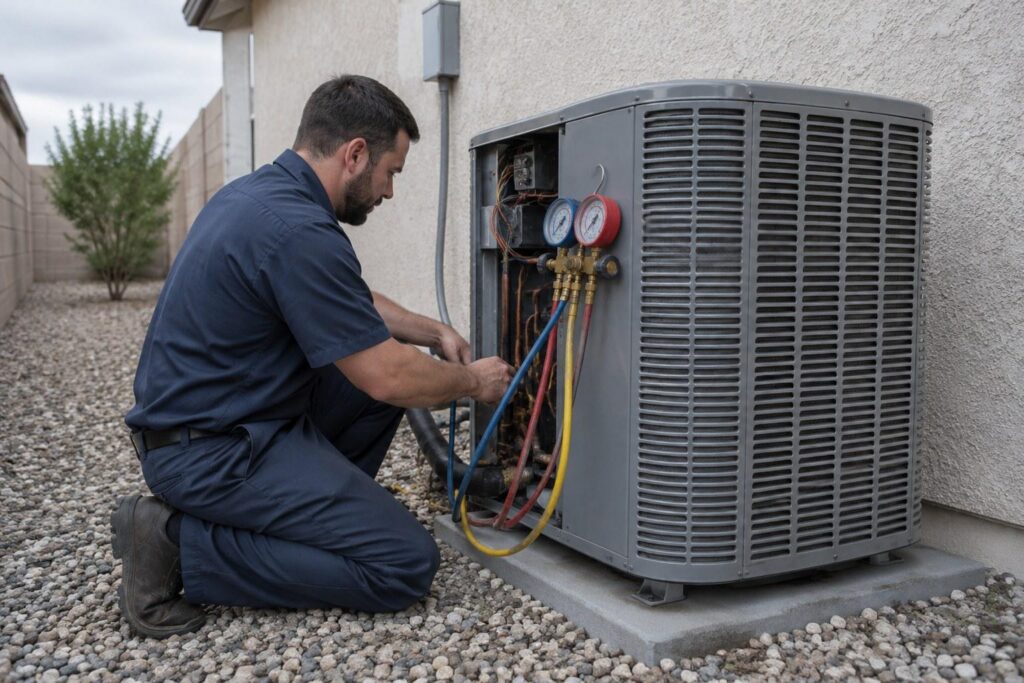
The seventh cause is mechanical. The reversing valve is the component that switches a heat pump between heating and cooling by changing the direction refrigerant flows. When it sticks in the cooling position, or its solenoid coil fails, the system runs but keeps cooling no matter what the thermostat says.
Signs of a Reversing Valve Problem
- The system blows cold air in heat mode but cools normally in summer.
- The heat pump seems stuck in one mode, or switches modes late with a loud clunk.
- The thermostat and wiring check out, but the problem continues.
Diagnosis and Repair
A technician will first test the thermostat signal and the solenoid coil, since a failed coil is often a simpler repair than the valve itself. If the valve body is stuck or leaking internally, it has to be replaced, which involves recovering refrigerant and brazing new components. On an older system, our team will give you a written, upfront estimate and an honest opinion on whether the repair makes sense compared with replacement.
Quick Troubleshooting Chart for a Heat Pump Blowing Cold Air
Use this chart to match what you are noticing with the most likely cause and a reasonable next step.
| What You Notice | Likely Cause | What You Can Do |
|---|---|---|
| Cool air for a few minutes, steam from outdoor unit | Normal defrost cycle | Wait it out, then confirm warm air returns |
| Cold air constantly, system in wrong mode | Thermostat settings | Set to Heat and fan to Auto, replace batteries |
| Lukewarm air, hissing, high power bills | Low refrigerant from a leak | Call a technician for leak detection and repair |
| Thick ice that never melts | Defrost, fan or refrigerant problem | Turn off the heat pump and schedule service |
| Very cool air every defrost, tripped breaker | Auxiliary heat failure | Reset the breaker once, call if it trips again |
| Weak airflow, short heating cycles | Dirty filter or duct problem | Replace the filter, open all vents |
| Cools in heat mode after thermostat checks | Reversing valve or solenoid | Schedule professional diagnosis |
When to Stop Troubleshooting and Call
If you have checked the thermostat, replaced the filter, cleared the area around the outdoor unit and reset a tripped breaker once, you have done what is safe to do on your own. Persistent cold air, ice that keeps returning, unusual noises or a burning smell all mean it is time for a professional. Our article on signs you might need heat pump repair covers more warning signs worth watching.
Preventing Cold Air Problems Next Winter
Many of these issues show up first on the coldest week of the year, when you need heat most. A fall tune-up gives a technician the chance to test the defrost controls, measure refrigerant pressures, check the reversing valve, inspect heat strips and clean the coils before the season starts. Joining our maintenance plan keeps those visits on schedule so small problems get caught early.
Ready to get your heat pump warming your home again? Book a visit with our team and get a clear diagnosis.
Frequently Asked Questions
Why does my heat pump blow cold air for a few minutes and then warm up?
That pattern usually means the system is running a defrost cycle. On cold, damp mornings, frost forms on the outdoor coil, so the heat pump briefly reverses to melt it. Indoor air may feel cool while this happens, especially if backup heat does not engage. If the cool air lasts much longer than about 15 minutes or happens constantly, have a technician check the defrost controls.
Is it safe to keep running a heat pump that is blowing cold air?
For a short defrost cycle, yes. If the unit is covered in thick ice, making grinding or banging noises, or tripping breakers, turn it off and switch to emergency heat if you have it. Running a heat pump with a refrigerant leak, a failed fan or a stuck valve can damage the compressor and turn a moderate repair into a much larger one.
Should I switch my thermostat to emergency heat?
Emergency heat is a temporary backup, not a regular setting. It shuts off the outdoor unit and heats with backup heat alone, which uses more electricity and can raise your NV Energy bill. Use it if the outdoor unit is iced over, damaged or not running, and schedule service soon so you can return to normal heat pump operation.
Can a dirty filter make my heat pump blow cold air?
It can contribute. A clogged filter restricts airflow, which can cause the system to overheat, shut down early and deliver short bursts of warm air followed by cooler air. Restricted airflow also makes the system work harder and can lead to other failures. In dusty Las Vegas homes, check the filter monthly and replace it whenever it looks dirty.
How do I know if my heat pump is low on refrigerant?
Common signs include lukewarm air that never gets truly warm, hissing near the units, ice on the refrigerant lines and rising energy bills. Since heat pumps use a sealed loop, low refrigerant usually means there is a leak. Only a trained technician should test pressures, find the leak and restore the correct charge, because refrigerant handling requires certification and special equipment.
Does cold weather in Las Vegas make heat pumps blow cool air?
Our winters are mild, so a properly sized and working heat pump should keep most valley homes comfortable. On the coldest nights, the system runs longer and defrosts more often, and supply air may feel cooler than furnace heat. That is normal. Air that stays cool for long periods, or a home that cannot reach its setpoint, points to a problem worth checking.
A heat pump blowing cold air in winter can come from something as simple as a thermostat setting or as serious as a refrigerant leak or a stuck reversing valve. Start with the safe checks, then let a professional handle the rest. Call Bumble Breeze Plumbing, Heating & Air at (702) 703-1346 for heat pump service in Las Vegas, Henderson, North Las Vegas, Summerlin, Spring Valley and Enterprise. Our office is located at 4755 W University Ave, Las Vegas, NV 89103.
Ready to Get Started with Bumble Breeze Plumbing, Heating & Air?
Do not spend another chilly evening wondering what is wrong with your heat pump. Our licensed and insured technicians offer upfront, honest pricing, a 100% satisfaction guarantee and financing options with approved credit. Call (702) 703-1346 to schedule service. You can also visit Bumble Breeze Plumbing, Heating & Air at 4755 W University Ave, Las Vegas, NV 89103.