
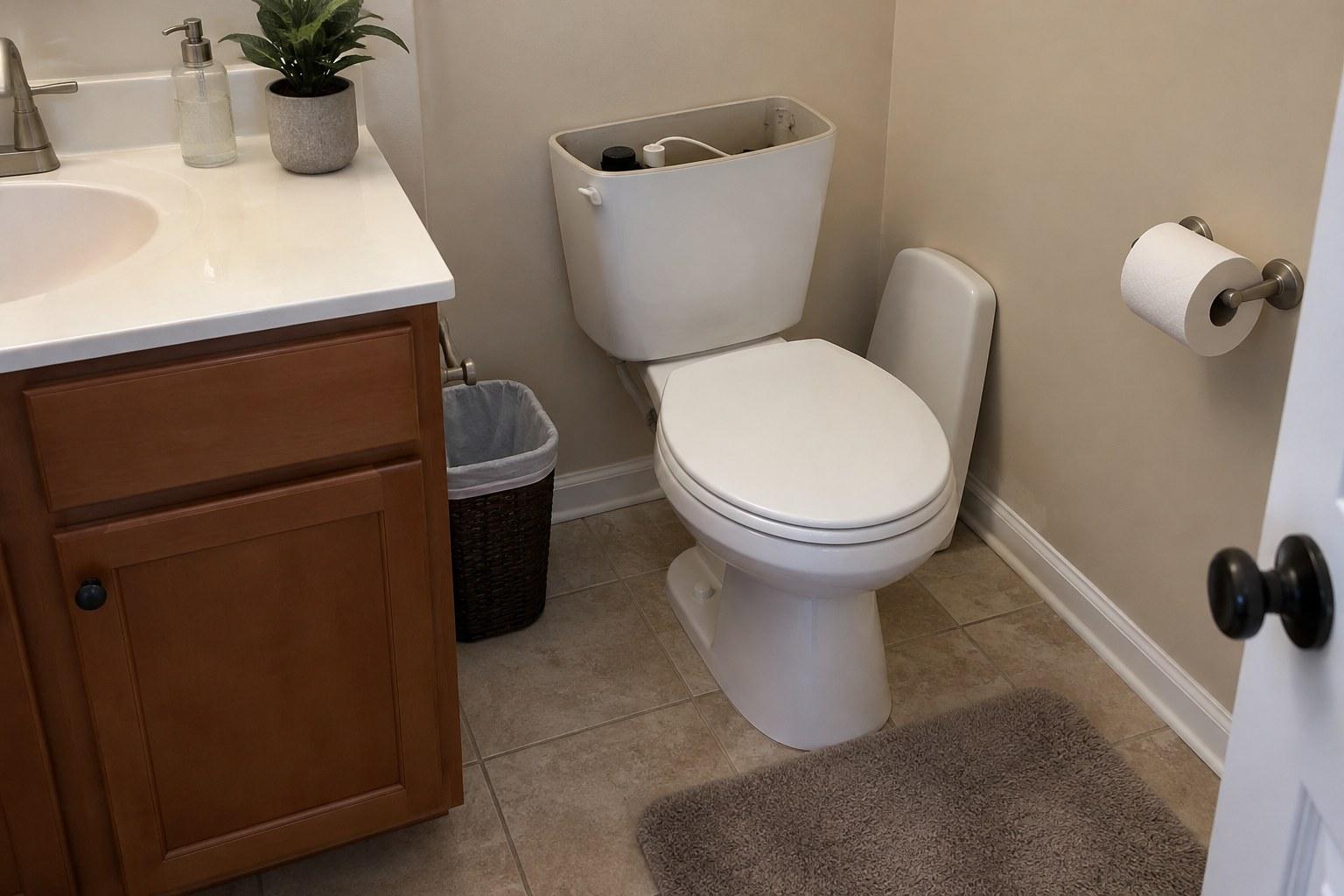
If your toilet keeps running long after a flush, water is quietly slipping out of the tank and down the drain, and the cause is usually one small part. At Bumble Breeze Plumbing, Heating & Air, our licensed technicians repair toilets in homes across the Las Vegas Valley, and we know that local hard water plays a bigger role than most homeowners expect. Mineral scale stiffens flappers, clogs fill valves and keeps seals from closing. The good news is that many running toilets can be fixed with a few minutes of careful troubleshooting, and the rest are a quick, straightforward repair for a professional.
Tired of hearing that hiss from the bathroom? Our team can track down the cause and give you an upfront estimate before any work begins.
Key Takeaways
- A running toilet is almost always caused by one of four parts: the flapper, the flapper chain, the float or the fill valve.
- Las Vegas Valley Water District water measures about 280 parts per million of hardness, and that mineral content can stiffen rubber flappers and clog fill valve openings faster than in soft water regions.
- The U.S. Environmental Protection Agency (EPA) recommends a simple dye test: add a few drops of food coloring to the tank, wait about 10 minutes, and check the bowl for color.
- The Las Vegas Valley Water District (LVVWD) reports that more than 20 percent of gravity-flush toilets leak, so a silent leak is more likely than many homeowners think.
- Replacing a flapper or adjusting a chain is a reasonable DIY task, but cracked tanks, leaking supply lines, corroded shutoff valves or a toilet that rocks on the floor call for a licensed plumber.
A toilet is one of the simplest machines in your home. Water fills the tank, a flapper holds it there, and when you push the handle the flapper lifts and gravity does the rest. When any piece of that cycle stops sealing or shutting off, the tank keeps refilling, sometimes constantly and sometimes in short bursts every few minutes.
In the Las Vegas Valley, that small problem matters more than it might elsewhere. Our water comes mostly from Lake Mead and the Colorado River, it carries a heavy mineral load, and every gallon that runs down the drain is a gallon our desert community works hard to conserve.
How a Toilet Tank Works and Why It Starts Running
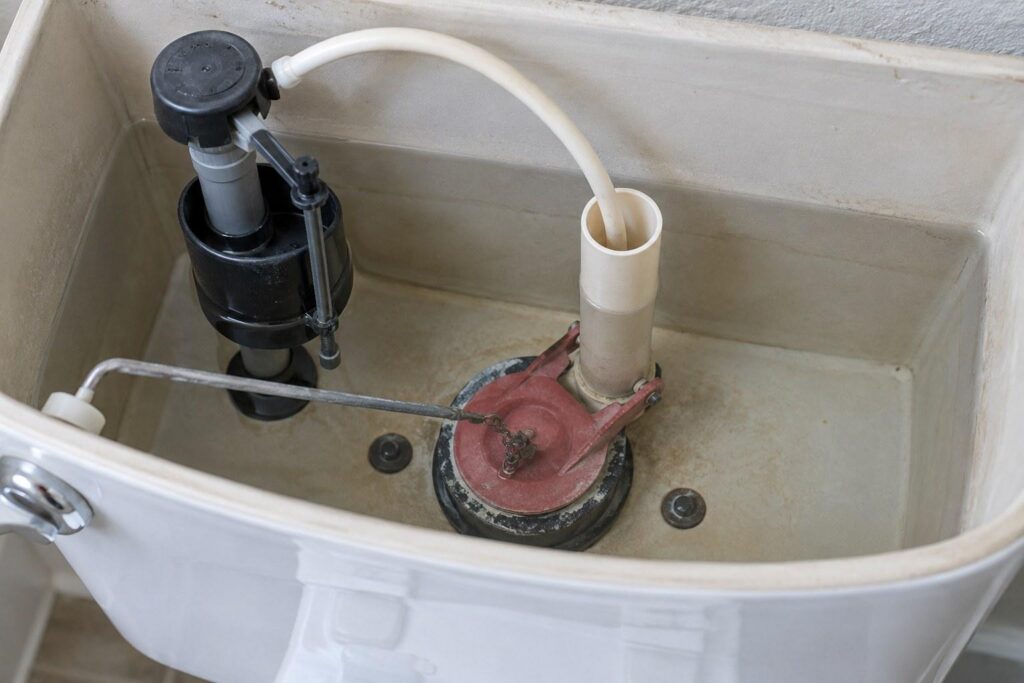
Before you start replacing parts, it helps to know what each piece in the tank actually does. Lift the lid and you will see a few key components that work together every time you flush.
The Flush Cycle in Plain Terms
When you press the handle, a lever pulls a chain that lifts the flapper off the flush valve opening at the bottom of the tank. Water rushes into the bowl, the tank empties, and the flapper drops back onto its seat. As the water level falls, the float drops and opens the fill valve, which refills the tank. Once the float rises to the set level, the fill valve shuts off and the cycle ends.
Two Kinds of Running Toilets
Most running toilets fall into one of two patterns, and knowing which one you have speeds up the repair:
- Constant running: The tank never stops filling. This usually points to a fill valve that will not shut off or a water level set above the top of the overflow tube.
- Phantom flushing: The toilet refills on its own for a few seconds every so often, even when no one has used it. This almost always means water is leaking past the flapper into the bowl.
How Hard Water Speeds Up Wear
According to the Las Vegas Valley Water District, local water averages about 280 parts per million of hardness, roughly 16 grains per gallon. The U.S. Geological Survey (USGS) classifies anything above 180 milligrams per liter as very hard. Inside a toilet tank, those minerals settle on the flapper seat, coat the rubber, and collect in the small ports of the fill valve.
Over time, a flapper that was soft and flexible becomes stiff or warped, and a crusty ring on the flush valve seat keeps it from sealing. Fill valves can stick open or shut off slowly when scale builds up inside them. If you notice white or tan crust in your tank, our article on how Las Vegas water quality affects your plumbing system explains the bigger picture.
How to Tell If Your Toilet Is Leaking Silently
Not every leak is loud. Some toilets lose a small amount of water past the flapper all day long without any obvious sound. These quick checks help you confirm a leak and narrow down where it starts.
Try the EPA Dye Test
The EPA WaterSense program recommends adding a few drops of food coloring or a dye tablet to the tank, then waiting about 10 minutes without flushing. If color shows up in the bowl, water is leaking past the flapper or the flush valve seal. Flush afterward so the dye does not stain the tank or bowl. You can find the full checklist on the EPA WaterSense Fix a Leak Week page.
Check the Water Level and Overflow Tube
Take the lid off and look at the overflow tube, the open pipe standing in the middle of the tank. If water is pouring over its top edge, the water level is set too high or the fill valve is not shutting off. Most manufacturers mark a fill line on the inside of the tank or on the overflow tube itself, and the water should stop at or just below that mark.
Listen and Watch for Clues
A faint trickle in the bowl, ripples on the water surface, or a fill valve that hisses for a second or two at random times are all signs of a slow leak.
If the dye test comes back clear but your water bill keeps climbing, the leak may be somewhere else. Our leak detection services use specialized equipment to find hidden leaks behind walls and under slabs.
Want a licensed plumber to take a look instead? Give our team a call and we will help you figure out what is going on.
6 Fixes When Your Toilet Keeps Running
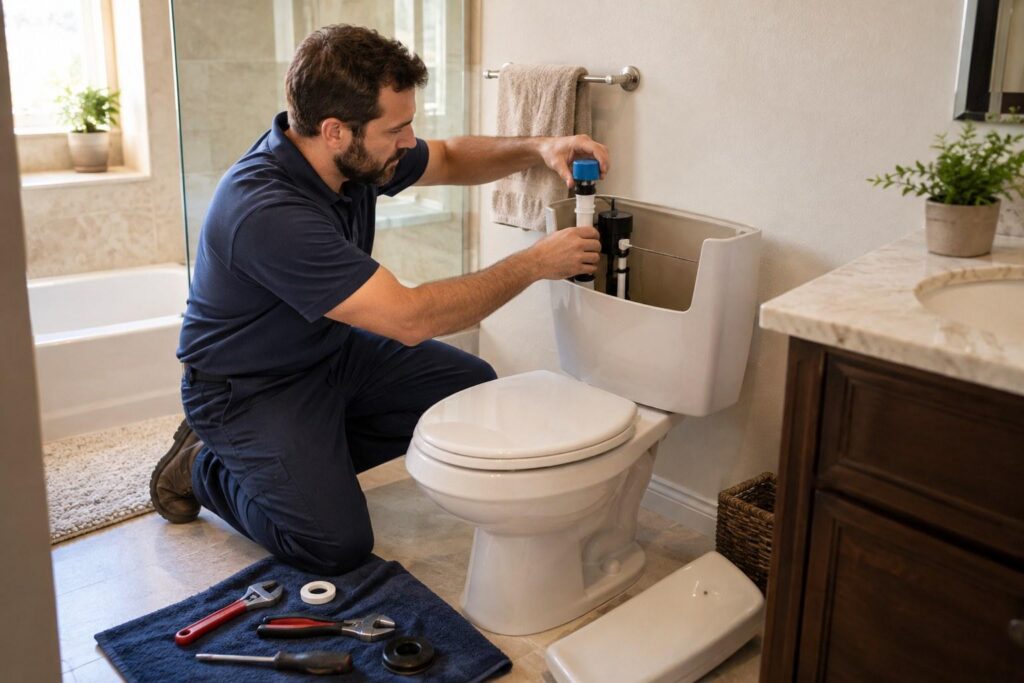
Once you know whether the problem is constant running or phantom flushing, you can work through the most likely causes in order. Before you start, turn off the water at the shutoff valve on the wall behind the toilet, then flush to empty the tank. The LVVWD also recommends following the manufacturer’s instructions for any replacement part.
Fix 1: Adjust or Replace the Flapper Chain
A chain that is too short holds the flapper slightly open, so water constantly trickles into the bowl. A chain that is too long can get tangled under the flapper and stop it from sealing. Aim for a little slack when the flapper is closed; roughly half an inch is a common rule of thumb. If the chain is corroded or kinked, a replacement is inexpensive and clips on in seconds.
Fix 2: Clean the Flapper and Flush Valve Seat
In hard water homes, a mineral ring often forms on the seat where the flapper rests. With the tank drained, wipe the seat and the underside of the flapper with a soft cloth or a non-scratch pad. A little white vinegar can help loosen light scale. Avoid steel wool or abrasive tools that could scratch the seat, because even a small groove can let water seep through.
Fix 3: Replace a Worn or Warped Flapper
If the flapper feels stiff, cracked, slimy or misshapen, cleaning will not save it. Flappers are rubber parts, and hard water, along with chlorine in treated water and some in-tank cleaning tablets, can break them down over time. Flappers come in different sizes, so note your toilet brand and model first. Unhook the old flapper from the ears on the overflow tube, attach the new one, connect the chain and test.
Fix 4: Adjust the Float
If water flows into the overflow tube, the float is probably set too high. Older toilets use a float ball on a metal arm that you can bend slightly downward. Most newer toilets use a float cup that slides up and down the fill valve shaft, usually adjusted with a clip or a screw on top. Lower the float until the water stops at the fill line, which is usually about an inch below the top of the overflow tube.
Fix 5: Clean or Replace the Fill Valve
When the float is set correctly but the fill valve still hisses or will not shut off, scale may be clogging its internal seal. Many fill valves have a removable cap that lets you flush out debris. If cleaning does not help, or the valve is cracked or several years old, replacing the whole fill valve is often the better choice. Universal fill valves fit most toilets, but they require removing the supply line and the locknut under the tank, so take your time and check for leaks afterward.
Fix 6: Check the Refill Tube and Handle
The small refill tube should clip onto the overflow tube and aim into it, not reach down below the water line. If the tube is pushed too far into the overflow, it can siphon water out of the tank and keep the fill valve running. Also check the flush handle. A sticky or overly tight handle can keep the flapper from dropping fully. Tightening a loose handle nut or replacing a corroded lever often solves the problem.
| Symptom | Most Likely Cause | DIY Fix | When to Call a Plumber |
|---|---|---|---|
| Water trickles into the bowl constantly | Worn flapper or short chain | Adjust chain, clean seat or replace flapper | New flapper still leaks or the seat is cracked |
| Toilet refills on its own every few minutes | Slow leak past the flapper | Dye test, then replace flapper | Leak persists after replacing the flapper |
| Water spills into the overflow tube | Float set too high | Lower the float to the fill line | Fill valve will not shut off at any setting |
| Fill valve hisses or never stops | Scale inside the fill valve | Flush or replace the fill valve | Shutoff valve or supply line is corroded |
| Handle sticks after flushing | Loose nut or corroded lever | Tighten or replace the handle | Tank cracked or mounting hardware damaged |
Why a Running Toilet Matters in the Las Vegas Valley
When a toilet keeps running only now and then, it is easy to ignore, but the water adds up quickly. A constantly running toilet can waste a surprising amount of water every day. For a Southern Nevada household, that can mean a noticeably higher water bill and wasted supply from a reservoir that serves the entire region.
Water Conservation Is a Shared Priority
Southern Nevada receives most of its water from the Colorado River through Lake Mead, and the LVVWD runs ongoing conservation programs to stretch that supply. Fixing indoor leaks is one of the easiest ways to do your part. If you want to learn more about local rules, our article on complying with Nevada water conservation regulations covers the basics.
Preventing a Running Toilet in Hard Water Homes
A few simple habits can keep your toilet parts working longer and cut down on surprise repairs. These steps are especially helpful in neighborhoods like Summerlin, Henderson and Spring Valley, where every home draws from the same hard water supply.
Inspect the Tank a Few Times a Year
Every few months, lift the lid and look for crust on the flapper seat, a stiff or discolored flapper, or a fill valve that seems slow to shut off.
Consider Whole-Home Water Treatment
If you are replacing flappers and fill valves more often than you would like, the root cause may be your water. A water softener installation reduces the minerals that cause scale in toilets, faucets, water heaters and appliances. Our technicians can test your water and talk through options with honest, upfront pricing.
Schedule Routine Plumbing Checkups
A periodic inspection lets a licensed plumber spot worn supply lines, corroded shutoff valves and loose toilet bases before they turn into leaks. Our maintenance plan makes it easy to keep your home’s plumbing and HVAC equipment on a regular schedule.
When to Call a Licensed Plumber
Signs the Problem Goes Beyond the Tank
- Water pools around the base of the toilet or the toilet rocks when you sit on it.
- The tank or bowl has a visible crack, even a hairline one.
- The shutoff valve will not turn, drips when you turn it, or is heavily corroded.
- The supply line is bulging, cracked or leaking at a connection.
- You have replaced the flapper and fill valve and the toilet still runs.
Repair or Replace the Toilet?
A running toilet rarely means you need a new one. Internal parts are designed to be replaced. That said, if your toilet is decades old, uses far more water per flush than modern models, or has cracks in the porcelain, an upgrade may make more sense. Our article on selecting the right plumbing fixtures for your home can help you compare options. Pricing varies by fixture and installation needs, so ask for a written, upfront estimate before you decide.
What to Expect From Our Team
When you call Bumble Breeze Plumbing, Heating & Air, our licensed and insured technicians inspect the entire toilet, including the tank parts, supply line, shutoff valve and wax seal area, and then explain what they found. You get upfront, honest pricing before any work starts, and every job is backed by our 100% satisfaction guarantee. Learn more about our plumbing repair services, or call (702) 703-1346 to talk with our team.
Ready to stop the running water for good? Book a visit and let our plumbers handle it.
Frequently Asked Questions
Why does my toilet run for a few seconds by itself?
That short refill is usually called a phantom flush. Water slowly leaks past the flapper into the bowl, the tank level drops, and the fill valve kicks on to top it off. A worn or warped flapper, a mineral ring on the flush valve seat, or a chain caught under the flapper are the most likely causes. A dye test will confirm it.
How much water can a running toilet waste?
A running toilet can quietly waste a large amount of water each day. Even a slow, silent leak past the flapper adds up over a month. In Southern Nevada, where our water comes mostly from Lake Mead, fixing a running toilet is one of the simplest ways to cut waste and keep your water bill from creeping up.
Can hard water make my toilet keep running?
Yes. Las Vegas water is very hard, and the minerals settle on the flapper seat and inside the fill valve. Scale can keep the flapper from sealing tightly or cause the fill valve to stick open. Cleaning the seat gently and replacing worn rubber parts usually solves it, and a water softener can slow the buildup over time.
How often should I replace my toilet flapper?
There is no fixed schedule, because wear depends on water quality, chlorine levels and the cleaning products you use. In hard water areas like the Las Vegas Valley, flappers may wear out sooner. Check yours a few times a year and replace it if it feels stiff, cracked, slimy or warped, or if a dye test shows color in the bowl.
Is it safe to use vinegar in my toilet tank?
A small amount of white vinegar on a cloth is generally fine for wiping mineral deposits off the flush valve seat and fill valve cap. Drain the tank first, scrub gently, then rinse and refill. Avoid soaking rubber parts for long periods, and skip harsh chemical tablets, which can wear out flappers and seals faster than plain cleaning.
When should I call a plumber for a running toilet?
Call a licensed plumber if you have replaced the flapper and fill valve and the toilet still runs, if water is leaking at the base or supply line, or if the shutoff valve is stuck or corroded. Cracks in the tank or bowl also need professional attention. Our team at Bumble Breeze Plumbing, Heating & Air can diagnose the issue and give you an upfront estimate.
A toilet keeps running for a reason, and in most Las Vegas homes that reason is a worn flapper, a misadjusted chain or float, or a fill valve choked with hard water scale. Start with the dye test and the simple fixes above, and call a professional when the problem goes beyond the tank. For fast, friendly help, call Bumble Breeze Plumbing, Heating & Air at (702) 703-1346. We serve Las Vegas, Henderson, North Las Vegas, Summerlin, Spring Valley, Enterprise and nearby communities from our office at 4755 W University Ave, Las Vegas, NV 89103.
Ready to Get Started with Bumble Breeze Plumbing, Heating & Air?
Whether you need a new flapper, a fill valve replacement or a full plumbing inspection, our licensed technicians are ready to help. Our customer service reps are available 24/7, and financing is available with approved credit. Call (702) 703-1346 to schedule your toilet repair. You can also visit Bumble Breeze Plumbing, Heating & Air at 4755 W University Ave, Las Vegas, NV 89103.