
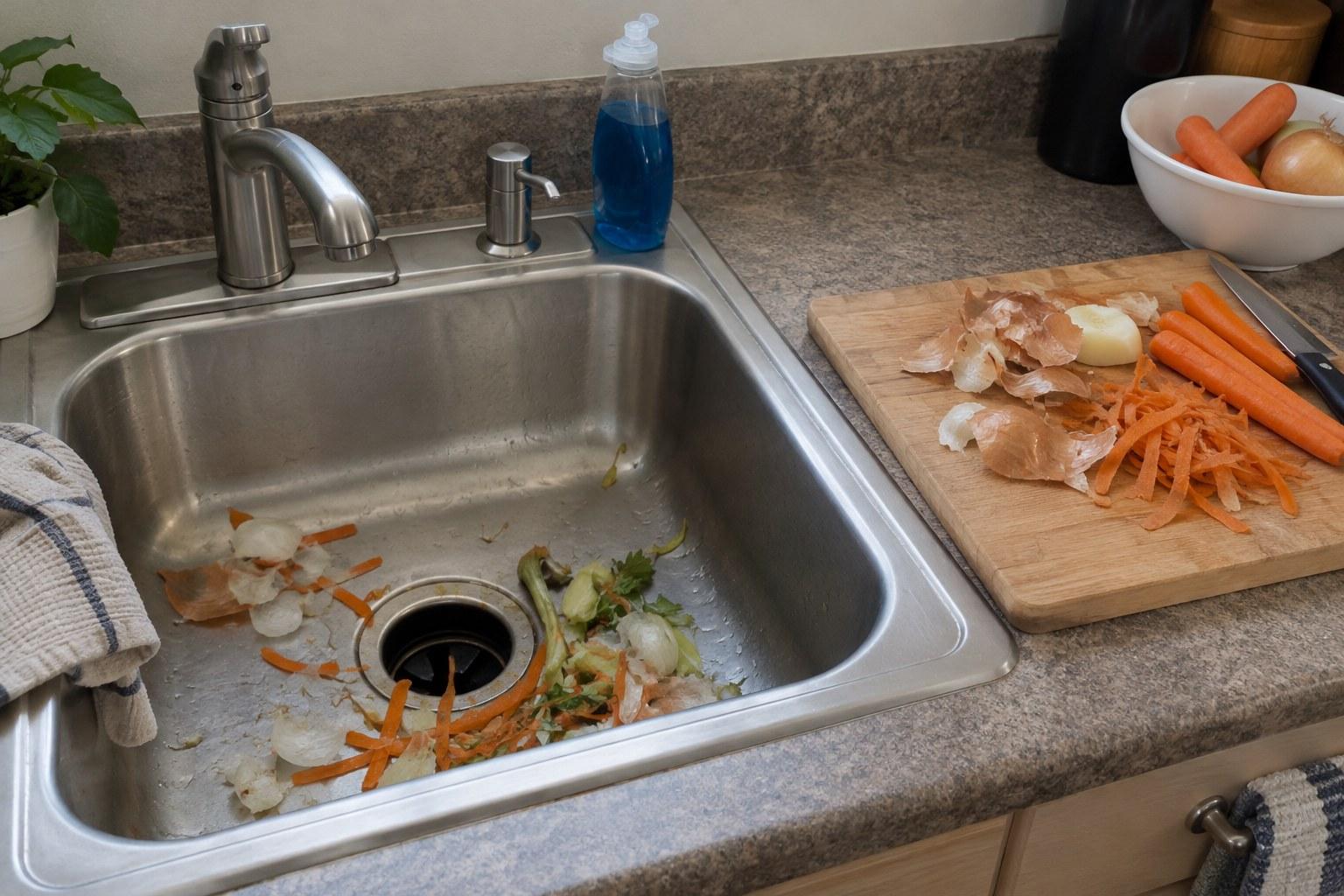
A garbage disposal not working is the last thing you want to discover the week before Thanksgiving, with a turkey thawing in the fridge and a sink full of prep dishes. The good news is that many disposal problems come down to a tripped reset button, a jammed flywheel or a simple power issue you can check safely in a few minutes. At Bumble Breeze Plumbing, Heating & Air, our licensed technicians help Las Vegas Valley homeowners keep their kitchen plumbing ready for the busiest cooking season of the year. Below, you will find seven safe fixes, the warning signs that mean it is time to stop and call a pro, and the holiday foods that cause the most trouble.
If your disposal is humming, leaking or completely silent and you would rather have a professional take a look, our team is ready to help.
Key Takeaways
- Always turn the disposal off at the wall switch, and unplug it or switch off its circuit breaker, before you look inside or try to free a jam.
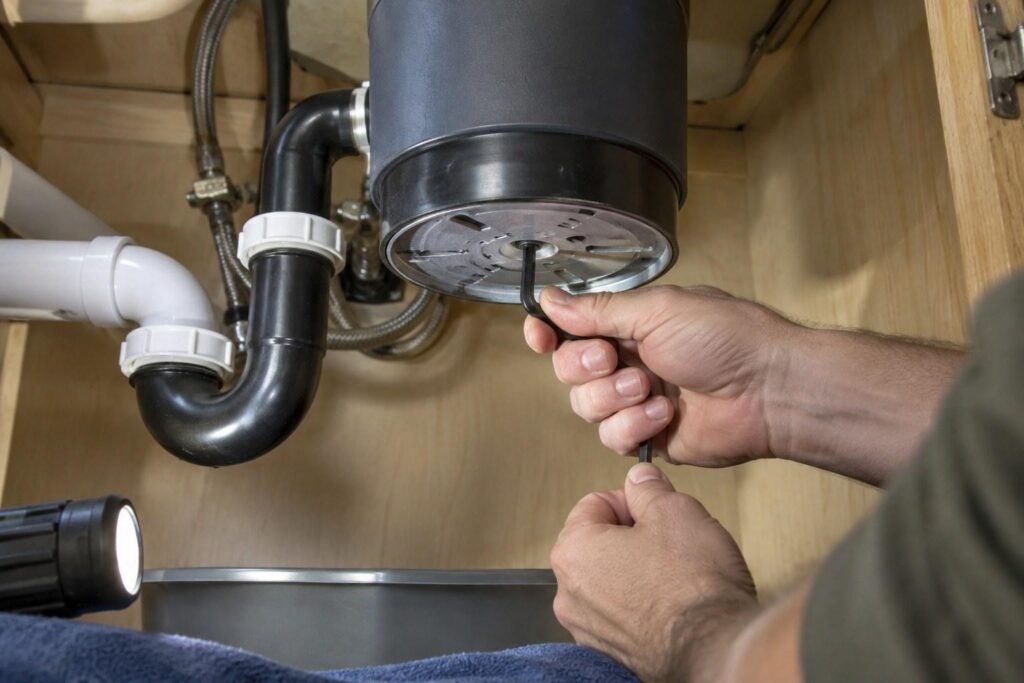
- Never put your hand into a garbage disposal. Use tongs or pliers to remove objects and a hex wrench under the unit to turn the motor by hand.
- A silent disposal often just needs the red reset button pressed after the motor cools, while a humming disposal usually means the flywheel is jammed.
- Grease, fats, potato peels, celery, onion skins, bones, eggshells and coffee grounds are the holiday foods most likely to jam a disposal or clog the drain line below it.
- Hard Las Vegas water can leave mineral scale in drain lines and fittings, which makes food buildup and slow kitchen drains more likely over time.
- Leaks from the bottom of the unit, repeated breaker trips, a burning smell or standing water that will not drain are signs to call a licensed plumber.
A disposal is a simple machine. A motor spins a flywheel with two swiveling impellers that push food against a stationary grind ring, and running water carries the small particles down into your drain line. When something stops that spin, overheats the motor or blocks the drain below, the whole system grinds to a halt.
Why Is My Garbage Disposal Not Working?
Before you grab any tools, it helps to match the symptom to the most likely cause. The sound your disposal makes, or does not make, when you flip the switch tells you a lot about what is going on inside.
It Makes No Sound at All
A completely silent disposal usually has a power problem. The unit’s built-in overload protector may have tripped, the circuit breaker may have flipped, or the wall switch or outlet under the sink may have failed. If your disposal is plugged into an outlet controlled by a switch, a loose plug is also worth checking.
It Hums but Will Not Spin
A humming sound means power is reaching the motor, but the flywheel cannot turn. In most cases a hard object such as a fruit pit, a small bone, a bottle cap or a piece of silverware has wedged between an impeller and the grind ring. Do not keep the switch on while it hums, because a stalled motor heats up quickly and will trip the overload protector.
It Runs but the Sink Will Not Drain
If the disposal spins normally but water backs up into the sink, the problem is usually below the unit. Food waste, grease and starchy paste can pack the discharge tube, the P-trap or the branch drain line in the wall.
It Leaks or Smells
Water dripping from the unit points to a loose sink flange, a worn gasket, a loose discharge or dishwasher connection, or a crack in the disposal body itself. Bad odors are usually caused by food residue trapped under the splash guard or around the grind ring.
| Symptom | Most Likely Cause | Safe First Step |
|---|---|---|
| Silent when switched on | Tripped reset button or breaker | Let the motor cool, press the reset button, check the breaker |
| Humming, no grinding | Jammed flywheel | Power off, then turn the motor with a hex wrench from below |
| Spins but sink backs up | Clog in the trap or drain line | Stop running food and call for drain help if water stays |
| Water under the sink | Loose fitting, worn gasket or cracked housing | Power off, dry the area and find where the drip starts |
| Bad smell | Food residue on the splash guard or grind ring | Clean the splash guard with a brush and dish soap |
| Trips the reset button repeatedly | Recurring jam or a failing motor | Schedule a professional inspection |
Safety First Before You Touch Your Disposal
Every fix below starts with the same rule. Turn the disposal off at the wall switch, then remove power completely by unplugging the unit under the sink or switching off its circuit breaker. A disposal can start unexpectedly if the switch is bumped or a jam suddenly frees itself, so a switch alone is not enough protection.
Never put your hand into the disposal chamber, even with the power off. The impellers and grind ring are not razor sharp, but trapped glass, metal and bone fragments can be. Use a flashlight to look inside and long-handled tongs or needle-nose pliers to pull out anything you can see.
A few more safety notes are worth keeping in mind:
- Do not pour chemical drain cleaners into a disposal. They can damage seals and metal parts and create a dangerous splash hazard if a plumber later needs to open the line. Learn more about the problem with chemical drain cleaner.
- Do not open the disposal’s electrical cover plate or rewire the switch or outlet yourself. Electrical work under a wet sink belongs with a professional.
- If the breaker trips again right after you reset it, leave it off and call for help.
7 Fixes to Try When Your Disposal Stops Working
These fixes are listed from simplest to most involved.
1. Check the Switch, Plug and Circuit Breaker
Start with the basics. Make sure the disposal is firmly plugged into its outlet under the sink, if it has one, and that the wall switch works. Then check your electrical panel for a tripped breaker labeled for the kitchen or disposal and reset it once by switching it fully off and back on.
2. Press the Red Reset Button
Most disposals have a small red reset button on the bottom of the unit. When the motor overheats or strains against a jam, an overload protector shuts it off and the button pops out. Turn the switch off, give the motor a few minutes to cool, then press the button firmly until it clicks and stays in. Restore power, run cold water and try the switch again. If the button pops out again right away, there is likely a jam or a deeper problem.
3. Free a Jam With the Hex Wrench From Below
If the disposal hums but will not spin, the flywheel is probably stuck. With the switch off and the power disconnected, find the hex socket in the center of the bottom of the unit. Many models use a 1/4-inch hex key, and manufacturers like InSinkErator include a self-service wrench for this purpose. Insert the wrench and work it back and forth until it turns a full rotation freely. This breaks the jam loose without anyone reaching into the chamber.
4. Remove the Obstruction With Tongs
Once the flywheel moves freely, shine a flashlight into the disposal and look for whatever caused the jam. Fruit pits, small bones, bottle caps, twist ties and stray silverware are common culprits after a big meal. Pull the object out with tongs or pliers, never your fingers. Then reconnect power, press the reset button if needed, and run cold water before switching the disposal back on.
5. Clear a Slow Drain Without Chemicals
If the disposal runs but water drains slowly, run cold water for a minute while the unit is on to flush loose debris. If water still sits in the sink, turn the disposal off and use a sink plunger, covering the other basin’s drain with a wet cloth if you have a double sink. Avoid chemical cleaners. If plunging does not clear it, the blockage may be in the trap or the branch line in the wall, which is a job for professional drain clearing services.
6. Tighten Loose Connections and Find Small Leaks
With the power off, dry the area under the sink with a towel and place a dry paper towel beneath the unit. Run some water in the sink and watch for drips. A drip at the top of the disposal often means the sink flange or its mounting ring has loosened. A drip at the side may come from the discharge tube or the dishwasher hose connection, and a gentle tightening of a hose clamp or slip nut may stop it. A leak from the bottom of the housing usually means internal seals have failed, and the unit typically needs replacement.
7. Clean the Splash Guard and Grind Chamber
Odors and slow grinding often come from residue stuck under the rubber splash guard. With the power off, lift the flaps and scrub them with an old toothbrush and dish soap. Grinding a handful of ice cubes with cold water can help knock buildup off the grind ring.
Worked through these steps and still stuck before the big dinner? Our team is a phone call away.
What Not to Put Down Your Disposal This Thanksgiving
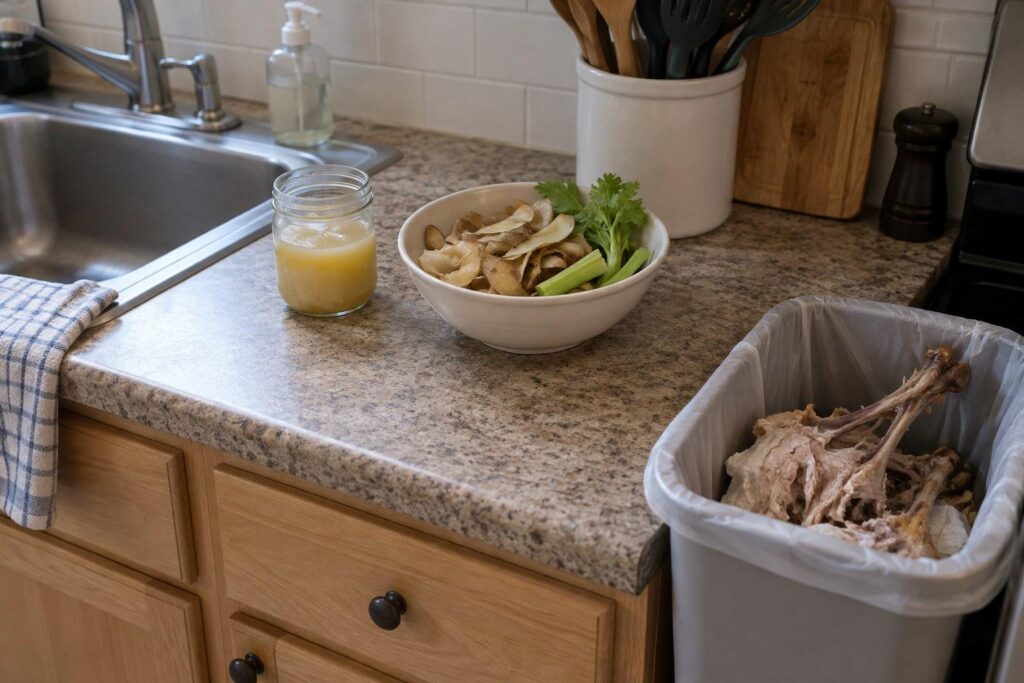
A lot of holiday disposal calls start the same way: a well-meaning guest helping with cleanup scrapes plates straight into the sink. A few minutes of prevention keeps your kitchen running through the whole weekend. Bumble Breeze Plumbing, Heating & Air has more tips in the dos and don’ts of your kitchen sink, but these are the holiday items to watch most closely.
Grease, Fats and Turkey Drippings
Hot grease looks harmless when it is liquid, but it cools and hardens inside your pipes and coats the walls of the drain line. Other food particles then stick to it and build into a stubborn clog. Pour cooled pan drippings, bacon fat and leftover gravy into a can or jar, let it solidify and put it in the trash.
Potato Peels and Starchy Foods
Potato peels are one of the biggest Thanksgiving troublemakers. Ground peels and starches turn into a thick paste that can glue the impellers in place and settle in the trap. Rice, pasta and stuffing absorb water and swell in much the same way. Put peels and leftover starches in the trash or a compost bin instead.
Fibrous Vegetables and Onion Skins
Celery, onion skins, corn husks, asparagus ends and squash strings have long fibers that wrap around the impellers instead of grinding. They can tangle the flywheel and catch other debris in the drain. Those holiday vegetable trimmings belong in the trash.
Bones, Pits and Hard Shells
Turkey bones, ham bones and fruit pits are too hard for most residential disposals. They can jam the flywheel, dull the grind ring and wear out the motor.
How Las Vegas Hard Water Affects Your Kitchen Drain
The Las Vegas Valley Water District (LVVWD) draws most of its water from Lake Mead and the Colorado River, and it reports an average hardness of about 280 parts per million, roughly 16 grains per gallon. The U.S. Geological Survey classifies water above 180 milligrams per liter as very hard, so valley homes are well past that mark.
Hard water leaves calcium and magnesium deposits on surfaces it touches regularly. Inside a kitchen drain, mineral scale gives grease and food particles a rough surface to cling to, so buildup can form faster than it would in a softer-water city. Scale can also collect around the disposal’s grind ring and on the sink flange. Bumble Breeze Plumbing, Heating & Air explains more in how to prevent drain damage in hard water areas.
Simple Habits That Help
- Run a strong stream of cold water before, during and for about 15 to 20 seconds after grinding.
- Feed scraps in gradually instead of stuffing the chamber full.
- Clean the splash guard every few weeks, more often during holiday cooking.
- Consider a whole-home water softener if scale is building up across your fixtures.
When to Stop and Call a Licensed Plumber
DIY troubleshooting has limits, and pushing past them can turn a simple repair into water damage or an electrical hazard. Call a professional if you notice any of the following:
- The reset button or breaker trips again after you have cleared the jam.
- Water leaks from the bottom of the disposal housing.
- You smell burning or see scorch marks near the unit, switch or outlet.
- Standing water will not drain after plunging, or the dishwasher starts backing up into the sink.
- The motor turns but grinds poorly or makes loud metal-on-metal noises.
- The disposal is older and you are dealing with repeated problems.
What a Professional Visit Looks Like
When our technicians arrive, they test the electrical supply to the disposal, inspect the unit for jams, worn parts and leaks, and check the trap and drain line beneath it. If a clog is deeper in the line, we can clear it and, when needed, use a camera to see what is happening inside the pipe. For heavy grease buildup in older homes, hydro jetting can scour the inside of the line clean.
If the disposal itself has failed, we explain your repair and replacement options and provide a written, upfront estimate before any work starts. Pricing varies with the model and plumbing setup. Bumble Breeze Plumbing, Heating & Air also offers full kitchen plumbing services.
Frequently Asked Questions
Why is my garbage disposal humming but not spinning?
A humming disposal is getting power, but the flywheel is stuck. Something hard, such as a pit, bone or utensil, is usually wedged between an impeller and the grind ring. Turn the switch off and disconnect power, turn the hex socket under the unit with a hex wrench until it moves freely, then remove the object with tongs and press the reset button.
Where is the reset button on a garbage disposal?
On most models, the reset button is a small red button on the bottom of the disposal, under the sink. It pops out when the motor overheats or strains against a jam. Turn the switch off, let the unit cool for a few minutes and press the button firmly until it clicks. If it keeps popping out, call a plumber to diagnose the cause.
Is it safe to put my hand in a garbage disposal?
No. Even with the switch off, a disposal can hold sharp fragments of glass, bone or metal, and a unit that is not fully disconnected can restart. Always disconnect power first, then use a flashlight to look inside and tongs or needle-nose pliers to remove objects. To free a jam, turn the motor from below with a hex wrench instead.
Can I pour grease down the disposal if I run hot water?
No. Hot water only keeps grease liquid long enough to carry it farther down the pipe, where it cools, hardens and traps other food particles. Over time, that creates a stubborn clog in the drain line. Let pan drippings and fats cool in a can or jar, then throw them away, and wipe greasy pans before washing them.
How long does a garbage disposal usually last?
Lifespan depends on the model, how often it is used and what goes into it. With good habits, a disposal can last for many years. Units that grind lots of hard or fibrous scraps, or that sit unused for long periods, tend to wear out sooner. Repeated jams, leaks from the housing and loud grinding are signs replacement may be near.
Should I call a plumber or an electrician for a dead disposal?
Start with the simple checks: the plug, the wall switch, the breaker and the reset button. If the disposal still has no power, or the breaker keeps tripping, a licensed professional should inspect it. A plumber can test the unit, check for jams and leaks, and clear any related drain clogs, while wiring problems inside the wall may need an electrician.
A garbage disposal not working does not have to derail your holiday plans. With the power safely off, most homeowners can press the reset button, free a jam with a hex wrench and keep grease, peels and bones out of the sink. When a fix goes beyond those basics, call Bumble Breeze Plumbing, Heating & Air at (702) 703-1346. Our licensed and insured plumbers serve Las Vegas, Henderson, North Las Vegas, Summerlin, Spring Valley, Green Valley and nearby communities from our office at 4755 W University Ave, Las Vegas, NV 89103. We offer upfront, honest pricing, a 100% satisfaction guarantee and financing with approved credit for larger plumbing repair projects.
Ready to Get Started with Bumble Breeze Plumbing, Heating & Air?
Do not let a jammed or leaking disposal slow down your holiday cooking. Call Bumble Breeze Plumbing, Heating & Air at (702) 703-1346 and let our licensed plumbers get your kitchen sink back in working order. Our customer service reps are available 24/7 to help you schedule. You can also visit Bumble Breeze Plumbing, Heating & Air at 4755 W University Ave, Las Vegas, NV 89103.