
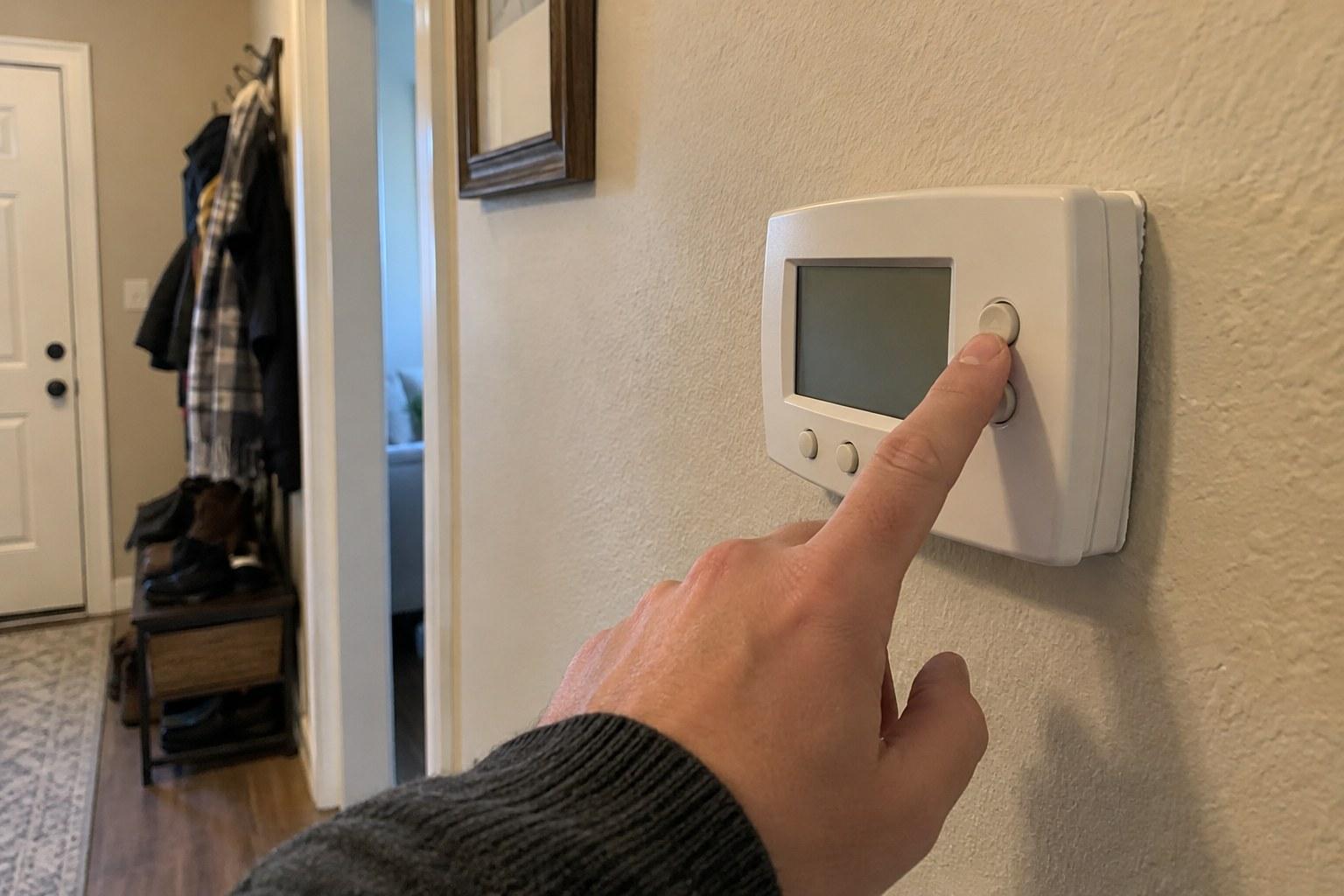
The best thermostat setting for winter in most Las Vegas homes is around 68°F while you are awake and at home, with a lower setback while you sleep or step out. That simple rule comes from U.S. Department of Energy (DOE) guidance, but the right number for your house also depends on whether you heat with a gas furnace or a heat pump, who lives with you, and how cold our desert nights get. At Bumble Breeze Plumbing, Heating & Air, our licensed technicians help valley homeowners dial in settings that keep them comfortable without wasting energy.
Want a heating system that holds your setting without a fight? Our team is ready to help.
Key Takeaways
- The DOE suggests about 68°F while you are awake and home, then turning the thermostat back 7 to 10 degrees for roughly 8 hours a day while you sleep or are away.
- The DOE estimates that setback habit can trim as much as 10% a year off heating and cooling costs.
- Heat pump owners should use small setbacks or a thermostat built for heat pumps, because a big morning recovery can trigger costly backup electric heat.
- Gas furnaces handle deeper setbacks well, since they recover quickly and do not rely on backup heat strips.
- Older adults, infants, and pets may need warmer, steadier settings, and the National Institute on Aging recommends at least 68°F to 70°F for older adults.
- On freezing nights or when you travel, keep the heat on and never below 55°F to protect pipes, as the American Red Cross advises.
Las Vegas winters are short, but they are not warm. According to National Weather Service climate records, the average low at the airport in January sits in the upper 30s, and outlying areas like Summerlin, Anthem, and Blue Diamond often run colder than the Strip on clear nights. Daytime highs can climb into the 50s or 60s with full sun, so a house can swing from comfortable to chilly in a few hours.
That big daily swing is exactly why your thermostat matters so much here. A good setting plan lets the sun do some of the work in the afternoon and keeps your heating system from overworking after dark.
What Is the Best Thermostat Setting for Winter?
For most households, the best thermostat setting for winter is 68°F during waking hours when someone is home. The DOE has recommended this number for years because it balances comfort with energy use. Every degree above it makes your system run longer, and every degree below it reduces how fast your home loses heat to the cold air outside.
Some people find 68°F a little cool at first. Before you bump the setting up, try a sweater, warm socks, or a throw blanket on the couch for a week. Your NV Energy or Southwest Gas bill will reflect the difference.
The DOE Setback Rule Explained
The second half of the DOE guidance is the setback. The agency says you can save as much as 10% a year on heating and cooling by turning your thermostat back 7 to 10 degrees for 8 hours a day. In winter, that usually means dropping to somewhere between 58°F and 61°F overnight or while the whole family is at work and school.
The savings come from simple physics. A cooler house loses heat more slowly than a warm one, so the longer your home sits at a lower temperature, the less energy leaks out through walls, windows, and the attic. The DOE also notes that recovering from a setback does not erase those savings, which is a common myth. You can read more about thermostat savings on the ENERGY STAR smart thermostat page.
A Sample Daily Schedule
Here is a simple schedule many valley households can start with. Adjust the times to match when you wake, leave, and go to bed.
| Time of Day | Gas Furnace Setting | Heat Pump Setting |
|---|---|---|
| Wake up (about 6 a.m.) | 68°F | 68°F (start warming early) |
| Away at work or school | 60°F to 62°F | 64°F to 66°F |
| Evening at home | 68°F | 68°F |
| Sleeping | 60°F to 62°F | 64°F to 66°F |
| Away on vacation | 55°F to 58°F (never below 55°F) | 55°F to 58°F (never below 55°F) |
Notice that the heat pump column uses smaller setbacks. We explain why in the next section, because it is one of the most misunderstood parts of winter thermostat advice.
Heat Pumps vs. Gas Furnaces: Why Your Setting Strategy Differs
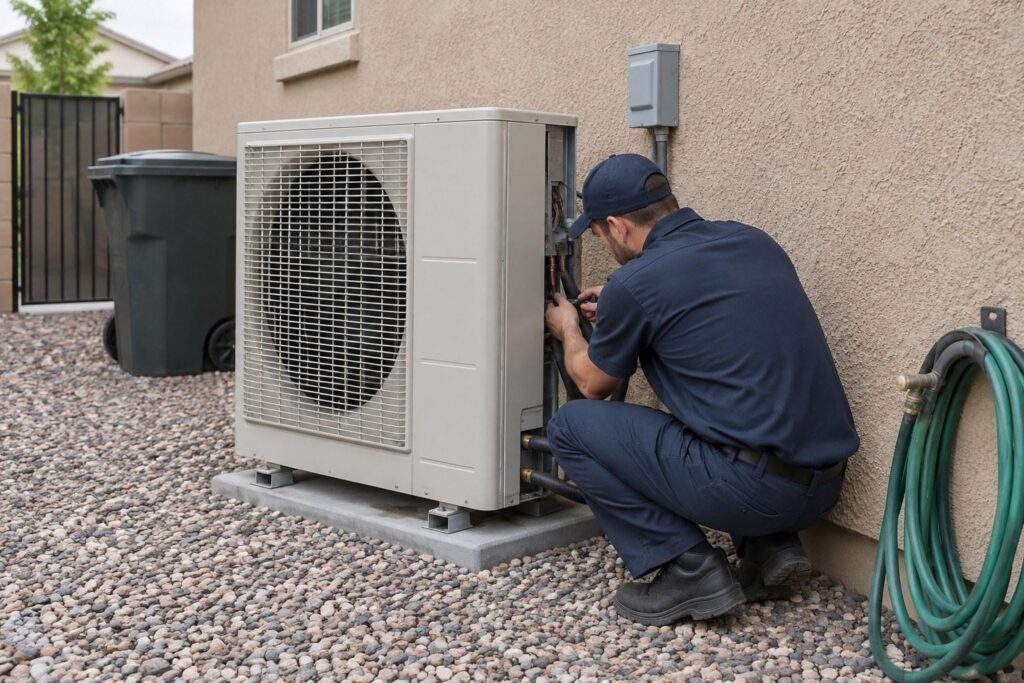
Las Vegas has a mix of both system types. Many older homes in Paradise, Spring Valley, and Green Valley heat with natural gas furnaces from Southwest Gas, while plenty of newer homes in Enterprise and parts of Henderson rely on all-electric heat pumps. The same setback can work great for one and backfire on the other.
Gas Furnaces Handle Setbacks Well
A gas furnace produces a lot of heat quickly. When your thermostat climbs from 60°F back to 68°F in the morning, the furnace simply runs a longer cycle and the house warms up. There is no backup heat to worry about, so a full 7 to 10 degree setback usually works without a penalty.
If your furnace struggles to recover from even a modest setback, takes much longer than it used to, or shuts off before the house warms up, that is worth a closer look. Short cycling, weak airflow, and odd noises are signs you may need furnace repair before the coldest weeks arrive.
Heat Pumps and Auxiliary Heat
Heat pumps move heat instead of burning fuel, which makes them very efficient in our mild climate. They heat more gently than a furnace, though. When you ask a heat pump to jump several degrees quickly, many systems call on auxiliary or emergency heat, which is usually electric resistance heat strips. Those strips work like a giant toaster and use far more electricity than the heat pump itself.
The DOE has noted that setting back a heat pump in heating mode can cause the unit to operate inefficiently and cancel out the savings. Its advice for heat pump owners is to keep a moderate, steady setting or use a programmable or smart thermostat designed for heat pumps. Those models use recovery logic that starts warming the house early and gradually, keeping backup heat off as much as possible.
Practical Rules for Heat Pump Owners
- Keep setbacks small, about 2 to 4 degrees, unless your thermostat is designed for heat pump recovery.
- Raise the temperature 1 or 2 degrees at a time instead of cranking it up all at once.
- Watch for an “AUX” or “EM HEAT” indicator on your thermostat. If it lights up often on mild days, something may be off.
- Do not leave the system in emergency heat mode unless a technician tells you to.
If your heat pump runs constantly, blows lukewarm air, or leans on auxiliary heat during ordinary winter weather, it may need heat pump repair. Curious how heat pumps hold up in our dry winters overall? Our post on how heat pumps perform in dry winter climates covers the basics.
Not sure whether your thermostat is set up correctly for your system type? Give us a call and talk it through with our team.
How Smart and Programmable Thermostats Help
A setback only saves money if it actually happens. Most people forget to turn the thermostat down at bedtime or before leaving, which is where programmable and smart thermostats earn their place on the wall.
Programmable vs. Smart Thermostats
A programmable thermostat follows a fixed schedule you set once. It is a solid, affordable upgrade if your routine is predictable. A smart thermostat adds Wi-Fi control, learning features, and sometimes occupancy sensing, so it can adjust when plans change. You can turn the heat up from your phone on the drive home from the Strip instead of walking into a cold house.
The ENERGY STAR program certifies smart thermostats that meet efficiency criteria. Its smart thermostat page explains what certified models offer and how they can help lower heating and cooling bills.
Features Worth Looking For
- Heat pump compatibility: Look for adaptive or smart recovery that limits auxiliary heat.
- Geofencing: Uses your phone’s location to start a setback when everyone leaves and warm up when someone heads home.
- Remote sensors: Help balance temperatures in two-story homes or rooms that run cold, like a bedroom over the garage.
- Usage reports: Show how many hours your system runs so you can spot problems early.
- Freeze alerts: Notify you if indoor temperatures drop too low while you are away.
We wrote about how these devices perform during our brutal cooling season in smart thermostats vs. Vegas summers. In winter, the same thermostat simply flips its priorities from cooling efficiency to heating efficiency.
Thermostat Placement Matters
Even the smartest thermostat makes poor decisions if it reads the wrong temperature. A thermostat in direct afternoon sun, near a kitchen, or next to a drafty sliding door can trick your system into running too little or too much. If one part of your house always feels colder than the thermostat says, placement could be the issue.
Adjusting Your Setting for Kids, Older Adults, and Pets
The 68°F guideline assumes healthy adults who can grab a sweater. Some households need a different plan, and comfort and safety should come before energy savings.
Older Adults
Older adults lose body heat faster and may not notice they are getting cold. The National Institute on Aging recommends setting the thermostat to at least 68°F to 70°F, and it warns that even mildly cool homes in the 60°F to 65°F range can lead to hypothermia in older adults. If a parent or grandparent lives with you, skip deep setbacks in the rooms where they spend time.
Babies and Young Children
Infants cannot regulate body temperature as well as adults, and the Centers for Disease Control and Prevention (CDC) lists babies sleeping in cold bedrooms among groups at risk of hypothermia. Keep the nursery at a steady, comfortable temperature and dress the baby in light layers rather than heavy blankets. Ask your pediatrician if you are unsure what range is right for your child.
Dogs, Cats, and Other Pets
Most healthy dogs and cats do fine in a house set in the low to mid 60s, especially with a bed off the tile floor. Short-haired breeds, very young or senior animals, and pets with health conditions may need it warmer. Reptiles, birds, and fish often need much more precise temperatures, so follow your veterinarian’s guidance and use a dedicated heat source for their habitat instead of relying on the whole-house setting.
Dry Air and Comfort
Desert air gets very dry in winter, and dry air feels cooler on your skin. If 68°F feels chilly, low humidity may be part of the reason. Adding moisture can make a lower setting feel warmer. Learn more in our post on when to consider a humidifier for winter.
Protecting Your Pipes on Cold Las Vegas Nights

Hard freezes are not common in the valley, but they do happen, especially in higher neighborhoods and during clear, still nights in December and January. Pipes in exterior walls, garages, attics, and on outdoor hose bibs are the most exposed.
Keep the Heat On
The American Red Cross recommends keeping your thermostat at the same temperature day and night during a cold snap, and never setting it lower than 55°F if you will be away during cold weather. A slightly higher bill is far better than a burst pipe soaking your drywall and flooring.
Other Simple Freeze Precautions
- Open cabinet doors under sinks on exterior walls so warm room air reaches the pipes.
- Disconnect garden hoses and cover outdoor faucets before a freeze warning.
- Let a faucet drip slightly on the coldest nights if pipes run through an unheated space.
- Know where your main water shutoff is in case a pipe does break.
For a deeper look at freeze protection, see our homeowner’s guide to preventing frozen plumbing. If you are leaving for the holidays, set your thermostat in the mid to upper 50s rather than turning the system off, and consider a smart thermostat with freeze alerts.
Common Winter Thermostat Mistakes to Avoid
Small habits can quietly push your heating bill up or leave your home uncomfortable. These are the mistakes our technicians run into most often when homeowners call about winter comfort.
Cranking the Thermostat Way Up
Setting the thermostat to 80°F does not heat your home faster. A furnace or heat pump delivers heat at a steady rate no matter how high the target is. Setting it high just makes the system overshoot and waste energy, and on a heat pump it can switch on costly auxiliary heat.
Leaving the Fan on “On”
In winter, the “On” fan setting moves air through the ducts even when the burner or compressor is off. That air can feel cool coming out of the vents, and it adds electricity use. For most homes, “Auto” is the better choice.
Closing Too Many Vents
Closing vents in unused rooms seems like a smart way to save, but most central systems are designed for a balanced airflow. Shutting off too many registers can increase duct pressure, reduce efficiency, and make some rooms even less comfortable.
Ignoring Warning Signs
If your system cannot reach 68°F on a typical winter day, runs nonstop, or cycles on and off every few minutes, the setting is not the problem. That points to a system issue that calls for professional heating repair. Also make sure your home has working carbon monoxide alarms, especially if you heat with gas.
Forgetting About the Sun
South- and west-facing windows can warm a room several degrees on a sunny Las Vegas afternoon. Open those blinds during the day and close them at sunset to hold the heat in.
If your heating system cannot keep up with a reasonable thermostat setting, let our licensed technicians find out why and give you an upfront, written estimate before any work begins.
Frequently Asked Questions
Is 68 degrees too cold for a house in winter?
For most healthy adults, 68°F is comfortable with light layers, and it is the temperature the DOE recommends while you are awake and home. It can feel cool in very dry desert air. Homes with older adults, infants, or people with health conditions may need a warmer, steadier setting, so put their comfort and safety ahead of energy savings.
Should I turn my heat off when I leave the house?
No, it is better to lower the setting than to turn the system off. A setback of 7 to 10 degrees on a gas furnace, or a smaller setback on a heat pump, saves energy while keeping the house from getting too cold. During freezing weather, keep the heat at 55°F or higher to help protect your pipes from freezing.
Does it cost more to reheat a cold house than to keep it warm?
For gas furnaces, no. The DOE explains that a cooler house loses heat more slowly, so a setback saves more energy than the recovery uses. Heat pumps are the exception, since a big recovery can trigger electric backup heat. Heat pump owners should use small setbacks or a thermostat built with heat pump recovery features.
What temperature should I set my thermostat when I go on vacation?
In winter, set it between about 55°F and 58°F while you are away. The American Red Cross advises never going below 55°F during cold weather to reduce the risk of frozen pipes. If you have pets staying home with a sitter, set it warmer. A smart thermostat lets you check temperatures and warm the house before you return.
Why does my heat pump say aux heat on my thermostat?
Aux heat means your heat pump is getting help from backup electric heat strips. That is normal briefly during defrost cycles or a large temperature jump. If it appears often on mild Las Vegas days, the system may be low on refrigerant, have a dirty coil, or have a thermostat setup problem. Our technicians can diagnose the cause.
Is a smart thermostat worth it for a Las Vegas home?
For many homes, yes. Las Vegas summers make cooling efficiency important, and winter setbacks add more savings in the heating season. A smart thermostat handles both automatically and can be controlled from your phone. ENERGY STAR certifies models that meet efficiency criteria. Heat pump owners should choose a model that supports heat pump recovery to limit auxiliary heat.
Finding the best thermostat setting for winter comes down to starting at 68°F, using setbacks that fit your system, and adjusting for the people and pets in your home. If your heating system cannot hold a reasonable temperature, call Bumble Breeze Plumbing, Heating & Air at (702) 703-1346. We serve homeowners in Las Vegas, Henderson, North Las Vegas, Summerlin, Spring Valley, and Enterprise from our office at 4755 W University Ave, Las Vegas, NV 89103.
Ready to Get Started with Bumble Breeze Plumbing, Heating & Air?
Our licensed and insured team offers upfront, honest pricing and a 100% satisfaction guarantee, with financing available with approved credit. Call (702) 703-1346 to talk with our 24/7 customer service reps about your heating system. You can also visit Bumble Breeze Plumbing, Heating & Air at 4755 W University Ave, Las Vegas, NV 89103.