
If you’re wondering why your water pressure is low, you’re not alone. Las Vegas homes deal with hard water, aging pipes, and desert heat that speeds up mineral buildup inside your plumbing. These conditions make low water pressure one of the most common calls our team gets at Bumble Breeze Plumbing, Heating & Air. Our certified plumbers serve Las Vegas and Henderson with upfront, honest pricing and same-day diagnostics, so you get a real answer fast.
Weak water pressure slowing you down? Call us at (702) 674-9775 and our certified plumbers will find the cause before any work begins.
Key Takeaways
- Mineral buildup from Las Vegas hard water is one of the most common causes of low water pressure in local homes.
- A faulty pressure-reducing valve can drop your home’s water pressure without any visible warning signs.
- If you ask yourself why your water pressure is low, the answer often comes down to one of six fixable problems.
- A certified plumber can diagnose the exact cause using state-of-the-art diagnostic equipment, saving you time and guesswork.
- Some pressure problems signal a hidden leak, which can waste thousands of gallons if left untreated.
Your Shower Is a Trickle. Your Pot Takes Forever to Fill. Here’s Why.
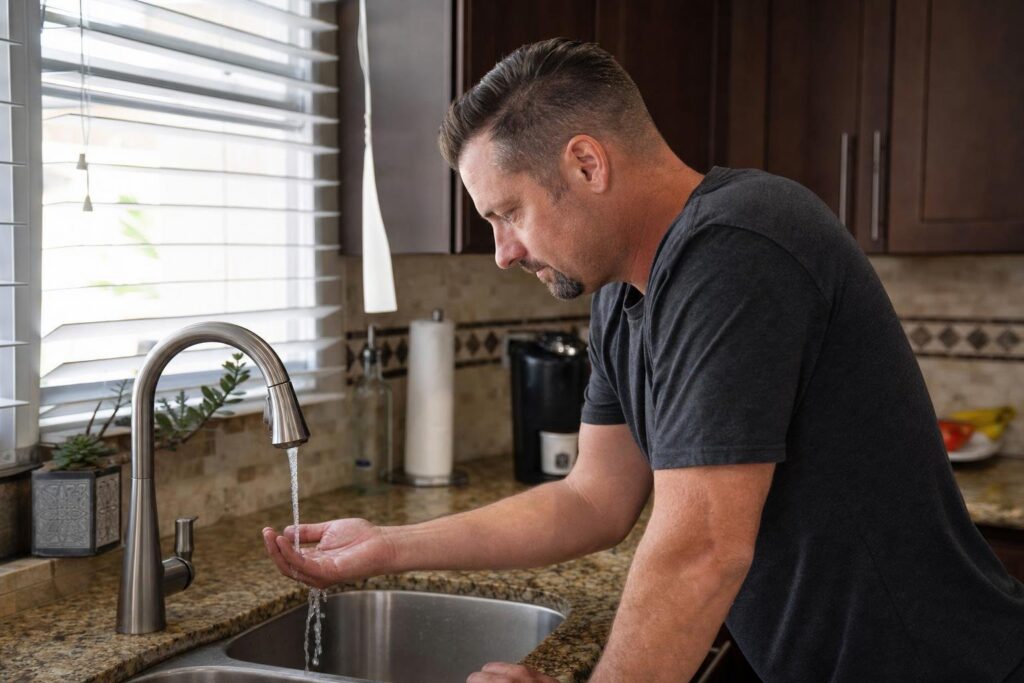
You turn on the shower and get a weak, unsatisfying dribble. You fill a pot at the kitchen sink and watch it crawl. If you are asking why your water pressure is low, you are not alone. It is one of the most common plumbing complaints we hear from homeowners in Henderson, North Las Vegas, Summerlin, and across Clark County.
This article covers the 6 most common causes of low water pressure in house situations here in the valley, in plain English. No confusing jargon. Just the real reasons your home stops delivering the water pressure you expect, and what to do about each one.
Our team has earned 4,120 reviews averaging 4.7 stars helping homeowners solve exactly these kinds of water pressure problems across Las Vegas and the surrounding area.
Cause 1: Mineral Buildup Inside Your Pipes
How Hard Water Creates Deposits Over Time
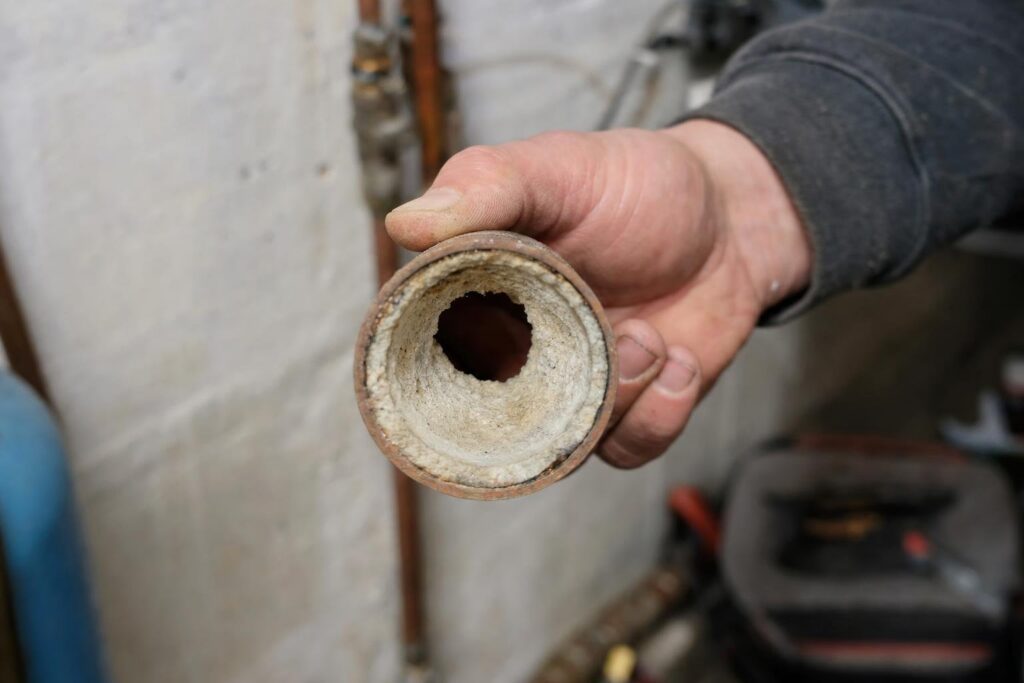
Las Vegas tap water comes primarily from Lake Mead, and it carries one of the highest mineral loads of any municipal supply in the country. Calcium and magnesium carbonate dissolve into that water, and every time it flows through your pipes, a thin layer of scale sticks to the interior walls. Think of it like plaque narrowing an artery. Over years, the opening inside the pipe shrinks, and so does your water pressure.
Galvanized steel and older copper pipes are hit hardest. Homes in Summerlin and the Spring Valley corridor built during the 1980s and 1990s construction boom are deep into this process right now. Those pipes have been collecting scales for 30 to 40 years. You can read more about what this means for your household in our guide to hard water in Las Vegas.
Warning Signs That Point to Mineral Buildup
Low water pressure in your house that affects multiple fixtures at once is the clearest signal. If only one faucet runs weak, a clogged aerator may be the problem. Soak the aerator or showerhead in white vinegar overnight. If flow improves at that fixture but overall house pressure stays low, buildup inside the supply lines is the more likely cause.
Our certified technicians use state-of-the-art diagnostic equipment to assess pipe condition before recommending any repair. You know exactly what you are dealing with before any work begins. No guesswork, no surprises.
- White or chalky residue around faucet bases
- Gradual pressure loss that has worsened over several years
- Uneven flow between fixtures on the same supply line
Cause 2: A Failing Pressure Regulator
What a Pressure Regulator Does
The Southern Nevada Water Authority sends water through municipal supply lines at anywhere from 80 to 150 psi. That is far too high for your home’s pipes and fixtures. A pressure-reducing valve (PRV) sits where the main water line enters your house and steps that pressure down to a safe range, typically 40 to 80 psi.
Most homes in Henderson and the Spring Valley area built after the mid-1980s have a PRV installed near the main shutoff. It looks like a small bell-shaped fitting. You may have never noticed it, but it does a critical job every single day.
How to Tell If Yours Has Gone Bad
PRV failure tends to hit fast. One day your shower pressure is fine; the next morning it feels like a trickle. That sudden drop is the key difference between a failing PRV and the gradual decline you get from mineral buildup in older pipes.
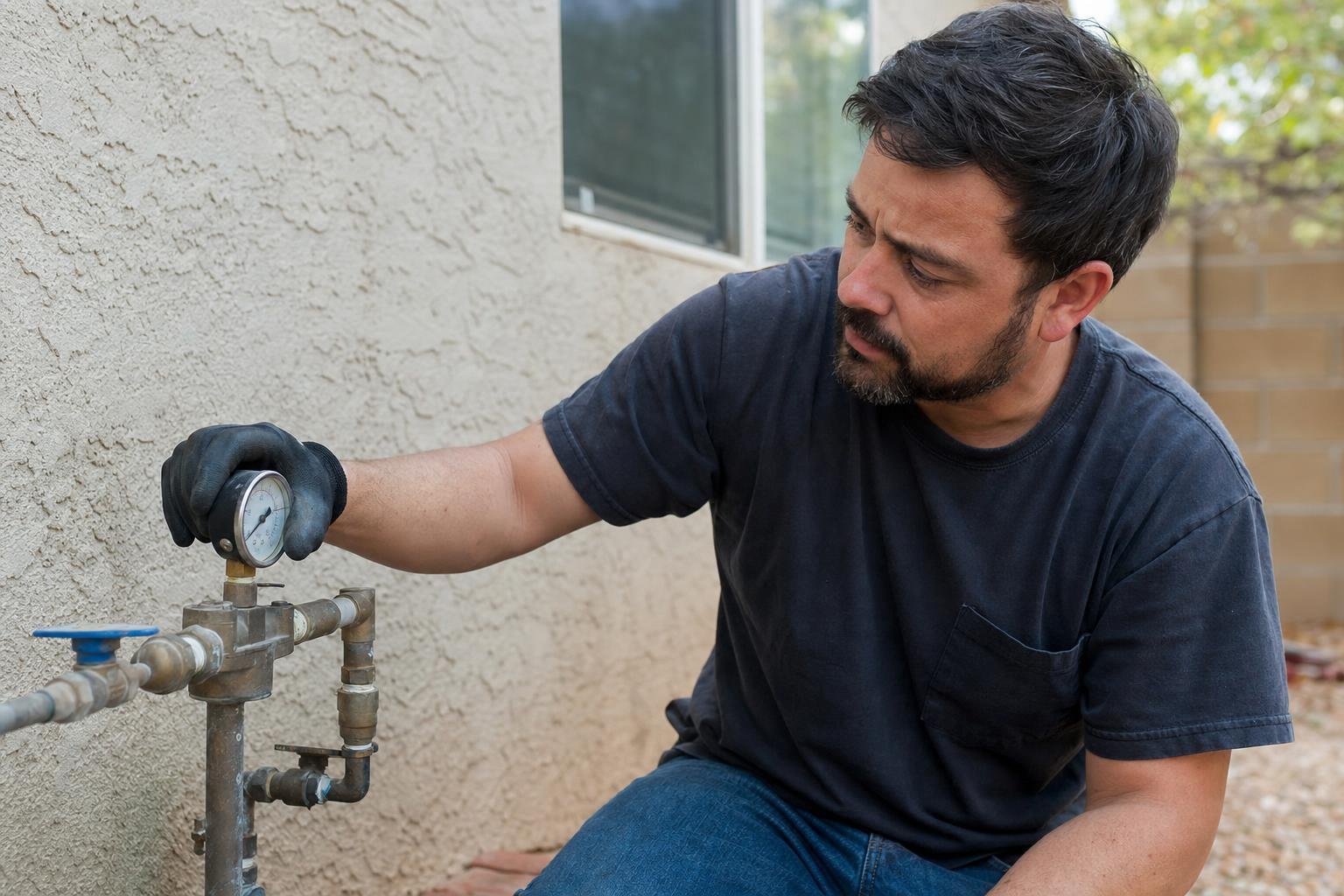
You can confirm a PRV problem yourself in about five minutes. Thread an inexpensive pressure gauge onto any outdoor hose bib. These gauges cost under $20 at any hardware store. Turn on the faucet and read the dial. A reading below 40 psi points strongly to a PRV that has stopped working correctly.
Replacing a PRV is a straightforward repair. Our certified plumbers carry the right parts for homes across Henderson, Green Valley, and the surrounding area. We give you upfront, honest pricing before any work begins, so there are no surprises on the final bill. If the PRV is the problem, we can typically have your pressure back to normal in a single visit. We are not happy until you are happy.
Cause 3: A Partially Closed Main Shutoff or Meter Valve
The Shutoff Valves That Control Your Whole House
Yes, a partially closed valve can absolutely cause low pressure throughout your entire home. This is one of the most common causes we find, and it is also one of the easiest to overlook. A valve that is only 80% open can choke supply to every faucet, shower, and appliance equally, making it feel like a serious pipe or supply problem.
Two valves control water to your whole property. The homeowner shutoff sits near your water heater or utility area inside the house. The meter shutoff lives at the street and is owned by Southern Nevada Water Authority (SNWA). If you are troubleshooting low water pressure in your house, start at the one you can reach yourself.
When to Check These Valves First
Check these valves immediately if your pressure dropped right after a plumbing repair, a home purchase, or a long vacancy. Homes in Henderson and Green Valley that sat empty over the summer are common cases we see. Inspectors and plumbers sometimes leave valves partially closed and nobody notices until the new owner moves in.
Here is how to read the valve type you have:
- Ball valve: The handle should sit parallel to the pipe for a full open position. If it is turned even slightly, your flow is restricted.
- Gate valve: These require several full counterclockwise turns to open completely. A single turn looks open but is not.
If the meter shutoff at the street appears to be the problem, call SNWA directly before touching it. That valve belongs to them. If your homeowner shutoff checks out and you still have low home water pressure, our plumbing services team can run a full diagnostic and find the real source fast.
Pressure issues in your Summerlin or Henderson home? Our certified plumbers are available seven days a week. Call us at (702) 674-9775 and we will figure out what is going on before any work begins.
Cause 4: Corroded or Leaking Supply Pipes
A leak anywhere in your supply system diverts water before it ever reaches your faucet or showerhead. The result is lower pressure at every fixture in the house, not just one. And the frustrating part is that many of these leaks are completely hidden inside walls, under floors, or beneath your slab.
How a Hidden Leak Bleeds Your Water Pressure
Pinhole leaks are small but damaging. A single pinhole leak inside a wall can waste thousands of gallons per month while your shower pressure drops and your water bill climbs. You may not see a puddle anywhere, but the water is going somewhere.
Watch for these warning signs:
- Your water meter moves when every fixture in the house is off
- Drywall looks discolored, soft, or blistered in spots
- You notice a musty or mold-like odor near a wall or floor
- A floor area feels soft or slightly spongy underfoot
Clark County’s slab-on-grade construction style makes slab leaks a known regional problem. If a pipe fails beneath the concrete, pressure drops fast and the damage spreads quietly. One customer in our service area had their home re-piped after a slab leak, and they described the work as extensive and impressive from start to finish. That is not a small job, but catching it early makes a real difference. Understanding what your plumbing really needs before a small drip becomes a slab event can save you thousands.
Older Henderson and Enterprise Homes and Galvanized Steel Pipes
Homes built before 1990 in Enterprise, Whitney, and parts of Henderson were often plumbed with galvanized steel supply lines. The galvanized pipe is steel coated in zinc. Over time, that zinc layer breaks down and the pipe corrodes from the inside out. The rust narrows the pipe’s interior, restricts flow, and drops your water pressure steadily over years. You may not notice it happening until the pressure problems are significant.
If your home is older and you are dealing with low water pressure, corroded galvanized lines may be a root cause worth investigating. Our certified plumbers can inspect your supply lines and tell you exactly what you are working with before any work begins.
Cause 5: Clogged or Faulty Fixtures and Aerators
Why Only One Fixture Has Low Pressure
If your kitchen faucet barely trickles but every other tap in the house runs strong, the problem is not your main supply line. It is the fixture itself. Low pressure at a single faucet or showerhead almost always points to a clogged aerator or a debris-blocked supply stop valve under the sink. This is actually good news. A fixture-level problem is the easiest low water pressure to fix. You may not need a plumber at all.
The Quick Aerator Fix You Can Do Today
The aerator is the small screen screwed onto the tip of your faucet. In Henderson, Green Valley, and across the entire Clark County area, hard water deposits calcium and minerals onto that screen within months. The buildup chokes off flow until the stream is barely usable.
Here is the fix:
- Unscrew the aerator by hand or with a cloth-wrapped wrench.
- Soak it in white vinegar for 30 minutes to break up mineral buildup.
- Rinse it under running water and reinstall.
If the screen is too corroded to clean, a replacement aerator costs under five dollars at any hardware store. If a brand-new fixture still has poor pressure after installation, debris may be caught inside the supply stop valve beneath the sink. That is a quick fix for one of our licensed plumbing technicians.
Low water pressure rarely fixes itself. A clogged pipe, failing regulator, or hidden leak gets worse the longer it goes unchecked. Our team is available seven days a week from 6:45 a.m. to 10 p.m. Call Bumble Breeze Plumbing, Heating & Air at (702) 674-9775. We give you an honest price before any work begins. Visit us at 4755 W University Ave, Las Vegas, NV 89103. We serve homeowners across the entire Clark County area, and we are not happy until you are.
Frequently Asked Questions
How Much Does It Cost to Fix Low Water Pressure in Las Vegas?
Repair costs vary depending on the root cause. Replacing a pressure regulator typically runs between $250 and $600 including labor, while pipe repairs or repiping a section of corroded line can range from $500 to several thousand dollars. Bumble Breeze Plumbing, Heating & Air provides upfront estimates before any work begins so you know exactly what to expect.
Can Low Water Pressure Damage My Water Heater or Appliances?
Yes, persistently low pressure can cause your water heater to work harder and less efficiently, shortening its lifespan. Dishwashers and washing machines are also designed to operate within a specific pressure range, and running them below that threshold can lead to poor performance and premature wear. If you notice low pressure throughout the house, it is worth having the system inspected before appliance damage compounds the problem.
Is Low Water Pressure Ever a Sign of a City Supply Problem?
Sometimes the issue originates with the municipal supply rather than anything inside your home. Local main breaks, scheduled maintenance, or peak demand periods can temporarily reduce pressure at the street level. You can call your local water utility to check for reported outages, but if neighbors have normal pressure and yours remains low, the cause is almost certainly inside your property.
How Long Does a Pressure Regulator Replacement Take?
A straightforward pressure regulator replacement usually takes a licensed plumber one to two hours. The water supply to the home will need to be shut off briefly during the swap. Bumble Breeze Plumbing, Heating & Air technicians carry common regulator sizes on their service vehicles, which means most replacements are completed in a single visit without waiting on parts.
Will a Whole House Water Softener Prevent Mineral Buildup in My Pipes?
A properly sized water softener significantly slows the accumulation of scale inside supply lines, which is especially valuable in the Las Vegas area where water hardness levels are notably high. However, it cannot reverse buildup that already exists in older pipes. Pairing a softener installation with a professional pipe assessment gives you the most complete protection going forward.
Can I Check My Home’s Water Pressure Myself Before Calling a Plumber?
You can purchase a simple pressure gauge at most hardware stores for under $15 and attach it to an outdoor hose bib to get a reading. Normal household water pressure falls between 40 and 80 psi, so anything below 40 psi confirms there is a genuine problem worth investigating. That reading will also give a Bumble Breeze Plumbing, Heating & Air technician useful information when diagnosing the cause more precisely.
Should I Be Concerned If Pressure Drops Only in the Morning or Evening?
Pressure that dips consistently during peak usage hours, typically early morning and early evening, often points to high neighborhood demand pulling from the same municipal supply line. It can also indicate that your pressure regulator is struggling to compensate for those fluctuations. If the pattern is predictable and recurring, scheduling an inspection with Bumble Breeze Plumbing, Heating & Air will help determine whether the regulator needs adjustment or replacement.
Ready to Get Started with Bumble Breeze Plumbing, Heating & Air?
Call (702) 674-9775 to speak with our team directly. We’re ready to answer your questions, walk you through your options, and help you find the right solution for your needs. Whether you’re just starting to plan or ready to move forward, we’ll make the process simple and stress-free. Reach out today and let’s talk about how we can help.