
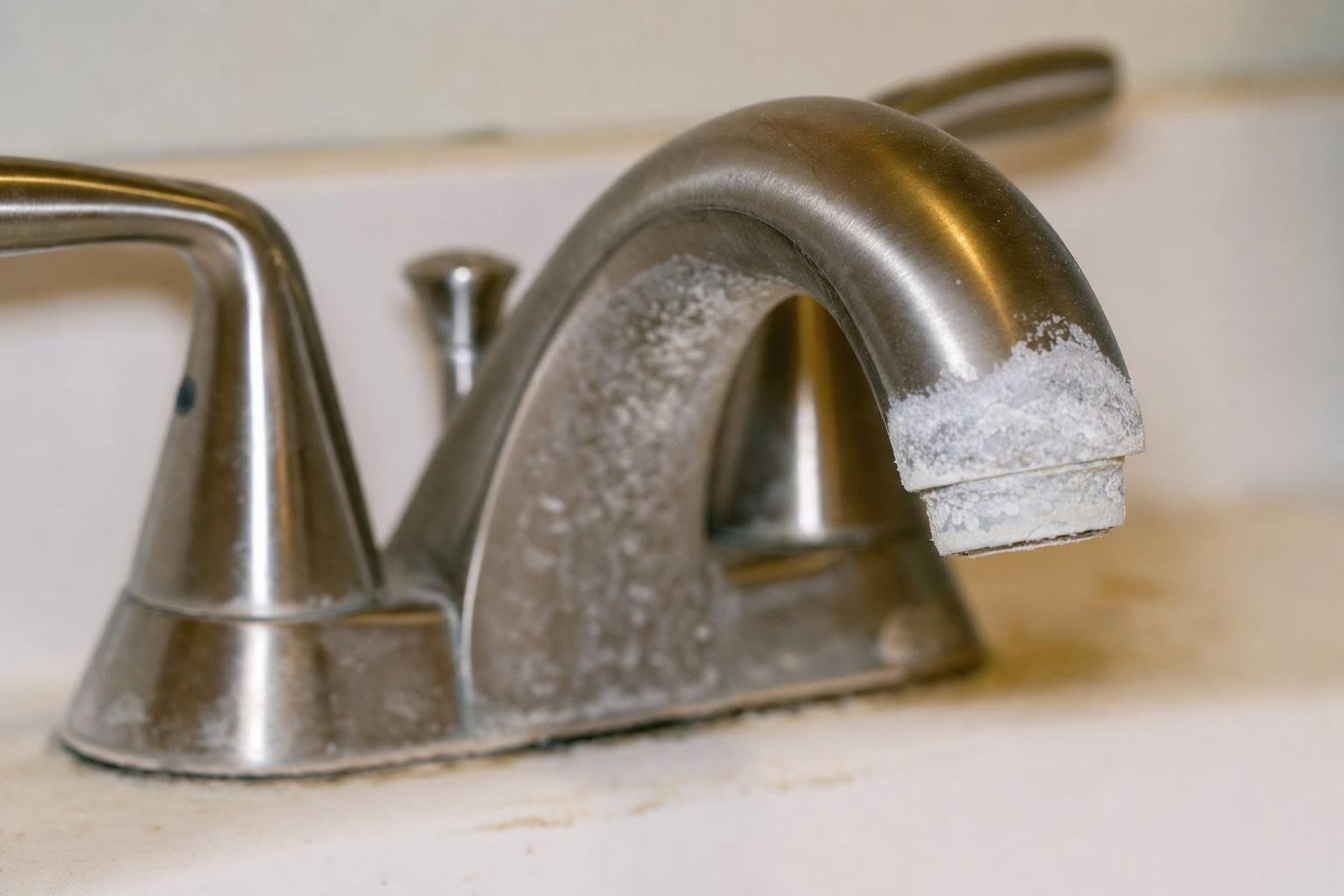
Las Vegas water is some of the hardest in the country, and if you live in the Las Vegas Valley, you already know the signs: white crust on your faucets, soap scum that won’t scrub off, hair and skin that feel dry no matter what you do. Hard water problems go deeper than appearances, though. Scale buildup quietly damages your water heater, pipes, and appliances over time.
Our certified technicians at Bumble Breeze Plumbing, Heating & Air have seen it all across the Las Vegas Valley, and we know exactly what your home is up against. Concerned about hard water damage in your Las Vegas home? Call us at (702) 674-9775 and we’ll walk you through your options, upfront, before any work begins.
Key Takeaways
- Las Vegas has some of the hardest municipal water in the United States, measured well above 300 mg/L in many areas.
- Hard water problems cause scale buildup inside pipes and water heaters, reducing efficiency and shortening appliance life.
- Soap scum, dry skin, and brittle hair are common early signs that your home has a hard water issue.
- A whole-home water softener or treatment system can protect your plumbing, appliances, and HVAC-adjacent equipment from long-term damage.
Your Faucet Is Trying to Tell You Something
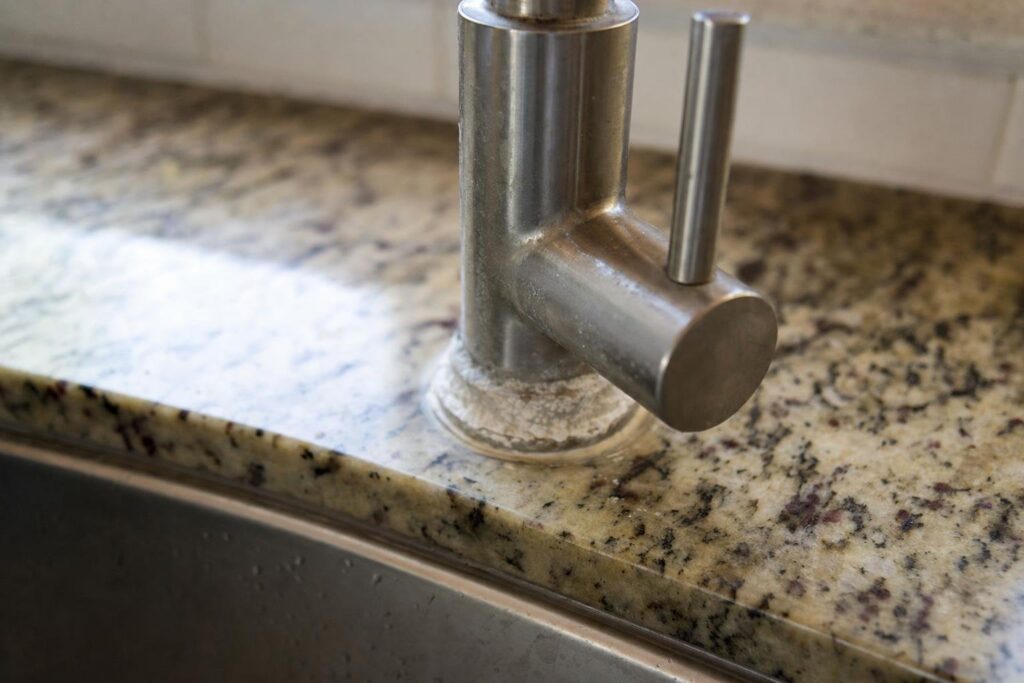
You’ve seen it before. That chalky white crust around the base of your faucet. Soap that barely lathers no matter how hard you scrub. Hair that feels dry and straw-like right after a shower. These are not random annoyances. They are the first signs of hard water problems, and in the 89103 zip code, they are practically guaranteed.
Las Vegas water regularly measures between 278 and 310 mg/L as calcium carbonate, according to the Southern Nevada Water Authority. That puts it among the hardest water supplies in the country. Homes along W University Ave and through Spring Valley pull from the same Colorado River-fed SNWA system. Above 300 ppm is the norm here, not the exception.
This article covers the real damage hard water does to your plumbing, appliances, skin, and hair, and exactly when to call a licensed plumber before the problem gets expensive.
What Makes Las Vegas Water So Hard?

Where Las Vegas Water Comes From
About 90 percent of the water flowing into homes near W University Ave and the Spring Valley corridor comes from Lake Mead and the Colorado River. The Southern Nevada Water Authority (SNWA) manages that supply. Before that water ever reaches the reservoir, it travels through miles of limestone and sediment-rich terrain. Along the way, it picks up dissolved calcium and magnesium. By the time it reaches your tap in the 89103 zip code, those minerals are already in the water.
This is not a treatment failure. It is geology. The Colorado River watershed upstream of Lake Mead is mineral-heavy by nature. Henderson, North Las Vegas, and the neighborhoods right here along University Ave all sit on the same SNWA supply grid. The hardness is structural and consistent across the valley.
What Hardness Actually Means for Your Home
Water hardness is measured in grains per gallon (GPG). Water above 7 GPG is considered hard. Most major U.S. cities sit in the 4 to 10 GPG range. Water in this valley typically measures 16 to 18 GPG. That is more than double the hardness threshold. Think of it this way: your water is carrying a heavy load of dissolved minerals every time it flows through a pipe or heating element.
When that water gets heated inside a water heater, dishwasher, or washing machine, the calcium and magnesium separate out of solution. They bond to surfaces and form scale. Scale is essentially mineral cement building up inside your appliances. It coats pipes, clogs showerheads, and leaves the white chalky film you see around your faucets and fixtures.
Water heaters take the hardest hit. Scale accumulates on heating elements and forces them to work harder to reach temperature. That extra strain is a primary reason homeowners notice a water heater making noise, specifically that rumbling or popping sound that tells you something is wrong inside the tank. Scale buildup in pipes compounds the problem over time across the whole home.
8 Signs You Have Hard Water Problems in Your Home
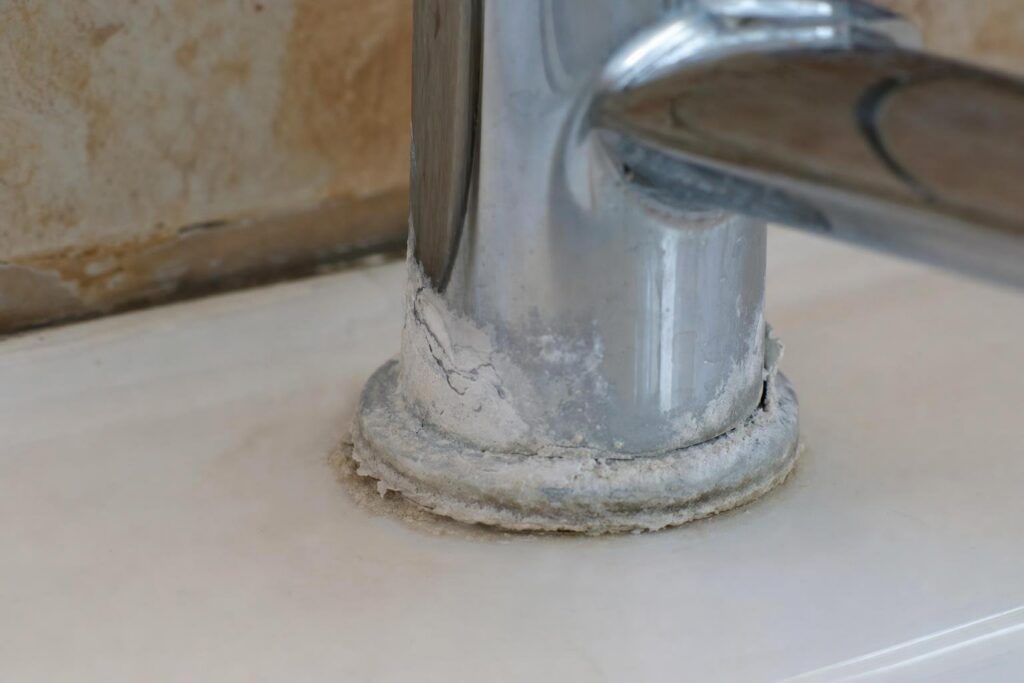
Hard water problems show up all over your house, and once you know what to look for, you will start spotting them everywhere. Homes in the 89103 zip code run water heaters, dishwashers, and showers in extreme heat year-round. That combination makes scale form faster here than in almost any other city in the country.
Visible Mineral Deposits and Soap Scum
Look at the base of your faucets. If you see a white or yellowish crust, that is calcium carbonate building up every time water evaporates and leaves minerals behind. Check your showerhead and drain stoppers too. The same process happens there.
That stubborn white film on your glass shower doors is soap scum, and it is not just a cleaning problem. It forms when soap reacts with the calcium and magnesium ions in hard water and creates an insoluble film that plain scrubbing will not fully remove. Those white spots on glasses and dishes after the dishwasher runs? That is dried mineral deposit, not leftover soap residue.
Plumbing and Appliance Warning Signs
If your showerhead keeps losing pressure even after you clean it, scale buildup inside the nozzle openings is most likely the cause. Minerals narrow those tiny holes over time, and no amount of soaking fully reverses the damage once it is severe. This is one of the most common low water pressure causes we see in homes around Spring Valley and Henderson.
Listen to your water heater. A popping or rumbling sound during heating cycles usually means scale has built up on the heating element. Water Quality Research Foundation data shows water heaters running on hard water can lose up to 48 percent efficiency over time. A unit that should last 10 to 12 years can fail in 6 to 8 years without treatment. Your dishwasher and washing machine heating elements scale up the same way, leaving white residue on dishes and laundry long after the rinse cycle finishes.
Skin, Hair, and Laundry Clues
Hard water leaves a soap residue on your skin that does not fully rinse away. It clogs pores and strips natural oils, leaving your skin feeling dry and tight right after a shower. If you have been blaming the dry desert air in Green Valley or Summerlin for your skin issues, hard water may be making things worse.
Dermatologists note that hard water can aggravate conditions like eczema and disrupt the skin barrier, so if your symptoms flare at home, the water is worth reading into as a possible factor.
Minerals coat the hair shaft and block conditioner from absorbing properly. The result is dull, brittle hair that breaks more easily than it should. Your laundry tells the same story. Clothes washed in hard water come out stiff and dingy because minerals bind to fabric fibers, accelerating color fade and leaving that rough texture that softener alone cannot fix.
If you recognize three or more of these signs in your home, there is a good chance hard water is working against your plumbing and your comfort every single day. Our plumbing team can test your water and walk you through your options before any work begins.
What Hard Water Does to Your Pipes and Plumbing Over Time

Hard water damage is quiet. It builds slowly, year after year, and most homeowners in the 89103 area never notice it until something breaks. Understanding what is actually happening inside your pipes makes it easier to act before a small problem becomes a serious repair bill.
How Scale Builds Inside Your Pipes
Here is the basic process. Calcium bicarbonate stays dissolved in cool water without any issue. But when water heats up or pressure changes, it converts to calcium carbonate and precipitates out of solution, sticking to whatever surface it contacts. Inside your pipes and water heater, that surface is the interior wall.
In copper and galvanized steel supply lines, which are common in homes built before 2000 throughout the Henderson and Spring Valley areas, scale creates a progressive narrowing of the internal pipe diameter. The gradual pressure drop you might notice at your faucet is often a direct result of this buildup.
Galvanized steel is particularly vulnerable because hard water accelerates corrosion, leading to pinhole leaks over time. Routine plumbing maintenance can catch these warning signs before they turn into a leak behind a wall or under your slab.
PVC and PEX lines resist scale buildup better, but the valves and fixtures connected to them are still vulnerable. No pipe material is fully immune when Clark County water averages 300 or more parts per million of dissolved minerals.
The Real Cost of Ignoring It
The Department of Energy estimates that just a quarter inch of scale on a water heater element reduces efficiency by 40 percent. A tank unit that should last 10 to 12 years can fail in 6 to 8 years in a hard water environment. Tankless water heaters, popular across Green Valley and Summerlin for their energy savings, are actually more vulnerable to scale damage than traditional tank units because the heat exchanger has tighter tolerances.
We have worked with homeowners near the W University Ave corridor who put off addressing hard water for years, only to end up facing a full re-piping job after a slab leak. That is a serious, costly project. Hard water is rarely the only cause, but it is a consistent contributing factor we see in older homes throughout the 89103 area.
The good news is that this damage is largely preventable. A water softener, installed and sized correctly, stops new scales from forming and gives your pipes and appliances a real chance to reach their expected service life. Staying on top of routine drain maintenance is also part of keeping the whole system healthy.
Hard water damage moves slowly, but it does not stop. If you have noticed any of the signs covered in this article, the right move is a professional assessment before a scaling issue turns into a failed water heater or a cracked pipe.
Bumble Breeze Plumbing, Heating & Air works with homeowners across Clark County on exactly these problems every day. We are based at 4755 W University Ave, right in the heart of the area most affected by the region’s hard water. Call us at (702) 674-9775 to schedule a plumbing assessment. We will tell you exactly what is going on and what it will take to fix it, upfront, before any work begins.
Frequently Asked Questions
How Long Does It Take for a Water Softener to Fix Hard Water Problems?
Most homeowners notice improvements in water quality within a day or two of installing a water softener. However, existing scale buildup inside pipes and appliances can take several weeks to gradually dissolve once softened water is flowing through the system. Bumble Breeze Plumbing, Heating & Air can assess how much existing buildup is present and recommend whether a descaling treatment should accompany a new softener installation.
Is Soft Water Safe to Drink Every Day?
Softened water is generally safe for most healthy adults, but the ion exchange process does add a small amount of sodium to the water. People on sodium-restricted diets may want to install a separate reverse osmosis filter at the kitchen tap for drinking and cooking. Bumble Breeze Plumbing, Heating & Air can walk you through combination systems that give you softened water throughout the house while keeping drinking water low in sodium.
Can Hard Water Void My Appliance Warranty?
Some manufacturers, particularly for water heaters and dishwashers, do include water quality clauses that can affect warranty coverage if scale damage is found. Checking your appliance documentation for water hardness limits is worth doing before filing any claim. Addressing hard water problems proactively with a treatment system is the surest way to keep warranty protections intact.
How Often Does a Water Softener Need to Be Serviced?
A standard salt-based water softener typically needs salt replenished every four to eight weeks depending on household size and local water hardness levels. A professional inspection once a year is recommended to check the resin bed, brine tank, and control valve settings. Bumble Breeze Plumbing, Heating & Air offers maintenance visits to keep your system running efficiently and prevent the small issues that lead to bigger repairs.
Will a Whole-House Water Filter Solve the Same Problems as a Water Softener?
Whole-house filters remove sediment, chlorine, and some contaminants, but they do not remove dissolved minerals like calcium and magnesium that cause hardness. A water softener specifically targets those minerals through ion exchange, which is the only reliable way to prevent scale accumulation in pipes and appliances. For Las Vegas homes, where hardness levels are among the highest in the country, a dedicated softener is usually necessary rather than optional.
Does Hard Water Affect My Water Heater’s Energy Efficiency?
Yes, scale buildup on a water heater’s heating element or tank lining acts as insulation, forcing the unit to run longer and use more energy to reach the set temperature. Studies have shown that a water heater operating in hard water conditions can lose 20 to 30 percent of its efficiency over time. Having Bumble Breeze Plumbing, Heating & Air inspect your water heater alongside any hard water treatment plan can reveal whether efficiency losses are already occurring.
What Is the Difference Between a Salt-Based and Salt-Free Water Softener for Las Vegas Homes?
Salt-based systems use ion exchange to physically remove hardness minerals from the water, which is the most effective method for high-hardness areas like Las Vegas. Salt-free systems, sometimes called water conditioners, alter the structure of minerals so they are less likely to stick to surfaces, but they do not remove the minerals entirely. For severe hard water problems, a salt-based system typically delivers more reliable protection for pipes and appliances, though Bumble Breeze Plumbing, Heating & Air can help you compare options based on your household water usage and preferences.
Ready to Get Started with Bumble Breeze Plumbing, Heating & Air?
Call (702) 674-9775 to speak with our team directly. We’re ready to answer your questions, walk you through your options, and help you find the right solution for your needs. Whether you’re just starting to plan or ready to move forward, we’ll make the process simple and stress-free. Reach out today and let’s talk about how we can help.