
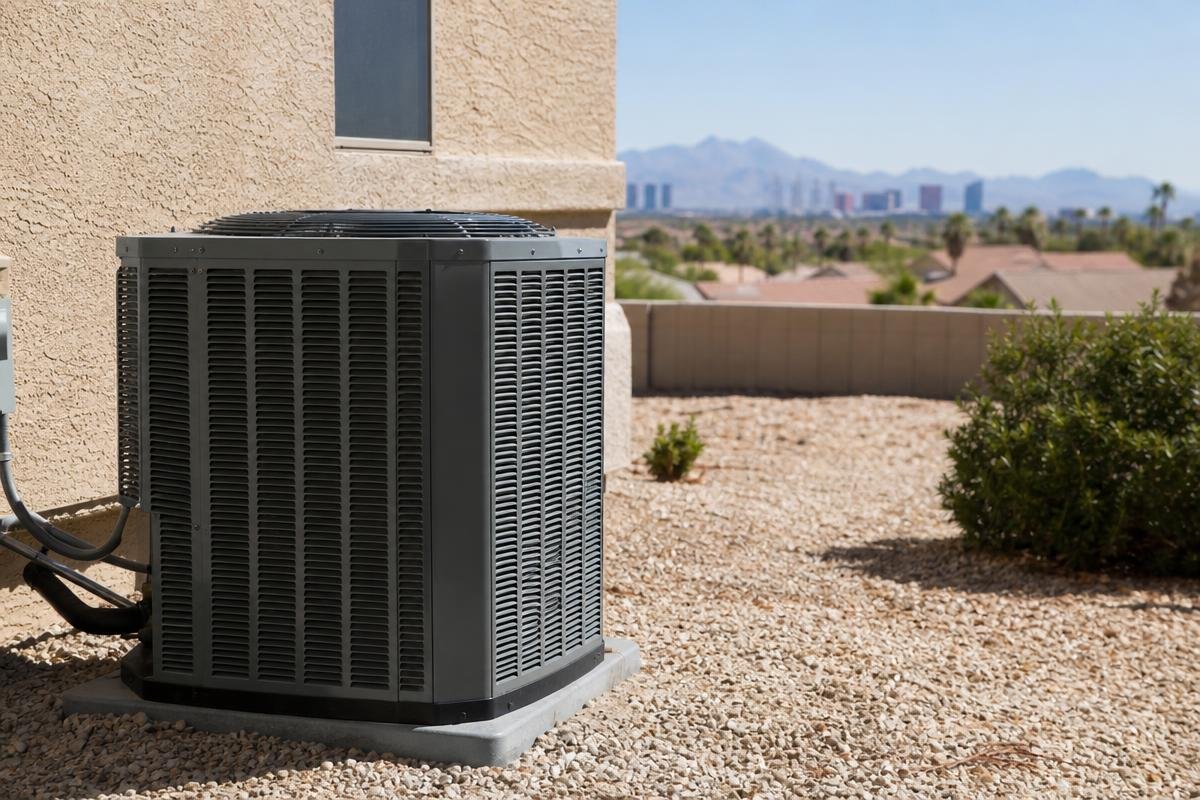
In most U.S. climates, air conditioners last 15 to 20 years. In Las Vegas, expect 10 to 12. Our desert summers push systems past 2,500 operating hours a year, nearly triple what an AC in a mild climate logs. That kind of punishment shortens the average AC unit lifespan in ways most homeowners don’t see coming until they’re facing a breakdown in 110-degree heat.
At Bumble Breeze Plumbing, Heating & Air, we’ve serviced systems across the Las Vegas valley for years, and we know exactly why local units wear out early and what you can do about it. Think your AC is aging out faster than it should? Get ahead of a summer breakdown before it leaves you in the heat.
Key Takeaways
- Local AC units log up to 2,500 to 3,000 operating hours per year, far above the national average of 1,000 to 1,500.
- Extreme desert heat, hard water, and heavy dust are the top reasons ac unit lifespan is shorter here than in most U.S. cities.
- Skipping regular maintenance doesn’t just void warranties, it can cut years off your system’s life.
- Knowing the warning signs early can help you decide whether to repair or replace before costs spiral.
Why Las Vegas AC Units Age Faster Than the National Average
Most homeowners read that air conditioners last 15 to 20 years and assume that applies to them. Across the valley, the real number is closer to 10 to 12 years. That gap is not a coincidence.
The desert climate here is genuinely different from anywhere else in the country. Summer peaks regularly hit 115°F, and your system runs from May through October with almost no break. That relentless run-time is only the start of the problem.
Knowing why this happens is the first step to doing something about it. At Bumble Breeze, we see the same five causes behind nearly every premature failure in this area. The following sections cover all five, plus what you can do to protect your investment. If you want to start now, routine AC maintenance in Las Vegas is the single most effective thing you can do.
How Long Should an AC Unit Last, and Why Las Vegas Is Different
In most U.S. climates, AC units last 15 to 20 years; in Las Vegas, expect 10 to 12. The difference comes down to how many hours the system runs each year and the conditions it runs in.
The National Benchmark
The 15-to-20-year benchmark assumes a moderate climate, regular annual maintenance, and roughly 1,000 to 1,500 operating hours per year. Think of a home in the Midwest or Pacific Northwest where the AC runs hard for three months and sits idle the rest of the year. Those systems age slowly because they get a long rest between cooling seasons.
The Las Vegas Reality
The valley does not have a moderate climate. The cooling season stretches from spring well into fall, adding up to those 2,500 to 3,000 annual run-hours mentioned earlier. That is roughly double or triple what systems in cooler states log.
Heat alone does not explain the shorter AC unit lifespan here. Mojave Desert dust, hard water with mineral content topping 250 ppm (per Southern Nevada Water Authority water quality reports), and heavy construction activity across the southwest valley all pile on at the same time. By year eight or nine, many homeowners are already fielding frequent AC repair calls as worn components start giving out.
The five sections below cover exactly why that wear happens faster here, and what you can do about it. If all five factors are working against your system at once, failure before the 10-year mark is a real possibility.
Reason 1: Extreme Heat Forces Your System to Run Almost Nonstop
Your AC in Summerlin isn’t just working harder than a system in Chicago. It’s working in a completely different category. Those same 2,500-plus annual run-hours mean two to three times the mechanical wear a moderate-climate system sees, every single year.
What Continuous Operation Does to Key Components
Three parts fail first under that kind of load. The start capacitor gives the compressor the electrical kick it needs to start up. The contactor relay is the switch that tells the system to turn on. The compressor itself is the heart of the whole unit. All three are rated for a finite number of operating cycles, and a desert climate burns through those cycles in roughly two-thirds the time of a moderate-climate system. If you’re already seeing symptoms, our AC repair service can pinpoint which component is showing wear before it takes the whole system down.
How the Run-Time Gap Adds Up
From late spring into fall, your system runs 14 to 18 hours a day when outdoor temps push past 115°F. That’s not a peak-day number. That’s a typical summer Tuesday here. Over a full cooling season, that runtime compounds fast. It’s the single biggest reason AC unit lifespan in the desert falls short of the national average.
One practical way to cut unnecessary startups is smart thermostat programming, which reduces short-cycling and gives components a break during off-peak hours. Fewer startups means fewer stress cycles on the capacitor and contactor, and that adds up to real extra years on your system.
Reason 2: Desert Dust and Debris Clog Coils and Filters Faster Here
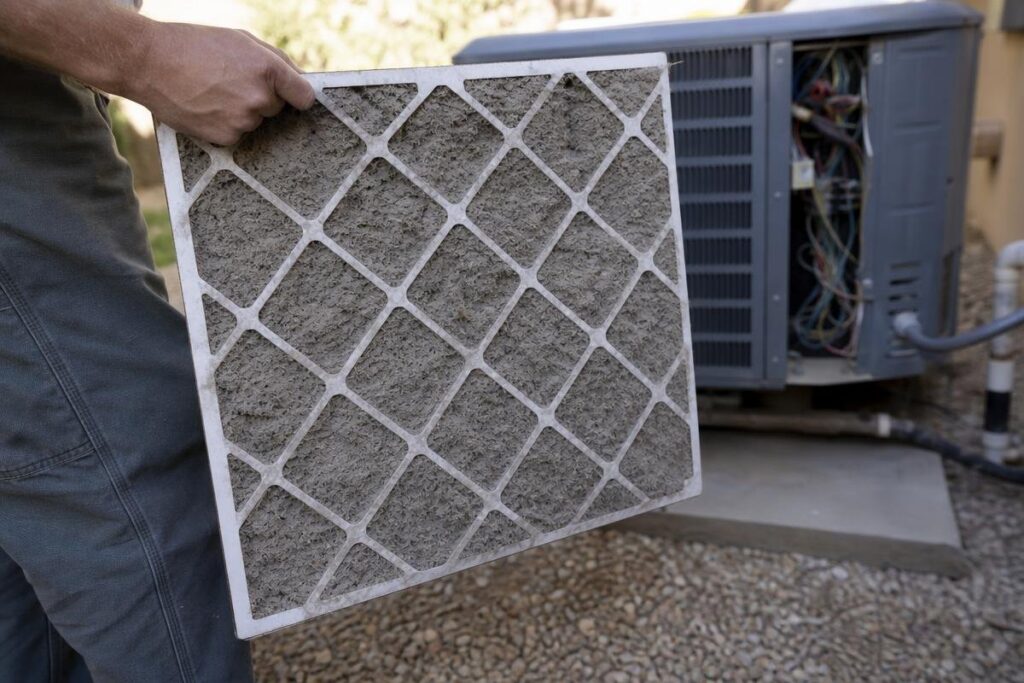
Most AC manufacturers design their filter-change schedules around a 60 to 90 day cycle. That schedule does not work in the Mojave Desert. In neighborhoods near active construction, windblown silica dust and fine construction particulates can clog a filter in as little as 30 days during peak summer months. The valley’s ongoing construction boom makes this worse, layering job-site dust on top of baseline desert grit.
How Dust Buildup Strains the Whole System
A clogged filter does not just reduce airflow. It forces your blower motor to work harder, raises static pressure throughout the system, and can trigger evaporator coil freeze-up. If you have noticed ice forming on your unit, that restricted airflow is often the cause. Our guide on what to do when your AC keeps freezing up covers that problem in detail.
Dirty ductwork compounds the issue by recirculating particulates back through the system, adding mechanical strain and hurting your indoor air quality.
The Coil-Cleaning Gap Most Homeowners Miss
Your condenser coils sit outside in the desert heat, collecting dust and debris all season long. When coils get coated, they trap heat in the refrigerant instead of releasing it. That raises head pressure and accelerates compressor wear, which is one of the most expensive failures in any AC system.
For most valley homes, professional condenser coil cleaning once a year is the minimum. Homes near unpaved roads or active job sites need it twice a year. This one step alone can add years to your system’s life.
Reason 3: Hard Water and High Mineral Content Damage HVAC-Adjacent Systems
Homeowners here deal with some of the hardest water in the country. Water hardness in the valley routinely measures 250 to 300-plus ppm of calcium and magnesium carbonate (per Southern Nevada Water Authority reports). That mineral load does not just affect your pipes and appliances. It quietly attacks your HVAC system too.
How Hard Water Affects Your Air Handler and Drain Line
Your AC pulls moisture from the air and drains it through a condensate line. In our valley, that water carries heavy mineral content. Over time, scale builds up inside the drain line and pan until the line clogs completely. When that happens, water backs up into the air handler and can damage the blower motor and evaporator coil housing.
A clogged condensate drain is not just a nuisance drip. Overflow can seep behind walls and cause hidden water damage you will not notice until mold appears or drywall starts to fail. If you suspect a backup, our drain cleaning service can clear the line before it causes real structural damage. We also recommend reading up on how hard water affects your home systems for the full picture. A condensate drain flush should be part of every annual Las Vegas air conditioner maintenance visit, full stop.
The Evaporative Cooler and Humidifier Connection
Many valley homeowners run an evaporative cooler alongside their central AC. Hard water causes rapid mineral scaling on evaporative pads and whole-home humidifier components. That scaling cuts efficiency and forces your central system to pick up the slack, adding hours to an already demanding cooling season.
Reason 4: Poor Installation and Undersized Equipment Fail Sooner in This Climate
A system that was never sized or installed correctly is fighting a losing battle from day one. Across the valley, we see this regularly. The unit runs hard, struggles to keep up, and wears out years ahead of schedule.
Why Proper Sizing Matters More in Las Vegas Than Anywhere Else
The industry standard for sizing is a Manual J load calculation. It accounts for your home’s square footage, insulation, window orientation, and local outdoor design temperatures. Here, that design temperature runs between 109°F and 115°F, higher than almost anywhere else in the country. Flat-roof stucco construction and west-facing windows push cooling loads even further. If a contractor skips the calculation and just swaps in the same tonnage as the old unit, you are likely starting with the wrong equipment.
An undersized unit runs nonstop and never reaches your setpoint, compounding the continuous-operation problem we covered in Reason 1. An oversized unit short-cycles: it cools the space quickly, shuts off, then restarts minutes later. Compressor startups are the most mechanically stressful moments in a system’s life. Frequent short-cycling adds up fast and is a leading driver of early AC replacement in the valley. If you are curious about your options, our AC installation in Las Vegas page covers what a proper sizing process looks like.
What a Flawed Installation Looks Like in Practice
Improper refrigerant charge is the most common installation defect we find. An overcharged or undercharged system stresses the compressor from the first cooling season. Poorly sealed ductwork is the other major issue. Attic temperatures here can hit 150°F in summer. Leaky ducts dump conditioned air straight into that heat, forcing your system to work harder to compensate and driving up your electric bills.
If high utility costs are already a concern, see our breakdown of common HVAC causes of high electric bills in Las Vegas. Our certified technicians check refrigerant charge, duct sealing, and airflow on every install so nothing gets missed. Overdue for a tune-up? Ask about our pre-summer maintenance visit. Call us at (702) 674-9775 and our certified technicians will inspect capacitors, coils, and drainage before the heat arrives.
Reason 5: Skipped Maintenance Turns Small Problems Into Full Replacements
A system running through a full desert cooling season takes a beating. Small issues that would stay small in a moderate climate become expensive failures here, fast. One skipped tune-up can be the difference between a $150 capacitor swap and a $1,500 compressor repair.
The heat in this valley is hard on electrical components above almost anything else. Capacitors degrade faster at extreme temperatures, and on a 112°F afternoon, a weak capacitor means a hard-starting compressor.
That stress shortens compressor life significantly. Catching a failing capacitor during a routine visit costs a fraction of what you pay after it takes the compressor with it.
What a Proper Las Vegas Tune-Up Covers
A real tune-up is not a filter swap and a handshake. Our certified technicians check start and run capacitors, clean condenser and evaporator coils, verify refrigerant charge, flush the condensate drain, inspect electrical connections and the contactor, and run system pressure and temperature tests. Each item on that list is a potential failure point that the desert heat accelerates. If something looks worn, we explain what we found and why it matters before any work begins.
The Real Cost of Skipping a Season
Compressor replacement runs $1,200 to $2,500 or more. A full system replacement runs several times that. A tune-up costs a fraction of either. Skipped maintenance also shows up on your power bill well before the system fails entirely. If your bills have been climbing, our guide on high electric bills and HVAC causes explains the connection. For systems already showing strain, AC repair in Las Vegas is the next step before a small problem becomes a full replacement.
Signs Your Las Vegas AC Unit Is Nearing the End of Its Life
All five causes covered in this article add up to one result: a system that ages faster than you expect. Units that would last 15 years in a mild climate often hit their limit closer to the 10-to-12-year mark here. Knowing the warning signs early gives you time to plan, not panic.
Six Warning Signs to Watch For
- Age Over 10 Years: In the valley’s heat, a decade of runtime is closer to 15 years of wear in a moderate climate.
- Frequent Repair Calls: Two or more service calls in a single summer is a red flag, not bad luck.
- Rising Electric Bills: A struggling system draws more power to do less work. If your bills keep climbing, HVAC issues may be the cause.
- R-22 Refrigerant: This refrigerant was phased out and is now extremely expensive to source. Older valley housing stock still runs these systems more than most homeowners realize.
- Uneven Cooling: Hot spots in back bedrooms or upstairs rooms signal a system that can no longer keep up.
- Loud or Unusual Noises: Banging, grinding, or rattling from the outdoor unit means mechanical wear is already advanced.
The Repair-vs.-Replace Rule Las Vegas Homeowners Should Know
Use the 5,000 rule before you approve any major repair. Multiply your system’s age by the repair cost. If the number exceeds $5,000, replacement is usually the smarter investment. A 12-year-old unit facing a $500 repair? That’s $6,000. Time to replace.
If you’re weighing your options, our AC repair service in Las Vegas includes an honest assessment of whether a fix makes financial sense for your specific system. We’ll give you the numbers upfront, before any work begins.
How Las Vegas Homeowners Can Get More Years From Their Current System
Your system is not doomed to fail early. A few consistent habits, matched to the valley’s specific conditions, can add real years to your AC’s life.
Three Maintenance Habits That Actually Make a Difference Here
First, swap filters every 30 days during the cooling season. The standard 90-day recommendation was written for moderate climates, not the desert. Homes near undeveloped land face dust loads that can choke a filter in weeks, not months. Heavy filters force your blower to work harder and your coils to run hotter.
Second, rinse your outdoor condenser coils at the start of each cooling season. Use a garden hose from the inside out to flush dust without bending the fins. This one step protects efficiency before the heat arrives.
Third, schedule a professional tune-up every March or April. Getting ahead of the summer heat spike means a technician can catch refrigerant issues, worn capacitors, and drainage problems before they become emergency calls. Pairing that with home insulation improvements reduces how hard your system has to work all season.
When an Upgrade Makes More Financial Sense Than Extending
If your system is 10 or more years old and showing two or more warning signs from the previous section, the math often favors replacement. A new 16-plus SEER2 unit typically costs less over a three-to-five year horizon than continued AC repairs in Las Vegas plus elevated NV Energy summer bills. Keeping an inefficient system running is not always the cheaper choice.
Frequently Asked Questions
How long do AC units last in Las Vegas?
Most central AC units in the area last 10 to 12 years, compared to the national average of 15 to 20 years. The desert heat pushes systems to log 2,500 to 3,000 operating hours per year, roughly double what a moderate climate demands. Proper annual maintenance can push your system toward the higher end of that local range.
What is the most common reason AC units fail early in Las Vegas?
The single most common culprit is a failed start capacitor. Continuous high-heat operation wears capacitors down fast, and when one fails, it can take the compressor with it. Catching it during a spring tune-up is a minor repair. Missing it entirely turns into a major replacement.
How often should I service my AC in Las Vegas?
Once per year is the minimum, and March or April is the right window before the valley heats up. If your home is near active construction or unpaved roads, add a mid-season coil inspection to clear the extra dust load.
Is it worth repairing a 12-year-old unit?
Use the 5,000 rule: multiply the unit’s age by the repair cost. A 12-year-old system facing a $600 repair equals $7,200, which is a strong signal to replace rather than repair. Our AC repair team will walk you through that math honestly before recommending anything.
What does it cost to replace an AC unit in Las Vegas?
Replacement cost depends on your home’s square footage, the efficiency rating you choose, and whether ductwork needs attention. We provide upfront, honest pricing before any work begins, so there are no surprises on the invoice. AC installation in the Las Vegas valley is quoted in full before our crew starts.
Can upgrading my thermostat extend my AC lifespan?
Yes. A smart thermostat installation reduces unnecessary compressor startups by pre-cooling your home in the early morning when outdoor temps are lower. Fewer hard starts mean less wear on the capacitor and compressor over time. It is one of the most cost-effective ways to protect a system that is already working hard.
Your AC is working harder than almost any system in the country. If it is past the 10-year mark or showing warning signs, call us at (702) 674-9775 or schedule online. Our team is based at 4755 W University Ave and serves homeowners across the valley. We will tell you exactly what we find, and what it means. No surprises on the invoice. We’re not happy until you’re happy.
Ready to Get Started with Bumble Breeze Plumbing, Heating & Air?
Call (702) 674-9775 or schedule online. Whether your unit is showing warning signs or you just want to know where it stands, our team gives you honest answers and upfront pricing before any work begins. We’re not happy until you’re happy.