
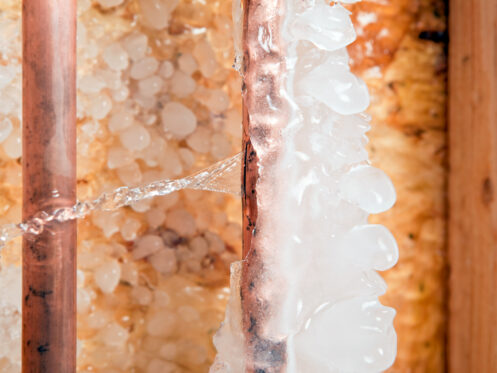
When temperatures drop, frozen plumbing becomes one of the most common and costly winter emergencies. Knowing how to prevent frozen pipes before severe cold arrives can protect your home from burst lines, water damage, and unexpected repair bills.
Whether you live in a region with occasional freezes or sustained winter cold, proactive frozen pipe prevention is essential for protecting your plumbing system.
This guide explains how to prevent frozen pipes in the winter — and what to do if freezing has already occurred.
Why Frozen Pipes Are a Serious Risk
Water expands when it freezes. If temperatures drop below 32°F and pipes are exposed to cold air, ice can form inside the line. As pressure builds behind the frozen section, pipes may crack or burst.
The damage often isn’t discovered until the pipe thaws and water begins leaking — which is why preventing frozen pipes during cold weather is far more effective than reacting after the fact.
How to Prevent Frozen Pipes in the Winter
Taking simple precautions before temperatures fall is the most reliable way to prevent frozen pipes and avoid plumbing emergencies.
1. Insulate Exposed Plumbing
Pipes located in crawlspaces, garages, attics, basements, and exterior walls are especially vulnerable. Foam insulation sleeves or heat tape can significantly reduce freezing risk.
This is one of the most effective long-term frozen pipe prevention strategies.
2. Seal Drafts and Air Leaks
Cold air entering through gaps in walls, foundations, or around doors and windows can expose nearby pipes to freezing temperatures.
Sealing cracks with caulk or insulation helps maintain warmer ambient air around plumbing lines.
3. Keep Faucets Dripping During Extreme Cold
Allowing a slow trickle of water to run during severe cold snaps keeps water moving through the pipes. Moving water is less likely to freeze than standing water.
This small step can dramatically reduce pressure buildup inside vulnerable pipes.
4. Open Cabinet Doors
If pipes are located beneath sinks along exterior walls, open cabinet doors to allow warm indoor air to circulate around them.
This simple method supports effectively preventing frozen pipes during cold weather without additional equipment.
5. Maintain a Consistent Indoor Temperature
Avoid lowering your thermostat too aggressively — even when leaving home. Consistent indoor heat reduces the likelihood of frozen plumbing.
Many winter plumbing emergencies occur when homes are left unheated for extended periods.
6. Disconnect Outdoor Hoses
Leaving hoses attached traps water inside outdoor spigots, increasing freeze risk. Disconnect hoses and shut off exterior supply lines before winter temperatures arrive.
What to Do If My Pipes Are Frozen?
If you suspect frozen plumbing, act carefully and quickly.
Common signs include:
- Little or no water flow from faucets
- Frost on exposed pipes
- Bulging pipe sections
- Unusual odors from drains
To address a frozen pipe:
- Keep the affected faucet open.
- Apply gentle heat using a hair dryer or heating pad.
- Begin thawing near the faucet and work toward the frozen area.
Never use open flames, torches, or propane heaters — these create fire hazards and can damage pipes.
If you cannot safely thaw the pipe or suspect damage, contact a professional immediately.
Should I Turn Off the Water If My Pipes Are Frozen?
Yes. If you believe a pipe is frozen and at risk of bursting, shutting off the main water supply can reduce the chance of flooding if the pipe cracks.
Turning off the water provides an added layer of protection until the situation is resolved.
Will Frozen Pipes Thaw on Their Own?
In some cases, frozen pipes may thaw naturally when temperatures rise. However, waiting is risky.
As ice expands, it can weaken pipe walls. When thawing occurs, cracks may begin leaking unexpectedly. Controlled thawing is always safer than relying on natural temperature changes.
How Long Can a Pipe Be Frozen Before It Bursts?
There is no guaranteed timeframe. Pipes can burst within hours if freezing temperatures persist and pressure builds rapidly.
The risk depends on:
- How cold the temperature is
- How long the freeze lasts
- Pipe material and insulation
- Water pressure inside the line
Because timing is unpredictable, proactive prevention of frozen pipes in the winter strategies are far safer than reacting after freezing occurs.
When to Call for Frozen Pipe Prevention Services
You should schedule professional service if:
- Pipes freeze repeatedly each winter
- You’ve experienced past burst pipes
- Your home has older plumbing
- You’re unsure which areas are vulnerable
A licensed plumber can evaluate your system and recommend insulation upgrades, pipe relocation, or winterization solutions to improve long-term frozen pipe prevention.
Protect Your Plumbing Before Temperatures Drop
Understanding how to prevent frozen pipes is one of the most important winter maintenance steps homeowners can take. Insulation, sealing drafts, maintaining indoor heat, and proactive inspections significantly reduce the risk of burst lines and costly water damage.
If you want added protection or need help addressing vulnerable plumbing, professional guidance ensures your system is ready for winter conditions.