
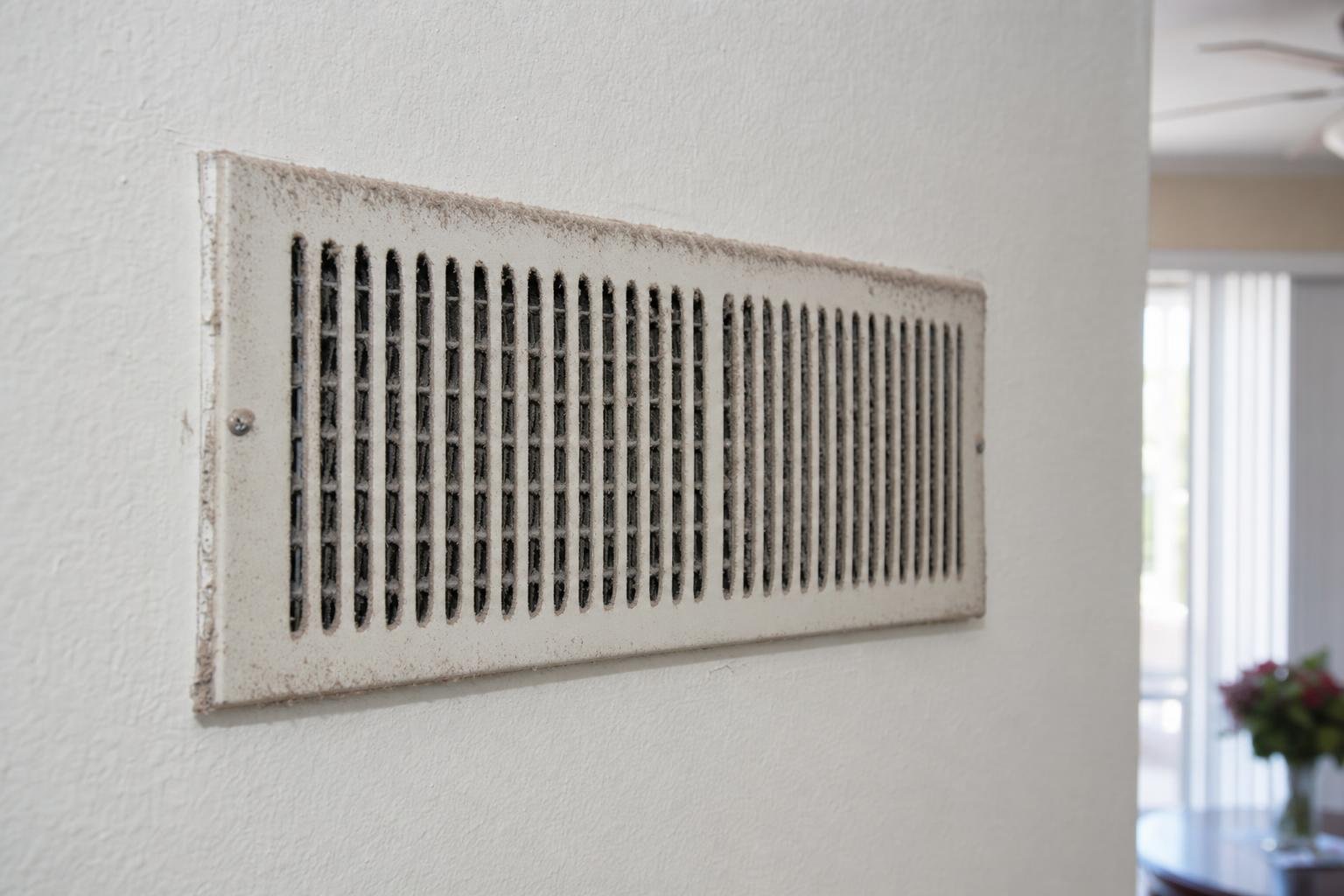
Las Vegas homes collect dust fast. The desert air around University Ave carries fine particulate matter year-round, and without the right HVAC setup, that dust settles everywhere. If you want to know how to reduce dust in your home, the fix is part habit and part system. Our certified technicians at Bumble Breeze Plumbing, Heating & Air have helped Las Vegas and Henderson homeowners breathe cleaner air for years, and we can show you exactly where to start.
Dusty home? We can help. Call us at (702) 674-9775 to schedule a filter check or duct inspection.
Key Takeaways
- Las Vegas desert air brings extra dust indoors, making regular HVAC filter changes more important than in most climates.
- Keeping windows closed on windy days is one of the easiest ways to control dust buildup in your home.
- Dirty air ducts circulate dust continuously, so professional duct cleaning tackles the problem at the source.
- Combining simple cleaning habits with the right HVAC filters is the most effective way to reduce dust in your home long-term.
Why Your Home Collects Dust So Fast
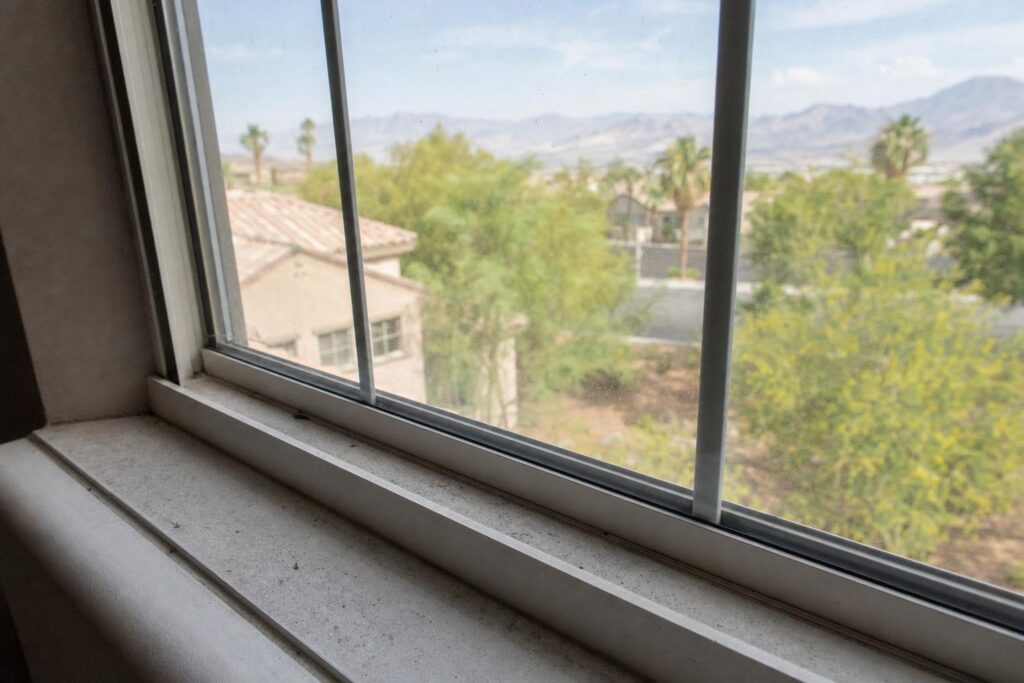
Las Vegas sits in the Mojave Desert, where annual rainfall rarely tops five inches. That means fine caliche dust and windblown sand have nowhere to go except into your home. If you’ve moved here from a wetter climate, the difference is immediate and frustrating.
That dust isn’t just a nuisance on your shelves. It clogs your HVAC filter fast, and during Henderson and North Las Vegas summers that push past 110°F, a clogged filter forces your system to work much harder than it should. Knowing when it is time for a duct cleaning is one piece of the puzzle.
Bumble Breeze Plumbing, Heating & Air serves Las Vegas, Henderson, North Las Vegas, and Summerlin. These nine tips are built for desert conditions, not generic national advice.
Why Las Vegas Homes Collect Dust Faster Than Most
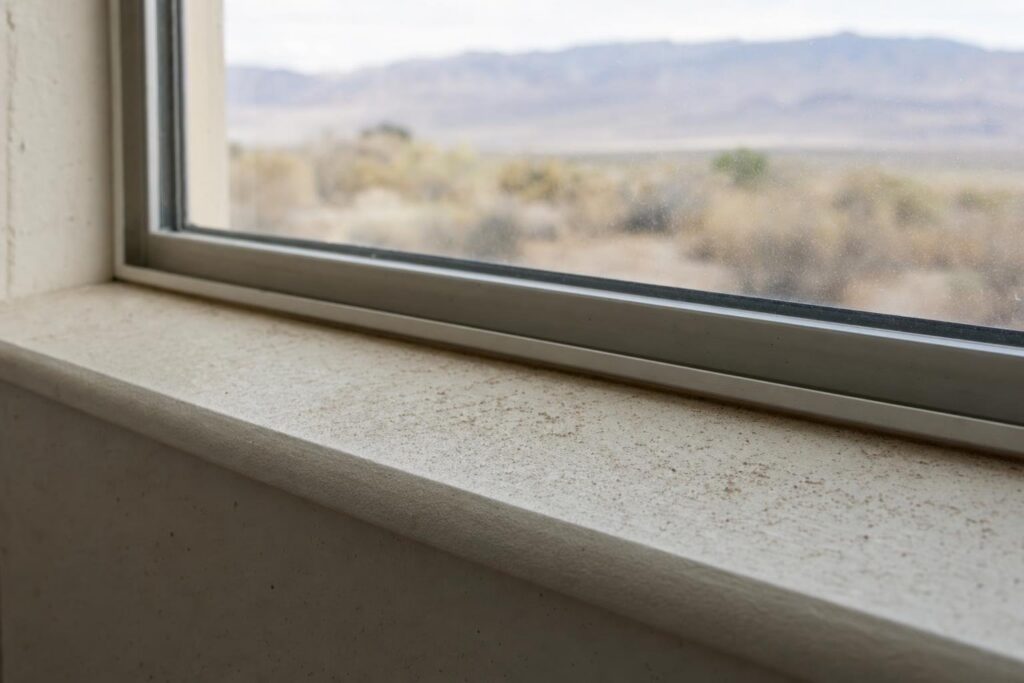
If you cleaned your home last weekend and it already looks dusty again, you are not imagining it. Homes in the 89103 zip code near W University Ave deal with dust loads that most parts of the country never see. Three things drive this: the desert geology under your feet, the dry air around your home, and the HVAC system running overhead.
Desert Soil and Caliche Dust
The Las Vegas Valley sits on an ancient lake bed. That geology left behind a mineral called caliche, an alkaline, fine-grained particle that breaks loose easily in wind. When a gust crosses the undeveloped desert lots bordering the 89103 area, that dust goes airborne fast.
Clark County averages seven or more high-wind days per month in spring. Caliche particles are small enough to slip through door gaps, window seals, and any crack in your building envelope. Fully built-out neighborhoods like Green Valley or Anthem have fewer exposed lots nearby. The 89103 area does not. That difference is real, and it shows up on your shelves and floors within days of cleaning.
Dry Air and Low Humidity
Henderson and Summerlin residents face the same low-humidity reality that affects the whole valley. Relative humidity here holds between 20 and 30 percent for most of the year. At that level, disturbed dust particles stay suspended in the air for 30 to 60 minutes before settling again. Every time you walk across a room or open a door, you kick up a new cloud.
Low humidity also increases electrostatic attraction. Dust clings harder to window screens, TV panels, and synthetic surfaces. Wiping those surfaces without addressing the air quality just moves the problem around. That is why home air quality tips that work in humid climates often fall short here.
High HVAC Run Times
Your air conditioner is not just cooling your home. It is cycling every cubic foot of indoor air through your return ducts, often 8 to 14 hours a day from May through September. If your filter is clogged or your ducts have gaps, that system redistributes settled dust right back into your living spaces.
Our team has opened return vents in hundreds of local homes and found years of buildup working against the homeowner every single hour the system runs. Understanding why Las Vegas AC units work harder in desert climate helps explain why your dust problem and your HVAC system are the same problem.
Tips 1 to 3: Start With Your HVAC System
Your HVAC system is either your biggest ally or your biggest problem in the fight to control dust in your house. Most homes in Henderson and the surrounding Clark County area are circulating air through their ductwork 8 to 14 hours a day during summer. That means whatever is inside your ducts, your filter, and your system is moving through your living space constantly. These three tips address the root cause, not just the symptoms.
Tip 1: Change Your Air Filter on the Right Schedule
National manufacturers recommend changing your filter every 90 days. That schedule is written for a mild climate with average dust levels. It does not apply near 4755 W University Ave. Desert air carries fine sand, caliche, and particulate matter that load a filter in a fraction of the time. Our team recommends a 30 to 45 day interval for most homes in this area.
Pull your filter out after 30 days and hold it up to the light. If it looks gray or tan, it is already restricting airflow. That is not a housekeeping problem. That is a desert climate doing what it does. Changing your AC filter is important for more than just dust control. A clogged filter makes your blower motor work harder, raises your energy bill, and sends dust back into your rooms. Stay on a tight schedule and you will notice the difference fast.
Tip 2: Schedule a Professional Duct Cleaning
Slab-foundation homes are the norm across Clark County, including Green Valley and Summerlin. That construction style places ductwork close to the ground, where fine desert particles settle into supply and return lines over time. Caliche and sand build up inside the duct system in ways you will never see from a vent cover.
The EPA recommends duct cleaning when there is visible mold, pest activity, or significant debris blocking airflow. In the Las Vegas Valley specifically, those conditions tend to show up on a realistic interval of every 3 to 5 years. If you have never had it done, or if your last cleaning was more than five years ago, it is worth having our team take a look.
Our HVAC maintenance checklist covers duct inspection intervals so you know exactly what to watch for between service calls. A thorough duct cleaning can eliminate dust buildup at the source before it ever reaches your living space.
Tip 3: Upgrade to a Higher-MERV Filter
MERV stands for Minimum Efficiency Reporting Value. Think of it as a dust-catching score. A MERV 1 to 4 fiberglass filter catches large debris but lets fine dust, pollen, and pet dander pass right through. A MERV 8 to 11 pleated filter captures those smaller particles without choking most residential systems. That is the range we recommend for the majority of North Las Vegas and Henderson homes.
MERV 13 is appropriate if someone in your home has allergies or asthma. However, a higher rating means more airflow resistance. Before you upgrade, have a technician verify your system’s static pressure tolerance. Pushing a MERV 13 or higher filter through a system not built for it can strain the blower motor over time.
HEPA-style filters rated MERV 16 and above are rarely compatible with standard forced-air systems at all. Installing one without a dedicated media air cleaner cabinet is a common mistake we see regularly. Get a quick system check first, and you can make a confident upgrade that actually helps you reduce dust in your home.
Tips 4 to 6: Control Dust Entry and Buildup Inside Your Home
Your HVAC system does a lot of the heavy lifting, but dust gets into your home through doors, windows, shoes, and foot traffic too. These three tips target those entry points directly. They cost little to nothing, and you can start today.
Tip 4: Keep Windows Closed During High-Wind Days
Spring and fall evenings in the Las Vegas Valley are tricky. Temperatures drop, and opening a window feels like a smart, free way to cool the house down. The problem is that Clark County high-wind advisories are common during exactly those seasons. When wind speeds climb, PM10 particulate matter spikes. Fine desert sand and dust pour in through any open window, and your HVAC filter gets hit with a load it was never designed to handle all at once.
Check the National Weather Service advisory before you open anything at night. If a wind advisory is active, keep windows closed and let your HVAC system do its job. The few degrees of free cooling are not worth a gritty house and a clogged filter.
Tip 5: Use Doormats and a No-Shoes Policy
Up to 80% of household dust enters through foot traffic. In Spring Valley and Paradise, where homes often have garages with dusty driveway surfaces, every trip inside tracks fine sand and caliche across your floors. That material breaks down, dries out, and becomes airborne dust within hours.
Layer your defense at the door. Use a thick-bristle outdoor mat to knock off the bulk of debris. Follow that with a softer indoor mat to catch what remains. Add a shoe tray and a no-shoes policy, and you cut your tracked-in dust dramatically. If you have kids or pets, a dedicated tray by the door keeps the habit manageable.
Tip 6: Vacuum Floors and Upholstery with a HEPA-Filtered Vacuum
A standard bag vacuum with a basic filter exhausts fine particles back into the room through its exhaust port. You are not removing dust. You are relocating it. A sealed HEPA-filter vacuum captures particles down to 0.3 microns, which means what goes in stays in.
Technique matters as much as equipment. Always vacuum before you dust, not after. Vacuuming stirs particles into the air. If you dust first, those particles resettle on surfaces you just cleaned. In low-humidity conditions common across Clark County, dust stays airborne longer than it would in wetter climates, so this order makes a real difference.
Aim for hard floors and rugs at least twice a week during spring and summer. Vacuum upholstered furniture and seat backs once a month. Even in dry conditions, body heat causes fabric to retain enough moisture for dust mite accumulation over time.
These three habits, combined with the HVAC maintenance steps covered earlier, give you a real system for keeping dust under control year-round.
Dust control in a home near the desert starts with a well-maintained HVAC system. If your filters clog fast, your ducts have not been inspected in years, or your air feels heavy and gritty, our team can help. Bumble Breeze Plumbing, Heating & Air serves homeowners throughout Henderson, North Las Vegas, Summerlin, and the surrounding Clark County area with filter checks, duct cleaning, and full HVAC tune-ups.
Visit our office at 4755 W University Ave or call us at (702) 674-9775 to schedule a visit. We will tell you exactly what your system needs and give you a straight answer on whether a duct cleaning or filter upgrade will make a real difference in your home. We are not happy until you are.
Tips 7 to 9: Improve Indoor Air Quality and Target Hidden Dust Sources
The first six tips handle your HVAC system and the main entry points for dust. These final three go after the sources of dust that stay hidden inside your home until your system circulates them. Applying all nine together gives you a complete, desert-tested dust control system.
Tip 7: Add a Whole-Home Air Purifier or UV Light System to Your HVAC
A higher-MERV filter catches particles on the way through the duct. A whole-home air purifier treats the air continuously, even between filter cycles. Units that install in-line with your air handler pass conditioned air through an ionization or UV-C stage that neutralizes fine particulate, bacteria, and mold spores before they circulate back into your rooms.
In the 89103 zip code and surrounding Clark County neighborhoods, caliche dust is small enough to pass through MERV 8 and MERV 11 filters. Adding a whole-home purifier behind the filter gives you a second capture stage for those sub-micron particles. Homeowners in the Henderson and Summerlin areas who deal with persistent dust haze after cleaning often find that adding a purifier removes the gritty, visible particulate that was passing through the filter undetected.
UV light systems take a different approach. They mount inside the air handler and neutralize biological particles, including mold spores and bacteria, that land on the evaporator coil. A coil free of biological growth is also easier to keep clean, which supports better airflow and efficiency. Bumble Breeze Plumbing, Heating & Air installs and services whole-home purifiers and UV systems as part of our indoor air quality offering. Our technicians can tell you which option makes the most sense for your specific system before any work begins.
Tip 8: Address Humidity Levels With a Whole-Home Humidifier
Low humidity is one of the main reasons desert homes accumulate dust faster than homes in other climates. When indoor relative humidity drops below 30 percent, dust particles carry an electrostatic charge that makes them stick to surfaces aggressively and stay suspended in the air after disturbance. Las Vegas indoor humidity regularly falls to 15 to 20 percent in winter, and even summer air brought in from outdoors often carries very little moisture once it passes through your AC system.
Raising indoor humidity to the 40 to 50 percent range causes airborne particles to absorb moisture and settle faster. That means less visible dust on flat surfaces and fewer particles cycling through your HVAC system per hour. A whole-home humidifier connected to your air handler maintains that range automatically without the hassle of filling portable units.
The improvement is measurable for most homeowners who make this upgrade. Surfaces that previously needed weekly dusting often go two to three weeks without needing attention. The combination of adequate humidity and a correctly rated MERV filter is one of the most effective interventions available for a Las Vegas home with a serious dust problem. Our team can assess whether your system is compatible with a bypass or fan-powered humidifier during a standard service visit.
Tip 9: Declutter and Reduce Horizontal Surfaces That Collect Dust
Every flat, horizontal surface in your home is a dust collector. Bookshelves, console tables, decorative ledges, and stacked items all accumulate dust faster than walls and floors because gravity works against you. In a desert home where fine caliche particles stay airborne for 30 to 60 minutes after disturbance, more surface area means more places for that dust to land.
Decluttering reduces the surface area available for settling. Fewer open shelves, consolidated decorative items, and closed-front storage cabinets dramatically cut the number of horizontal planes your HVAC system deposits dust onto. For surfaces you cannot eliminate, microfiber cloths trap fine particles instead of pushing them back into the air the way cotton or paper towels do.
This tip works best as a permanent habit rather than a one-time project. When dust has fewer places to land, it circulates longer and gets captured by your HVAC filter more often. Combined with the right filter schedule and a tighter building envelope, reducing cluttered surfaces means each cleaning cycle you do lasts longer before the dust becomes visible again. Pair this with the HVAC and entry-point tips in sections one through six, and you have a practical, desert-tested system that works with Las Vegas conditions rather than against them.
Frequently Asked Questions
How Long Does a Professional Duct Cleaning Take for an Average Las Vegas Home?
Most residential duct cleanings in Las Vegas take between two and four hours depending on the size of the home and the extent of debris buildup. Homes with larger square footage or ductwork that has gone several years without service may take closer to five hours. Bumble Breeze Plumbing, Heating & Air technicians will typically give you a time estimate before work begins so you can plan accordingly.
Can Air Purifiers Work Alongside My HVAC System to Reduce Dust?
Yes, whole-home air purifiers that integrate directly with your existing HVAC system can significantly cut airborne dust particles between filter cycles. Portable room units help in targeted areas but cannot treat the full volume of conditioned air moving through your ducts. Bumble Breeze Plumbing, Heating & Air can assess whether an in-line purifier is a practical addition for your specific system setup.
Is It Safe to Run My HVAC Fan Continuously to Filter More Air?
Running your fan on the “ON” setting rather than “AUTO” does increase air circulation and filtration, but it also moves more dust through your filter faster, meaning you will need to replace filters more frequently. In Las Vegas heat, continuous fan operation can also add to energy costs. A balanced approach is to run the fan on a timer during peak dusty hours rather than around the clock.
How Often Should Duct Cleaning Be Scheduled in a Desert Climate Like Las Vegas?
The EPA generally recommends duct cleaning every three to five years for most homes, but desert conditions in Las Vegas can accelerate debris accumulation enough to justify every two to three years. Homes near construction zones or unpaved roads near areas like West University Avenue may need more frequent service. Bumble Breeze Plumbing, Heating & Air recommends a duct inspection at least every two years so a technician can advise based on what they actually find.
Does New Home Construction Nearby Make Indoor Dust Problems Worse?
Active construction sites generate silica dust, concrete particles, and disturbed soil that travel easily in Las Vegas wind patterns and enter homes through small gaps around doors, windows, and ductwork. This type of construction dust is finer than typical desert soil and can pass through lower-rated filters more easily. If construction is ongoing in your neighborhood, upgrading your filter MERV rating temporarily is a practical short-term measure.
Will Increasing Indoor Humidity Actually Help Settle Dust Faster?
Slightly higher humidity, ideally between 40 and 50 percent, causes dust particles to absorb moisture and fall out of the air more quickly rather than staying suspended. In Las Vegas, where indoor humidity regularly drops below 20 percent in winter, a whole-home humidifier attached to your HVAC system can make a measurable difference. Bumble Breeze Plumbing, Heating & Air installs and services whole-home humidifiers as part of its indoor air quality offerings.
Can Pet Dander Make My Dust Problem Significantly Worse?
Pet dander is a major contributor to household dust, often making up a substantial portion of the particulate matter circulating through your HVAC system. Dander bonds with other dust particles and can clog filters faster than average, especially in multi-pet households. Grooming pets regularly outside, washing bedding weekly, and scheduling more frequent filter changes are the most effective ways to manage dander-related dust buildup.
Ready to Get Started with Bumble Breeze Plumbing, Heating & Air?
Call (702) 674-9775 to speak with our team directly. We’re ready to answer your questions, walk you through your options, and help you find the right solution for your needs. Whether you’re just starting to plan or ready to move forward, we’ll make the process simple and stress-free. Reach out today and let’s talk about how we can help.