
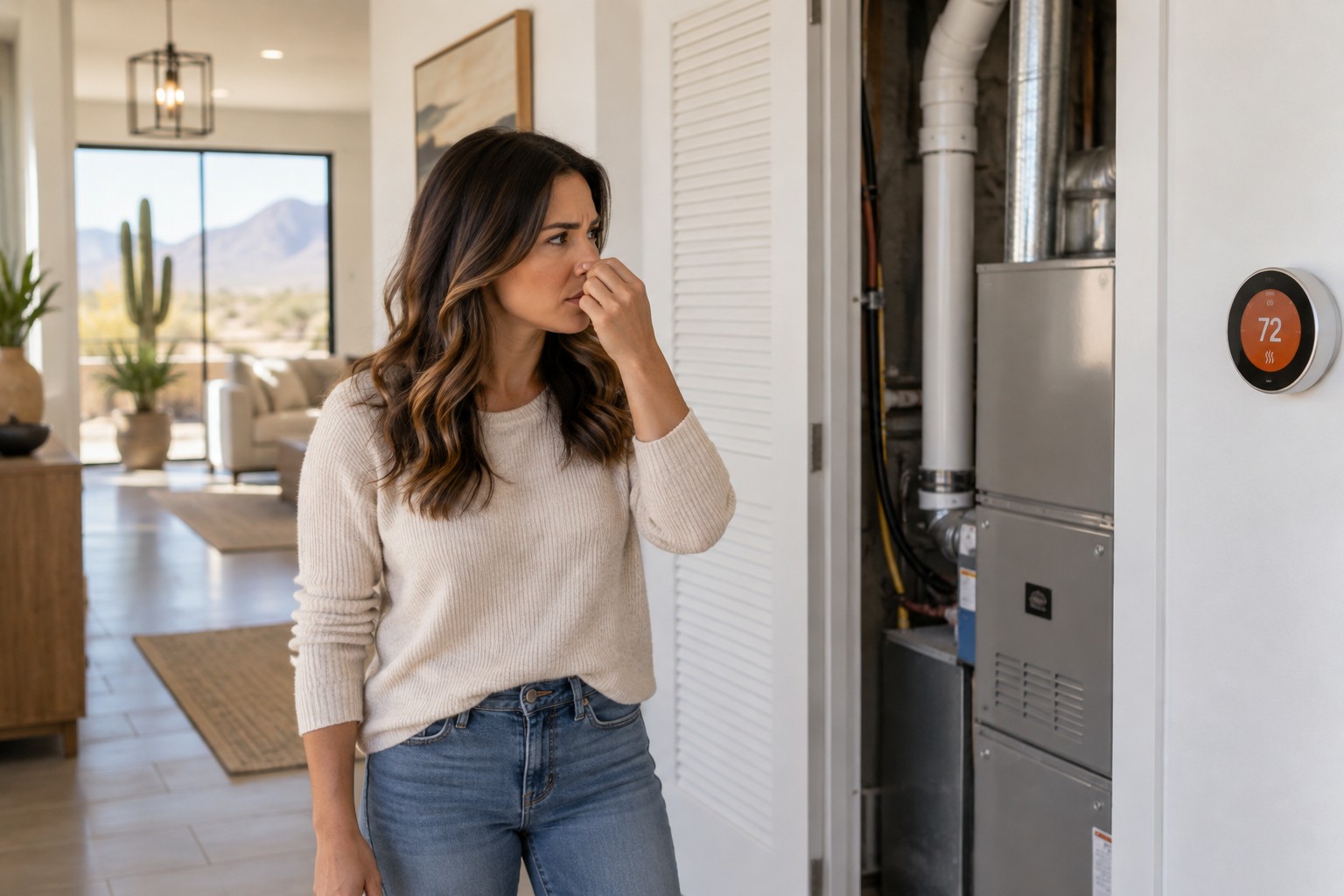
A furnace burning smell the first time you switch on the heat this season is usually nothing to worry about. Dust that settled on the burners and heat exchanger over a long Las Vegas cooling season burns off within the first heating cycle, and the odor should fade fast. At Bumble Breeze Plumbing, Heating & Air, our licensed technicians get calls every fall from homeowners who cannot tell whether that smell is routine or a sign something is actually wrong, and the difference matters more than most people realize.
Not sure if what you are smelling is normal? Our team can check your system.
Key Takeaways
- A brief dusty smell during the first heating cycle of the season is normal and should clear within about 30 to 60 minutes.
- An electrical or burning plastic smell means a component is overheating and the system should be shut off until a technician inspects it.
- A rotten egg smell means natural gas. Leave the home immediately, avoid switches and flames, and call Southwest Gas or 911 from outside.
- Musty or oily smells point to moisture, mold, or a mechanical problem inside the furnace rather than simple startup dust.
- Las Vegas homes can have a stronger dust burn off smell because furnaces often sit idle for months during our long cooling season.
- A working carbon monoxide alarm on every level of your home is essential whenever you run a gas furnace.
Every fall, furnaces across the valley fire up for the first time in months, and a furnace burning smell is a common reason homeowners call us. Most of the time it is harmless. Sometimes it is not, and knowing which is which can protect your home and your family.
Below, we break down exactly what different burning smells mean, what is normal, what needs a phone call right now, and how our Las Vegas climate can make some of these smells more noticeable here.
Is a Burning Smell Normal When You First Turn On the Heat
Yes, in most cases a brief burning or dusty smell the first time you run your furnace each season is completely normal. It happens because dust and light residue that settled on the heat exchanger, burners, and heating elements over the summer heat up and burn away as the system runs. Once that thin layer of dust is gone, the smell should disappear.
What the Normal Dust Burn Off Smell Actually Is
Think of it the same way a dusty light bulb smells slightly odd the moment you switch it on after months unused. Your furnace’s heat exchanger and burner assembly collect dust while the system sits idle all summer, and that dust singes off as soon as the components heat up. It is a dry, dusty odor, not sharp or chemical, and it is strongest in the first few minutes of the cycle.
How Long the Smell Should Last
A typical dust burn off smell should peak within the first several minutes of the heating cycle and fade steadily after that. It is usually gone within 30 to 60 minutes of continuous operation, and it usually will not return on the next cycle once the residue has burned away. If a furnace burning smell is still noticeable after an hour, or it comes back strong every time the system cycles, treat it as a sign that something beyond ordinary startup dust is going on and call our team for furnace repair in Las Vegas before you keep running the system.
A dust smell that fades quickly is one thing. A smell that lingers, changes character, or comes with smoke, sparking, or a hissing sound is a different situation entirely, and it is where the rest of this comes in.
Warning Smells That Mean Something Is Actually Wrong

Not every furnace smell is startup dust. Certain odors point to specific mechanical or safety problems, and recognizing the smell itself is often the fastest way to figure out what is happening before a technician even arrives. Use the table below as a quick reference.
| Smell | Likely Cause | What to Do |
|---|---|---|
| Mild dust, fades within an hour | Normal startup dust burn off on burners and heat exchanger | Let the cycle finish. If it lingers past an hour, call for service. |
| Rotten egg or sulfur | Natural gas leak (mercaptan odorant added by the utility) | Leave the home immediately, avoid switches and flames, call Southwest Gas or 911 from a safe location. |
| Sharp electrical or burning plastic | Overheating blower motor, failing capacitor, or damaged wiring insulation | Shut the furnace off at the thermostat or breaker and call a licensed technician. |
| Musty or damp, like a basement | Mold or moisture inside ductwork, the evaporator coil, or a clogged condensate drain | Have the system inspected. Do not ignore it, especially if anyone in the home has allergies or asthma. |
| Oily, smoky, or a chemical or formaldehyde-like odor | Oil residue on components, an overfiring burner, or a possible cracked heat exchanger | Turn the furnace off and call a technician. Do not use the system until it is inspected. |
| Metallic, hot-metal smell | Overheated motor bearing or a part rubbing against a housing | Shut the system down and schedule an inspection before running it again. |
If you are hearing strange noises along with any of these smells, our guide for new homeowners on strange HVAC noises and smells walks through more of what those combinations usually mean.
Electrical or Burning Plastic Smells Mean Overheating
A sharp, acrid smell that reminds you of burning plastic or hot electrical wiring is not dust. It usually means a component inside the furnace is running hotter than it should, and it deserves immediate attention rather than a wait and see approach.
Common Causes of an Electrical Burning Smell
A blower motor with worn bearings or failing windings can overheat and produce this smell, often along with a humming sound, reduced airflow, or a tripped breaker. A failing capacitor, loose wiring connections, or insulation that has degraded around aging wiring can also cause it. Any of these can escalate into a fire risk if the system keeps running.
What You Should Do
Turn the furnace off at the thermostat, and if the smell is strong or you see smoke, switch off the breaker for the unit as well. Do not attempt to open the blower compartment or inspect wiring yourself. Call a licensed technician to diagnose the source before you run the system again. Our furnace repair technicians can check blower motors, capacitors, and electrical connections to find the source.
Need someone to take a look? Our licensed technicians are ready to help.
A Rotten Egg Smell Means Gas. Leave the Home
Natural gas itself has no odor. Utilities add a chemical called mercaptan, which smells like rotten eggs or rotten cabbage, specifically so homeowners can detect a leak before it becomes dangerous. If you smell this anywhere near your furnace, water heater, or gas line, treat it as an emergency, not a maintenance question.
What to Do If You Smell Gas
Leave the home immediately with everyone inside, including pets. Do not flip any light switches, do not use your phone inside the house, and do not light a match or start a vehicle in an attached garage. Once you are outside and at a safe distance, call 911 and Southwest Gas at 877-860-6020. Do not go back inside until Southwest Gas or emergency personnel tell you it is safe.
After the Leak Is Addressed
Once the utility or a licensed technician has confirmed the leak is resolved, have your gas lines and furnace connections inspected before you use the system again. Our blog post on how to detect gas leaks in your home covers the warning signs worth knowing between inspections, and our gas line repair team can address a leaking fitting or aging line once the immediate emergency is over.
Musty, Oily, or Smoky Smells Point to Deeper Problems
Not every unusual smell is dramatic. Some build up slowly and are easy to dismiss, but they still point to real issues worth addressing before they get worse.
Musty or Damp Odors
A musty smell when your furnace runs usually means moisture, mildew, or mold somewhere in the system, often in ductwork, around the evaporator coil, or near a clogged condensate drain. It is more common in homes where the AC ran hard all summer and left condensation behind. It will not go away on its own, and it can affect indoor air quality for the whole household.
Oily, Smoky, or Chemical Odors
An oily or smoky smell, sometimes described as similar to formaldehyde, can indicate oil residue on internal components, a burner that is not combusting cleanly, or in more serious cases a cracked heat exchanger that is letting combustion byproducts escape where they should not. This is not a smell to live with. Turn the system off and have it inspected before running it again.
Why Las Vegas Furnaces Are Especially Prone to a Burning Smell

That startup odor can be more noticeable in Las Vegas homes than in climates where heating and cooling trade off more often, and the reasons come down to how we use our systems here.
A Long Idle Season Means More Dust Buildup
Many valley homes run air conditioning for six or seven months straight and leave the furnace completely idle the rest of the year. During that stretch, fine Mojave dust settles on burners, the heat exchanger, and blower components uninterrupted. When the furnace finally fires up in the fall, there is simply more dust to burn off than in a climate where heating and cooling alternate every few weeks. That is one reason the startup smell can feel stronger here than homeowners transplanted from other states expect, and our blog post on how Nevada’s dust and air affect your HVAC system covers more of what that buildup does to your equipment over a full year.
Attic Furnaces Add Their Own Complications
Many Las Vegas homes have the furnace in the attic, where summer temperatures can climb well above 120 degrees Fahrenheit. That heat bakes dust onto components and can dry out wiring insulation and gaskets faster than in a conditioned closet or basement installation. It also means a burning smell from an attic furnace is harder to notice right away, since the unit is out of sight, and any odor that does drift down through the ductwork deserves prompt attention rather than being dismissed.
When to Shut the System Off and Call for Help
Deciding whether to keep running your furnace or shut it down comes down to a few clear rules. Shut the system off immediately, and call for service, if you notice any of the following:
- A burning smell that has not faded after roughly an hour of the furnace running.
- Any electrical, burning plastic, or hot metal odor, especially with humming, sparking, or tripped breakers.
- A rotten egg smell anywhere near your furnace, gas line, or water heater.
- Visible smoke, or a chemical, oily odor that was not present in past heating seasons.
- A carbon monoxide alarm sounding, at any time, for any reason.
Carbon monoxide is colorless and odorless on its own, which is exactly why a working CO alarm on every level of your home matters so much whenever a gas furnace is running. If your alarm sounds, get everyone outside into fresh air right away and call 911 before you try to identify the source yourself. A furnace burning smell that comes with symptoms like headaches, dizziness, or nausea in the household should be treated the same way, as a possible carbon monoxide concern rather than a maintenance issue you can put off.
If your furnace has not been serviced in the last year, a professional visit is the safest way to rule out the more serious causes on this list before winter settles in. Our furnace maintenance visits include a full check of burners, the heat exchanger, and electrical connections, exactly the components that produce most of these smells.
Ready to get your system checked before the next cold night?
Frequently Asked Questions
Is it normal for my furnace to smell like burning when I turn it on for the first time this season?
Yes, a mild dusty burning smell during the first heating cycle of the season is normal in most homes. It comes from dust that settled on the burners and heat exchanger over the summer, and it should fade within about 30 to 60 minutes. If the smell is strong, chemical, or does not go away, call a technician.
How long should a furnace burning smell last before I worry?
A normal dust burn off smell typically peaks in the first few minutes of the heating cycle and clears within roughly an hour of continuous operation. If that odor is still present after an hour, returns on every cycle, or grows stronger rather than weaker, treat it as a sign to shut the system off and call for an inspection.
What should I do if my furnace smells like rotten eggs?
Treat it as a gas emergency. Leave the home right away with everyone inside, avoid light switches and open flames, and call 911 and Southwest Gas from outside once you are at a safe distance. Do not return home until the utility or emergency responders confirm it is safe.
Can a dirty furnace filter cause a burning smell?
A severely clogged filter can restrict airflow enough to cause a furnace to run hotter than it should, which can produce a burning or hot dust odor beyond the normal startup smell. Replacing the filter regularly is one of the simplest ways to reduce strain on the system and lower the chance of overheating-related smells.
Should I keep running my furnace if I smell something burning?
It depends on the smell. A faint dusty odor in the first hour of the season’s first heating cycle is fine to let run. Any electrical, plastic, oily, smoky, or gas odor means you should shut the furnace off at the thermostat, and the breaker if needed, and call a licensed technician before running it again.
Do I need a carbon monoxide alarm even if my furnace smells fine?
Yes. Carbon monoxide has no smell or color, so a furnace can produce it even when nothing seems obviously wrong. Every home with a gas furnace should have a working CO alarm on each level, tested regularly and replaced by its manufacturer’s expiration date, regardless of whether you have noticed any unusual odors.
A furnace burning smell is a common concern across the valley once the weather turns, and figuring out whether it is ordinary startup dust or a genuine warning sign is worth taking seriously. If you are ever unsure, do not guess. Call Bumble Breeze Plumbing, Heating & Air at (702) 703-1346 and our licensed technicians can inspect your furnace and tell you plainly what is going on. We serve Las Vegas, Henderson, Summerlin, North Las Vegas, Spring Valley, Paradise, Enterprise, Green Valley, and surrounding communities across the valley from our office at 4755 W University Ave, Las Vegas, NV 89103.
Ready to Get Started with Bumble Breeze Plumbing, Heating & Air?
Call (702) 703-1346 to speak with our team directly. We can help you figure out whether that furnace smell is normal or something that needs a technician soon, and we will explain exactly what we find before any work begins.