Yes, a gas furnace can leak carbon monoxide, and these leaks are one of the most serious safety risks in any home heated with natural gas. A healthy furnace sends its combustion gases safely outdoors, but a cracked part, a blocked vent, or a burner that is out of adjustment can let that invisible gas slip into your living space. At Bumble Breeze Plumbing, Heating & Air, our licensed technicians inspect gas furnaces across the Las Vegas Valley every fall, and we want every homeowner to know how to spot trouble early and what to do the moment an alarm sounds.
Want peace of mind before the first cold night? Our team can inspect your furnace and venting before the weather turns.
Key Takeaways
- Every gas furnace produces carbon monoxide as a byproduct of burning fuel, so the real question is whether your system is venting it safely outside.
- The most common causes of a furnace carbon monoxide leak are a cracked heat exchanger, a blocked or disconnected flue, backdrafting, dirty burners, and poor combustion air.
- Flu-like symptoms that ease when you leave the house, a yellow or orange burner flame, soot, and heavy window condensation are all warning signs worth a professional inspection.
- If a CO alarm sounds, get everyone outside to fresh air right away, then call 911 and Southwest Gas at 877-860-6020 from a safe location.
- The U.S. Consumer Product Safety Commission (CPSC) recommends CO alarms on every level of your home and outside sleeping areas, tested monthly.
- A yearly professional inspection of your furnace, flue, and vents is the single best way to catch carbon monoxide hazards before they reach your family.
Las Vegas winters are mild, but the National Weather Service puts the normal December low in the upper 30s, and areas like Summerlin and Anthem often dip colder. Most valley furnaces sit idle for months and then run hard for a few weeks, giving dust and small mechanical problems time to build up quietly.
Below, we explain how your furnace handles combustion gases, what causes them to escape, the seven signs to watch for, and how to protect your household.
How a Gas Furnace Produces and Vents Combustion Gases
Your furnace does not heat your home by blowing air across an open flame. It burns natural gas inside a sealed chamber and transfers that heat through metal walls to the air circulating through your home.
What Happens Inside the Burner and Heat Exchanger
When your thermostat calls for heat, the burners ignite and hot combustion gases travel through the heat exchanger, a set of metal tubes or chambers. Your blower pushes household air across the outside of the heat exchanger, warming it without mixing it with the gases inside. When the heat exchanger is intact, the two air streams stay completely separate.
Where the Carbon Monoxide Goes
Complete combustion mostly produces carbon dioxide and water vapor, but every gas flame produces at least some carbon monoxide, and incomplete combustion produces far more. Southwest Gas describes carbon monoxide as a poisonous, odorless, colorless gas produced by the incomplete burning of fuel, including natural gas. A draft inducer fan and a flue pipe carry these gases up and out through your roof or a side wall. As long as the vent path is sealed, connected, and clear, carbon monoxide from furnace combustion never reaches the rooms where you live and sleep.
Why Las Vegas Homes Need Extra Attention
Many valley homes have furnaces tucked into attics, garages, or small interior closets. Attic units bake through triple-digit summers, which is hard on vent connections and seals. Garage and closet units can be starved of combustion air when the space is sealed up or crowded with storage. Add fine desert dust, and a furnace can slowly drift toward poor combustion.
What Causes a Furnace Carbon Monoxide Leak
CO from your furnace usually traces back to one of two problems. Either the furnace is producing more CO than it should, or the gases are not leaving the house as designed. Here are the most common causes our technicians find.
| Cause | What Goes Wrong | Why It Matters |
|---|---|---|
| Cracked heat exchanger | Metal fatigue from years of heating and cooling opens cracks or holes | Combustion gases can mix with the air your blower sends through the house |
| Blocked flue or vent | Debris, bird nests, or damaged caps restrict the exhaust path | Exhaust has nowhere to go and can spill back into the home |
| Disconnected or corroded vent pipe | Joints separate or rust through, often in hot attics | Gases leak directly into the attic, closet, or living space |
| Backdrafting | Exhaust fans or a tight house pull air down the flue instead of up | Combustion gases are drawn back into the home |
| Dirty or misadjusted burners | Dust and debris disrupt the fuel and air mix | Incomplete combustion produces much more carbon monoxide |
| Poor combustion air | Closet doors sealed, vents blocked, or storage crowding the unit | An oxygen-starved flame burns dirty and creates more CO |
Cracked Heat Exchanger
The heat exchanger expands every time it heats up and contracts every time it cools down. Over many years, that constant stress can cause cracks, especially in older furnaces or systems that overheat because of restricted airflow from a clogged filter. Common cracked heat exchanger symptoms include a flame that flickers when the blower starts, soot inside the cabinet, and CO alarms that sound when the heat runs. Only a technician’s inspection can confirm a crack.
Blocked or Disconnected Flue
Your flue is the exit route for exhaust gases. The CPSC notes that a professional inspection should check chimneys and flues for blockages, corrosion, and partial or complete disconnections. In attics, summer heat and vibration can loosen vent joints until a pipe slips apart and dumps exhaust into the attic.
Backdrafting and Poor Combustion Air
Many furnaces and water heaters rely on natural draft, meaning hot exhaust rises up the flue on its own. Powerful range hoods, bath fans, or a clothes dryer running in a tight house can create negative pressure that pulls air back down the flue. A furnace closet sealed too tightly can also starve the burners of air. Keep stored items away from the furnace and never block combustion air openings.
Dirty Burners
Dust on the burners changes the way gas and air mix, so the flame burns dirtier and produces more carbon monoxide. Keeping up with regular furnace filter changes reduces the dust load, but burner cleaning and adjustment should be left to a licensed technician.
Think your furnace might be venting poorly? Talk to our team now.
7 Warning Signs of Furnace Carbon Monoxide Problems

Because CO has no color, taste, or smell, you cannot rely on your senses to detect the gas itself. What you can notice are the side effects of poor combustion and poor venting from a furnace. Any one of these signs is reason enough to shut the furnace off and call for an inspection.
1. Flu-Like Symptoms That Improve When You Leave Home
The Centers for Disease Control and Prevention (CDC) lists headache, dizziness, weakness, upset stomach, vomiting, chest pain, and confusion as the most common symptoms of CO poisoning, and notes they are often described as flu-like. If several people or pets feel sick at the same time, and everyone feels better after time away, suspect carbon monoxide. Get fresh air and seek medical help right away, and tell the provider you suspect CO exposure.
2. Your CO Alarm Sounds
This is the most important warning sign of all. Treat every alarm as real until emergency responders say otherwise, and follow the steps in the next section.
3. A Yellow, Orange, or Flickering Burner Flame
A healthy gas burner flame is mostly crisp and blue. A lazy yellow or orange flame, or one that dances or rolls out of the burner area, points to incomplete combustion or an airflow problem. Southwest Gas advises that high yellow flames or soot buildup at an appliance call for a qualified contractor. You can often see the flame through a small window in the furnace door, but never remove panels or reach into the burner compartment yourself.
4. Soot or Scorch Marks
Black, powdery soot around the furnace cabinet, on the vent pipe, or around supply registers is a sign that fuel is not burning cleanly. Scorch marks near the burners can mean flames are rolling out of the combustion chamber.
5. Heavy Condensation on Windows
Las Vegas air is famously dry, so persistent fogging on the inside of your windows during heating season is unusual. Combustion produces water vapor, and when it is not vented properly it can collect on cool glass. Condensation alone does not prove a CO problem, but in a desert home it is worth mentioning to your technician.
6. Pilot Light or Burner Problems
Older furnaces with a standing pilot may show a pilot that keeps going out or burns yellow. On newer furnaces, burners that shut down shortly after lighting, or a pressure or rollout switch that keeps tripping, can mean exhaust is not moving the way it should.
7. Stale, Stuffy Air or a Rusty Vent Pipe
Air that feels unusually stuffy or stale when the heat runs, a lack of draft at the vent, or rust and water streaks on the flue pipe can all point to poor venting. Corrosion is especially concerning because it can eventually eat through the pipe and let exhaust escape. If you notice any of these, our furnace repair team in Las Vegas can test combustion and trace the problem.
What to Do Immediately If Your CO Alarm Goes Off
Speed matters more than troubleshooting. Do not try to find the source. Follow these steps, based on CPSC, CDC, and Southwest Gas guidance.
- Get everyone, including pets, out of the house to fresh air immediately.
- From outside, call 911.
- Call Southwest Gas at 877-860-6020. You can confirm the current number on the Southwest Gas report a leak page.
- Do a head count to make sure everyone is out.
- Seek medical help for anyone who feels sick, and mention possible carbon monoxide exposure.
- Do not go back inside until emergency responders say it is safe.
What About a Gas Smell
Carbon monoxide has no odor, but natural gas does. The utility adds a sulfur or rotten egg odorant so leaks are noticeable. If you smell gas, leave the home right away, do not flip light switches, use phones inside, or light anything, and call 911 and Southwest Gas from a safe distance. Our article on how to detect gas leaks in your home explains more about the difference.
After Responders Clear the Home
Responders may shut off or tag the furnace as unsafe. Do not restart it until a licensed HVAC technician has inspected and repaired the furnace, including a combustion analysis, heat exchanger inspection, and vent check.
Where to Put Carbon Monoxide Detectors in Your Home
Knowing where to put carbon monoxide detectors is just as important as owning them. Always follow the manufacturer’s instructions for your model, and use the guidance below as a starting point.
What the CPSC and NFPA Recommend
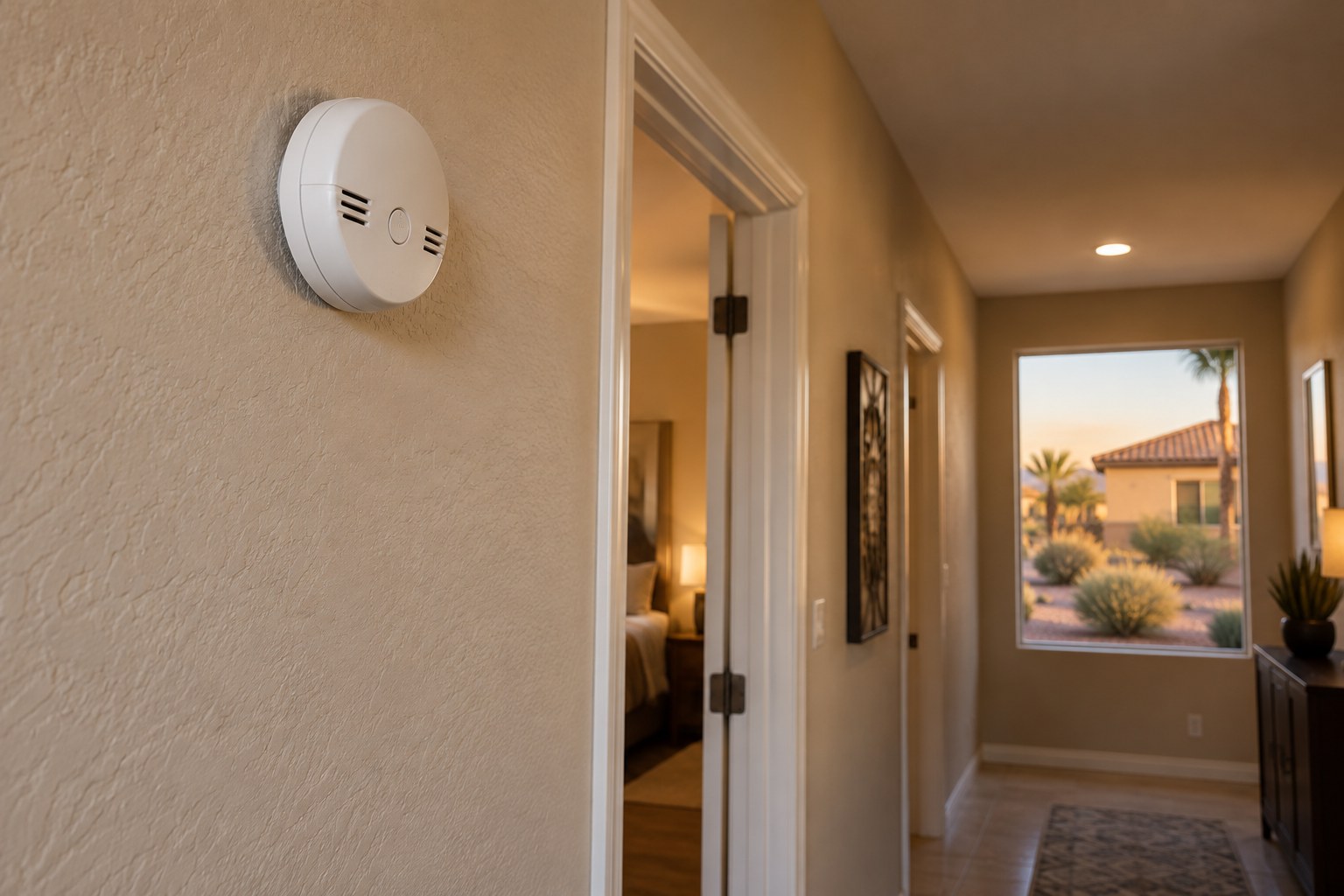
The CPSC recommends CO alarms on each level of the home and outside sleeping areas. The National Fire Protection Association (NFPA) advises installing them in a central location outside each sleeping area, on every level, and anywhere else required by local codes. Both organizations say interconnected alarms offer the best protection, because when one sounds, they all sound. Choose alarms that meet the UL 2034 standard, with battery power or battery backup.
Placement Tips for Las Vegas Floor Plans
- In single-story ranch homes common in older neighborhoods like Paradise and Spring Valley, place an alarm in the hallway outside the bedrooms, plus near the main living area if bedrooms are split across the house.
- In two-story homes throughout Summerlin, Henderson, and Enterprise, put at least one alarm on each floor, with one outside each separate sleeping area.
- Avoid placing alarms directly next to the furnace, in humid bathrooms, or right by windows and fans, where readings can be distorted.
Testing and Replacing Your Alarms
The CPSC recommends testing CO alarms monthly and replacing batteries as needed. CO sensors wear out, and many alarms are designed to last roughly five to ten years depending on the model, so check the manufacturer date on the back and replace units according to the label.
How Annual Furnace Maintenance Prevents Carbon Monoxide Problems

Alarms warn you when something has already gone wrong. Maintenance is what keeps it from going wrong in the first place. The CPSC urges homeowners to schedule a yearly professional inspection of all fuel-burning heating systems, including furnaces, water heaters, chimneys, flues, and vents, and the U.S. Environmental Protection Agency (EPA) recommends the same at the start of each heating season.
What Our Technicians Check
During professional furnace maintenance in Las Vegas, our licensed technicians look at the parts that matter most for carbon monoxide safety:
- Visual inspection of the heat exchanger for cracks, holes, and corrosion
- Combustion testing to confirm the burners are burning cleanly
- Burner cleaning and flame inspection
- Flue and vent inspection for blockages, loose joints, and rust
- Combustion air review to make sure the furnace closet or attic space is not starved for air
Why Fall Is the Right Time
Scheduling in October or early November catches problems before the coldest nights. Our heating maintenance service covers gas furnaces and heat pumps alike, and members of our maintenance plan get routine tune-ups scheduled for them so nothing slips through the cracks.
When Repair Is Not Enough
A cracked heat exchanger on an older furnace raises the question of whether repair makes sense, and depending on the system’s age and condition, replacement may be the safer choice. Pricing varies by system, so we give you a clear, upfront estimate before any work begins, along with an honest recommendation. If your furnace is showing its age, read about the signs you need a furnace replacement before you decide.
Ready to make sure your furnace is venting safely this winter? Book your inspection today.
Frequently Asked Questions
Can a furnace leak carbon monoxide when it is turned off?
A furnace that is completely off is not burning gas, so it is not producing carbon monoxide. However, if a CO alarm sounds while the heat is off, another appliance could be the source, such as a gas water heater, range, dryer, or a vehicle in an attached garage. Treat every alarm as real, get outside, and call 911 and Southwest Gas.
How can I tell if my furnace is leaking carbon monoxide without a detector?
You cannot reliably detect CO with your senses, which is why alarms are so important. Indirect signs include a yellow or flickering burner flame, soot around the furnace, rust on the vent pipe, unusual window condensation, and flu-like symptoms that ease when you leave home. If you notice any of these, turn off the furnace and schedule a professional inspection.
What are the most common cracked heat exchanger symptoms?
Common signs include a burner flame that flickers or changes when the blower turns on, soot inside the furnace cabinet, a CO alarm that sounds when the heat runs, and unusual odors. Some cracks show no obvious symptoms at all. A licensed technician confirms a crack with a visual inspection and combustion testing, which is why annual maintenance matters so much.
Where should I put a carbon monoxide detector?
The CPSC recommends CO alarms on every level of your home and outside sleeping areas, and NFPA recommends a central location outside each sleeping area. Interconnected alarms provide the best coverage. Avoid spots right next to the furnace, in bathrooms, or near windows and fans. Always follow the placement instructions from your alarm’s manufacturer.
Is a newer high-efficiency furnace safe from carbon monoxide leaks?
Newer furnaces include more safety controls, but no gas appliance is immune. High-efficiency models use sealed combustion and plastic vent pipes that can still become blocked, disconnected, or damaged, so a new furnace still needs yearly maintenance and working CO alarms.
Staying safe from CO from your furnace comes down to three habits: working CO alarms in the right places, knowing the warning signs, and a yearly professional inspection of your furnace and venting. If you have noticed any of the signs above, or it has been more than a year since your last tune-up, call Bumble Breeze Plumbing, Heating & Air at (702) 703-1346. We serve homeowners in Las Vegas, Henderson, North Las Vegas, Summerlin, Spring Valley, Green Valley, and throughout the valley from our office at 4755 W University Ave, Las Vegas, NV 89103.
Ready to Get Started with Bumble Breeze Plumbing, Heating & Air?
Our licensed technicians can inspect, repair, and maintain your gas furnace with upfront, honest pricing. Call (702) 703-1346 today to schedule your furnace safety check.