
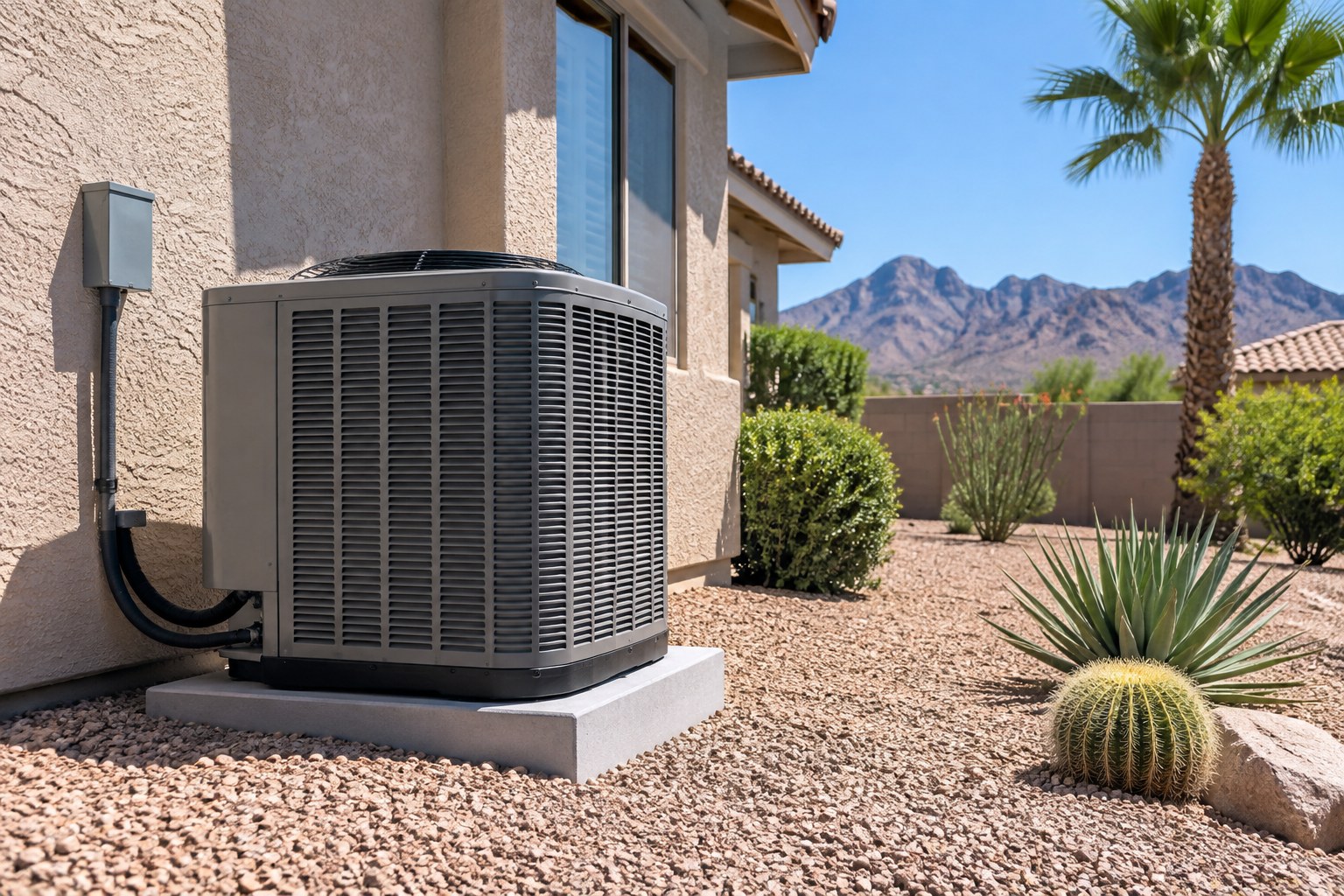
Choosing between a heat pump vs furnace is a common decision valley homeowners face when replacing an aging system, and the right answer depends on your home, your utility mix, and how you use heating and cooling through the year. At Bumble Breeze Plumbing, Heating & Air, our licensed technicians install and service both systems across the Las Vegas Valley, and we walk homeowners through the tradeoffs before recommending anything. Our mild winters and brutal summers make this decision different here than it is in colder parts of the country.
Not sure which system fits your home? Our team can walk your house and give you a straight answer.
Key Takeaways
- A heat pump moves heat instead of burning fuel, so it can both heat and cool your home, while a furnace only produces heat by burning natural gas.
- Las Vegas winters are mild enough that a heat pump can usually carry the full heating load without struggling, unlike in colder northern states.
- Heat pumps are rated with SEER2 and HSPF2, while furnaces use AFUE, and comparing these numbers directly is not accurate since they measure different things.
- A dual fuel, or hybrid, system pairs a heat pump with a gas furnace so the furnace only kicks in on the rare cold night when it is genuinely needed.
- Homes without an existing gas line, including some newer all-electric builds, are strong candidates for a heat pump since there is no gas infrastructure to add.
- Lifespan, comfort preferences, and whether your home already has a Southwest Gas connection all factor into which system makes more sense long term.
Every heating decision in the Las Vegas Valley starts with the same fact: our winters are short and mild compared to much of the country, but our summers are among the most extreme. That combination changes the math on a heat pump and a furnace in ways that do not apply in Denver or Chicago. A system that would struggle to keep a Midwest home warm all winter can carry a Las Vegas home through its entire heating season without much strain.
Below, we break down how each system works, what the efficiency numbers actually mean, what tends to drive your NV Energy or Southwest Gas bill, and when each option makes the most sense for a home in Henderson, Summerlin, Spring Valley, or anywhere else in the valley.
How a Heat Pump Works Compared to a Furnace
The core difference between these two systems is simple: one moves heat, and the other burns fuel to create it. That single distinction explains almost every other difference you will read about below.
How a Heat Pump Moves Heat Into Your Home
A heat pump uses refrigerant and a compressor to pull heat energy out of the outdoor air, even on a cool day, and transfer it inside through your ductwork. In summer, the system runs in reverse, pulling heat out of your home and releasing it outdoors, which is exactly how a standard air conditioner works. That reversible cycle is why a heat pump can replace both your furnace and your AC with a single outdoor unit.
Because a heat pump does not burn anything, there is no flame, no combustion byproduct, and no flue to inspect. It runs on electricity from NV Energy alone. Our team installs and services heat pumps across the valley, and you can see the full range of options on our heat pump installation page.
How a Gas Furnace Produces Heat
A furnace burns natural gas from Southwest Gas in a combustion chamber, and a heat exchanger transfers that heat to air that a blower pushes through your ducts. Combustion byproducts, including carbon monoxide, vent outside through a flue pipe. That is why a working carbon monoxide alarm near sleeping areas is non-negotiable in any home with a gas furnace.
Furnaces only produce heat. They do not cool, so a home with a gas furnace still needs a separate air conditioning system for our long, brutal summer season. If your current furnace is aging or acting up, our furnace installation page covers what a replacement typically involves.
Efficiency Ratings: SEER2 and HSPF2 vs AFUE

Efficiency labels on heating equipment confuse a lot of homeowners because heat pumps and furnaces are measured on completely different scales.
What SEER2 and HSPF2 Measure on a Heat Pump
SEER2 (Seasonal Energy Efficiency Ratio 2) measures a heat pump’s cooling efficiency over a season, while HSPF2 (Heating Seasonal Performance Factor 2) measures its heating efficiency. Both replaced the older SEER and HSPF metrics in 2023 under a revised U.S. Department of Energy test procedure that better reflects real-world duct static pressure, so a unit’s HSPF2 number reads a bit lower than its old HSPF rating would have, even though the equipment did not get any less efficient. Higher SEER2 and HSPF2 numbers mean the system delivers more cooling or heating per unit of electricity it uses.
What AFUE Measures on a Furnace
AFUE (Annual Fuel Utilization Efficiency) measures the percentage of fuel energy a furnace actually converts into usable heat over a heating season, with the rest lost through the flue. A furnace rated at 95 percent AFUE turns 95 percent of the natural gas it burns into heat inside your home. Standard efficiency furnaces are rated around 80 percent AFUE, while high-efficiency condensing furnaces are rated 90 percent AFUE or higher.
You cannot compare a SEER2 or HSPF2 number directly against an AFUE number since one measures electrical output per watt and the other measures heat output per unit of fuel burned. The table below lays out the practical differences side by side instead.
| Factor | Heat Pump | Gas Furnace |
|---|---|---|
| Fuel source | Electricity (NV Energy) | Natural gas (Southwest Gas) |
| Efficiency rating | SEER2 (cooling) and HSPF2 (heating) | AFUE |
| Cools your home | Yes, in the same unit | No, needs a separate AC |
| Combustion or flue needed | No | Yes, vented outside |
| Typical lifespan | Roughly 12 to 15 years | Roughly 15 to 20 years |
| Performance on the coldest nights | Strong in our mild winters, may lean on backup heat on the rare hard freeze | Consistent output regardless of outdoor temperature |
| Needs a gas line | No | Yes |
Heat Pump vs Furnace: What Actually Drives Your Heating Costs in Las Vegas
Homeowners understandably want a dollar figure, but an honest answer depends on your specific rate plan, your home’s insulation, your thermostat habits, and current NV Energy and Southwest Gas rates, all of which shift over time. Instead of guessing at a number that will be wrong by the time you read it, it helps to understand what actually moves the needle.
NV Energy Electricity vs Southwest Gas Natural Gas
A heat pump runs entirely on electricity billed through NV Energy. A furnace runs on natural gas billed through Southwest Gas, with a smaller electric load just to run the blower and controls. Because a heat pump moves existing heat rather than generating it from scratch, it typically produces more heat energy per unit of electricity it consumes than a resistance heater would, and in a mild climate like ours it can often deliver home heating efficiently relative to its electric input. Whether that translates to a lower or higher bill than a gas furnace depends on your current NV Energy electric rate compared to your Southwest Gas rate, which is exactly why we recommend asking for a written, upfront estimate that accounts for your actual home rather than relying on a generic number.
Why the Same Equipment Can Cost Different Homeowners Different Amounts
Duct leakage, insulation quality, window efficiency, and thermostat setpoints all change how hard either system has to work. An older Paradise or Spring Valley home with leaky ductwork will see higher bills on any heating system until the ducts get sealed. Home size, ceiling height, and how many hours a day you actually run heat all matter more than the label on the equipment. If you are weighing a heat pump or furnace decision purely on projected running costs, ask your technician for a load calculation on your specific home rather than trusting a rule of thumb pulled from a national average.
Curious what a heat pump actually costs to run day to day in a desert climate? Our blog post on energy efficient heating and cooling with heat pumps in Las Vegas breaks down the details.
Ready to see which system fits your home and your budget?
Dual Fuel Hybrid Systems: Getting the Best of Both
You do not always have to pick one system and give up the other entirely.
How a Dual Fuel Hybrid System Works
A dual fuel, or hybrid, system pairs an electric heat pump with a gas furnace on the same ductwork. A control board switches between the two based on outdoor temperature. The heat pump handles nearly all of your heating on the mild nights that make up most of our winter, and the furnace only takes over on the rare occasion the temperature drops low enough that the furnace can deliver heat more efficiently than the heat pump can. That threshold, called the balance point, is set during installation based on your home and your local climate.
Is a Hybrid System Worth It in a Las Vegas Climate
Because our winters rarely produce sustained hard freezes, a dual fuel system in the valley often ends up leaning on the heat pump for the vast majority of the heating season, with the furnace sitting mostly idle as backup. That gives you efficient day-to-day heating plus a reliable fallback for an unusual cold snap, without ever worrying about comfort on the coldest night of the year. It is a good option if you already have a gas line and want the flexibility of both technologies rather than choosing one outright.
Homes Without a Gas Line and New Construction
Not every home in the valley has natural gas service, and that single fact can settle the heat pump vs furnace question before you even get to efficiency ratings.
All-Electric Homes and Newer Communities
Some newer homes and communities in the Las Vegas area are built all electric, with no gas line run to the home at all. If that describes your house, installing a furnace means paying to bring in gas service and a meter from Southwest Gas before you can even install the equipment, which adds real cost and complexity. A heat pump sidesteps that entirely since it only needs an electrical connection, which every home already has.
Adding a Heat Pump Without Changing Your Ductwork
If your home already has central ducted air conditioning, a heat pump can generally use that same ductwork, which keeps installation straightforward in most cases. Our team evaluates your existing duct sizing and layout as part of any heat pump installation to confirm it will support the new system properly. Homeowners curious about how a heat pump handles our unique climate on both ends of the thermometer can read more in our blog post on whether heat pumps are effective during winter in dry climates and our post on whether heat pumps can handle the Vegas heat.
Lifespan, Comfort, and Making the Final Call

Once you understand how each system works and what drives cost, the decision usually comes down to lifespan expectations and comfort preferences.
How Long Each System Typically Lasts
A well-maintained gas furnace typically lasts around 15 to 20 years, in part because it only runs during the heating season. A heat pump typically lasts around 12 to 15 years because the outdoor compressor runs nearly year-round in our climate, handling both heating and cooling duty instead of resting for half the year like a furnace does. Regular maintenance narrows that gap significantly in both directions, which is why we recommend annual service for either system. You can review what that looks like on our heat pump maintenance and furnace maintenance pages.
Comfort Differences Worth Considering
A furnace delivers a burst of noticeably hot air at the vents, which some homeowners simply prefer on a cold morning. A heat pump delivers a steadier, more moderate airflow temperature, which some homeowners find more even throughout the day but less dramatic on the coldest nights. Neither is objectively more comfortable. It is a matter of what you are used to and how your home is insulated.
If you are ready to move forward with either option, our team can walk you through financing, install timelines, and what to expect on installation day.
Frequently Asked Questions
Is a heat pump or a furnace better for Las Vegas winters specifically?
Both work well here because our winters are short and mild compared to most of the country. A heat pump alone can typically carry the full heating load in most valley homes, while a furnace delivers consistent output regardless of outdoor temperature. The better fit depends on whether you also want the heat pump’s built-in cooling and whether your home already has a gas line.
Do I need a backup heat source with a heat pump in the Las Vegas Valley?
Most homes do not strictly need one because our coldest nights rarely stay below freezing for long. Some homeowners still choose a dual fuel setup for extra peace of mind on an unusual cold snap, or as a transition option if they are not ready to give up their existing furnace.
Can I install a heat pump if my home does not have a gas line?
Yes, and it is often the simpler and more cost-effective choice in that situation. A heat pump only requires an electrical connection, so you skip the cost of running new gas service and a meter that a furnace installation would require in a home without existing gas infrastructure.
Are there tax credits or rebates for installing a heat pump in 2026?
The federal Energy Efficient Home Improvement Credit (Section 25C) that once covered qualifying heat pumps expired for equipment placed in service after December 31, 2025, so it is not available for new 2026 installations. NV Energy and manufacturers periodically run their own rebate or financing programs, so ask our team what is currently active before you budget for a new system.
What should I do if I smell gas near my furnace?
Leave the home immediately, and do not flip any light switches or use anything that could create a spark. From a safe location outside, call 911 and Southwest Gas at 877-860-6020. Do not go back inside until Southwest Gas or emergency responders tell you it is safe.
Can a heat pump replace my furnace and my air conditioner at the same time?
In most cases, yes. A single heat pump handles both heating and cooling through the same outdoor unit and, in many homes, the same existing ductwork, which is one of its biggest advantages over a furnace that only heats. Our technicians can confirm whether your specific ductwork and electrical panel support the switch.
Deciding between a heat pump or furnace does not have to be a guessing game. Whichever direction fits your home, gas access, and comfort preferences, our licensed technicians at Bumble Breeze Plumbing, Heating & Air can walk your house, check your ductwork, and give you an honest, upfront recommendation. Call (702) 703-1346 to schedule a visit anywhere in Las Vegas, Henderson, Summerlin, Spring Valley, Green Valley, Anthem, or the surrounding communities we serve. Our office is located at 4755 W University Ave, Las Vegas, NV 89103.
Ready to Get Started with Bumble Breeze Plumbing, Heating & Air?
Call (702) 703-1346 to speak with our team directly. We’re ready to answer your questions, walk you through your options, and help you find the right heating and cooling solution for your home.