
Natural gas is commonly used in homes for heating, cooking, and hot water. While it’s an efficient and reliable energy source, a gas leak can pose serious safety risks if not addressed quickly. Knowing how to detect a gas leak and what steps to take can help protect your home and family.
If you suspect leaking gas, acting promptly is critical. Below, we’ll explain how to recognize warning signs, answer common questions about gas leak detection, and outline when to contact professional gas leak detection services.
Why Gas Leaks Are Dangerous
Natural gas is highly flammable. Even small leaks can create hazardous conditions if gas accumulates indoors. In addition to fire risk, prolonged exposure may cause symptoms such as dizziness, headaches, nausea, or breathing difficulties.
Because gas is colorless and naturally odorless, utility providers add a sulfur-like odorant that smells similar to rotten eggs. This makes detecting gas leaks at home easier for homeowners.
How to Detect a Gas Leak
Understanding the warning signs is the first step in effective gas leak detection.
Smell of Rotten Eggs
The most common way homeowners detect leaking gas is by smell. If you notice a strong sulfur or rotten egg odor near appliances, gas lines, or outdoors near your meter, treat it as a potential leak.
Even a faint smell should not be ignored.
Hissing Sounds Near Gas Lines
A hissing or whistling noise near a gas appliance, flexible connector, or gas meter may indicate escaping gas. This is often more noticeable in quiet areas or near exposed piping.
Visible Signs Around Gas Lines
In some cases, you may see physical indicators of a leak, including:
- Dead or discolored vegetation near underground gas lines
- Bubbling water in puddles after rain
- Dust blowing upward near a buried gas pipe
These outdoor signs are important for detecting gas leaks at home before they become more serious.
Physical Symptoms Indoors
Exposure to natural gas can cause:
- Headaches
- Dizziness
- Nausea
- Fatigue
- Difficulty breathing
If symptoms improve when you leave the home, a gas leak could be the cause.
Will a Carbon Monoxide Detector Detect a Gas Leak?
This is a common and important question.
No — a carbon monoxide detector will not detect a natural gas leak.
Carbon monoxide detectors are designed to detect carbon monoxide (CO), a byproduct of incomplete combustion in appliances like furnaces and water heaters. Natural gas leaks involve unburned gas, not carbon monoxide.
To detect gas leaks, you need either:
- Your sense of smell (due to added odorant)
- A combustible gas detector
- Professional gas leak detection equipment
Understanding this distinction is critical for home safety.
What to Do If You Suspect a Gas Leak
If you believe there may be a gas leak in your home:
- Do not turn lights or electrical switches on or off.
- Do not use phones or electronics inside the home.
- Avoid open flames, candles, or smoking.
- Leave the building immediately.
- Call your gas utility company or emergency services from outside the home.
Never attempt DIY repairs on gas lines. Professional gas leak detection and repair are essential for safety.
Professional Gas Leak Detection Services
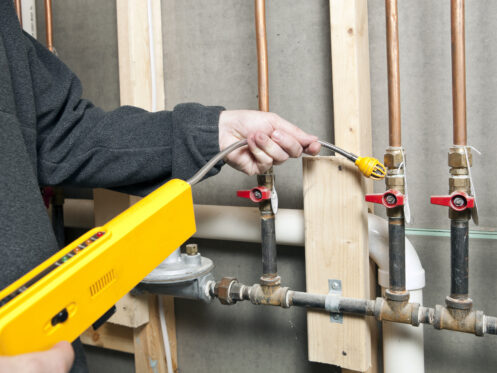
While some signs are obvious, smaller leaks can be harder to identify without specialized equipment. Professional gas leak detection services use advanced tools designed to safely and accurately locate leaks, including:
- Electronic combustible gas detectors
- Pressure testing equipment
- Infrared leak detection devices
These tools allow technicians to pinpoint the exact source of the leak without unnecessary damage to walls or flooring.
A professional gas leak detection solution ensures the problem is resolved safely and in compliance with local codes.
Preventing Gas Leaks in the Future
Routine inspection and maintenance reduce the risk of gas line issues. Consider:
- Annual appliance inspections
- Checking flexible gas connectors for wear
- Ensuring proper installation during renovations
- Scheduling professional inspections if you notice corrosion or loose fittings
Preventative service plays a major role in long-term safety.
When to Call for Immediate Help
Contact emergency services or your gas provider immediately if you notice:
- A strong gas odor
- Sudden physical symptoms
- Hissing sounds near gas lines
- Dead vegetation above underground gas lines
Gas leak detection should never be delayed. Acting quickly reduces safety risks and prevents property damage.
Final Thoughts on Detecting Gas Leaks at Home
Knowing how to detect a gas leak is essential for homeowner safety. From recognizing the smell of sulfur to understanding that a carbon monoxide detector cannot detect leaking gas, awareness makes a critical difference.
If you suspect a leak or want peace of mind, professional gas leak detection services provide accurate diagnosis and safe repair solutions. Early detection protects your home, your family, and your property.