
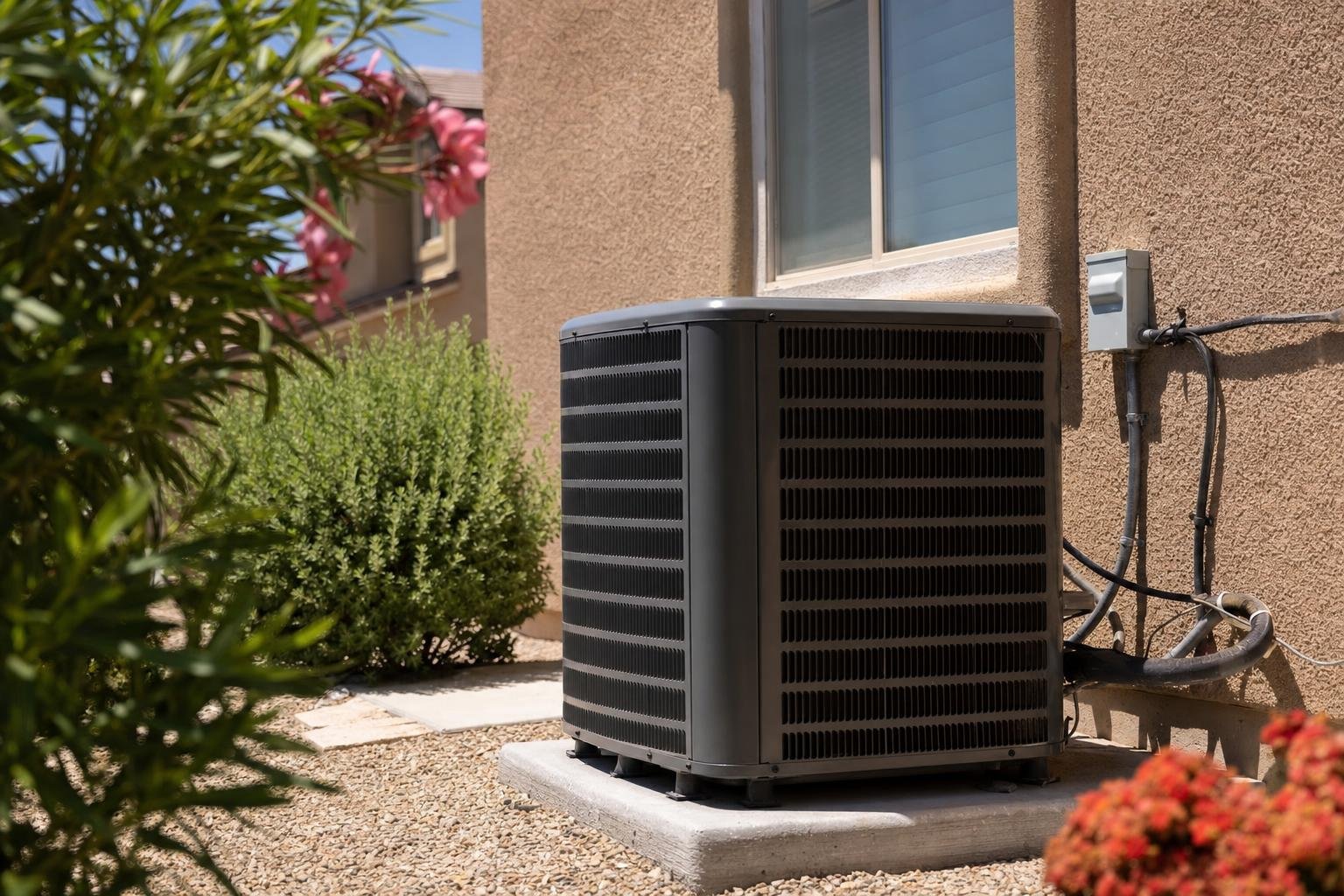
A heat pump might be the most misunderstood piece of equipment in your Las Vegas home. Most people assume it generates heat the same way a furnace does. It doesn’t. Understanding how a heat pump works helps you make smarter decisions about your comfort system, your energy bills, and when to call for service. Our certified technicians at Bumble Breeze Plumbing, Heating & Air, based right here at 4755 W. University Ave. in Las Vegas, see heat pump questions every week. We’re happy to walk you through exactly how this technology keeps your home comfortable year-round.
Have questions about your heat pump? Call us at (702) 674-9775 and speak with a certified technician today.
Key Takeaways
- A heat pump moves heat from one place to another rather than generating it, making it highly energy efficient.
- The same refrigerant cycle that cools your home in summer can reverse itself to warm your space in winter.
- Las Vegas heat pumps work especially hard in extreme temperatures, so annual maintenance is not optional.
- Understanding how a heat pump works helps you spot early warning signs before a small issue becomes a costly repair.
What Las Vegas Homeowners Are Hearing About Heat Pumps and What They Actually Need to Know
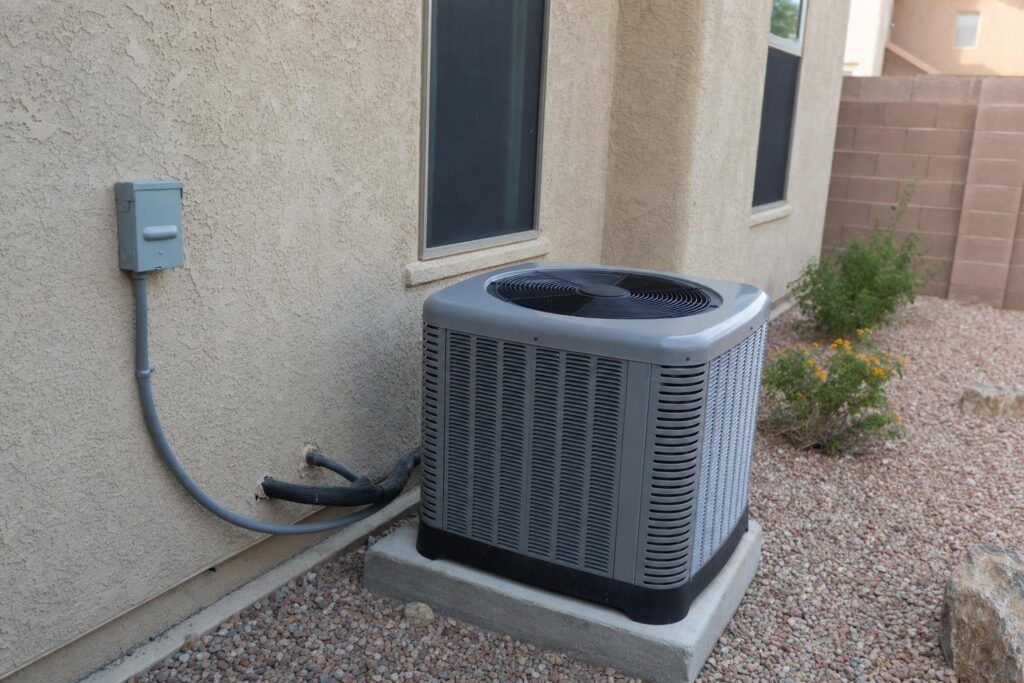
Heat pumps are showing up in Henderson and Summerlin ads constantly right now. Homeowners are being told one system can replace both their AC and furnace. That sounds great, but most people have no idea how the thing actually works.
This guide gives you a plain-English answer to how a heat pump works, and why that question actually matters here. Our desert climate swings from 115°F in July to freezing nights in January. That extreme range puts real demands on any heating and cooling system. Understanding the basics helps you spot trouble early, ask better questions, and make smarter choices about heat pump efficiency in Las Vegas before you spend a dollar on repairs or upgrades.
What a Heat Pump Actually Does (and What It Doesn’t)

Most people assume a heat pump generates heat the way a furnace does. It doesn’t. A heat pump moves heat from one place to another. That one distinction changes everything about how you think about efficiency, cost, and why one unit can replace two separate systems in your home.
It Moves Heat, It Doesn’t Make It
Think about your refrigerator. It doesn’t create cold air. It pulls heat out of the food compartment and pushes that heat out through coils at the back. A heat pump works the same way, just on a much larger scale. In summer, it pulls heat out of your home and releases it outside. In winter, it runs that process in reverse.
Here’s the part that surprises most homeowners: even 35°F air contains usable heat energy. The refrigerant inside the system gets cold enough to absorb that energy from the outdoor air. No gas. No combustion. The system moves heat that’s already there. That’s how a heat pump heats your home without burning fuel.
The refrigerant circulates through a closed loop, absorbing heat on one side and releasing it on the other. That cycle is what powers the whole system. It’s efficient because moving energy takes far less electricity than creating it from scratch with a resistance element.
The Two Jobs One System Does
If you’re running a central AC all summer and a gas furnace a few months each winter, you’re maintaining two completely separate systems. That’s the standard setup across Henderson and the surrounding Clark County area. A heat pump collapses both into one unit.
A component called a reversing valve is what makes this possible. It switches the direction of refrigerant flow. In summer, the outdoor unit rejects heat. In winter, it collects heat. The indoor air handler handles both modes. One piece of equipment. One refrigerant loop. Two jobs done.
In cooling mode, a heat pump functions identically to your air conditioner. If you’ve had a central AC your whole life, you already know what summer operation feels like. The winter side is what’s new, and it’s where the efficiency advantage really shows up.
We’ll cover exactly how that efficiency breaks down in real North Las Vegas and Summerlin conditions in the next section, including when a heat pump works hardest and what that means for your energy bill.
The Refrigerant Cycle: Step by Step Through Your Heat Pump
Understanding the heat pump refrigerant cycle helps you spot trouble early and explains why this technology works so well in our climate. The whole process comes down to one idea: refrigerant moves heat from one place to another. It never generates heat on its own. Here is exactly what happens inside your system, step by step.
Step 1: Compressor
The compressor sits in the outdoor unit and does the hardest work. It squeezes the refrigerant gas, raising its pressure sharply. Think about pumping up a bicycle tire: the pump gets warm near the valve because you are compressing air. The same thing happens here. The refrigerant exits the compressor as a hot, high-pressure gas ready for the next stage.
Step 2: Outdoor Coil
In cooling mode, the outdoor coil acts as a condenser. It dumps the heat the refrigerant collected from inside your home into the outdoor air, then the refrigerant condenses into a liquid. In heating mode, a reversing valve flips the direction. Now the outdoor coil acts as an evaporator, pulling heat energy out of outside air and turning the refrigerant into a gas.
Here is what surprises most homeowners in the Summerlin area and across the Henderson valley. Even on a chilly December night, outdoor air at 40°F still holds enough heat energy to run this process efficiently. The refrigerant runs colder than the outside air, so heat naturally flows into it. That is physics, and it is why a heat pump can warm your home even when it feels cold outside.
Step 3: Expansion Valve
After the outdoor coil, the refrigerant passes through the expansion valve. This small component drops the pressure fast, and when pressure drops, temperature drops with it. The refrigerant gets cold enough to absorb heat from air that already feels cool. That low temperature is the key to everything that happens next.
Step 4: Indoor Coil
The cold refrigerant moves into the indoor coil. In cooling mode, warm air from inside your home passes over the cold coil. The coil absorbs both heat and moisture, so your home gets cooler and less humid at the same time. In heating mode, the coil releases the heat it collected outside into your indoor air. Your blower fan then pushes that conditioned air through the ductwork into every room.
When one part of this cycle fails, such as a refrigerant leak or a stuck expansion valve, the whole system suffers. If your heat pump is running but not keeping up, you may need heat pump repair before the problem gets worse and more expensive.
The cycle repeats continuously until your thermostat’s set temperature is reached.
How Heat Pumps Perform in Las Vegas’s Extreme Desert Climate

Most heat pump articles are written for climates with cold winters and mild summers. That is not our reality here. Henderson, Summerlin, Spring Valley, and Enterprise all face conditions that push HVAC equipment to its limits in both directions. Here is what actually happens inside your heat pump when the desert does what the desert does.
Summer Cooling: Competing with 115°F Outdoor Temperatures
Yes, a heat pump can keep up with 115°F heat. But it works harder to do it. In cooling mode, your system has to dump indoor heat into outdoor air that is already blazing. The smaller that temperature gap between the refrigerant and the outdoor air, the more the compressor strains to push heat through. That strain costs electricity.
This is why SEER2 ratings matter more here than anywhere. SEER2 reflects real peak-day performance, not lab conditions. Older SEER ratings were tested at lower outdoor temperatures that never describe a Summer afternoon in Spring Valley or Enterprise. When we size equipment for a home in this area, SEER2 is the number we care about. A unit with strong marketing specs but a weak SEER2 rating will run constantly and still fall short on the hottest days.
Winter Heating: Working Through Near-Freezing Las Vegas Nights
Winter here does get cold enough to matter. Overnight lows in the Summerlin area and neighborhoods closer to the Strip can drop into the mid-30s from December through February. Standard air-source heat pumps lose efficiency as outdoor temps approach 35 to 40°F, and below roughly 25 to 30°F, most units trigger an auxiliary electric resistance heat strip to compensate.
Here is the genuine local advantage: Clark County rarely drops below 25°F. That backup heat strip almost never activates for homeowners in this area. In the Midwest or parts of the Southeast, that strip runs for weeks. Ours sits dormant most of the season. If you are in the higher-elevation foothills near Henderson, a cold-climate heat pump rated with a strong HSPF2 score can maintain efficiency down to 0°F and is worth the conversation.
Keeping your system tuned is what preserves that winter efficiency edge. Regular HVAC maintenance before the heating season catches refrigerant issues, dirty coils, and worn components that quietly drain performance when you need it most.
Why Coefficient of Performance (COP) Matters Here
A gas furnace converts one unit of energy into one unit of heat. COP of 1.0, maximum. A heat pump under moderate conditions moves three to four units of heat energy for every one unit of electricity it consumes. That is a COP of 3 to 4.
Our mild winters mean your heat pump spends most heating hours in exactly that high-efficiency range, rarely cold enough to drag performance down. That difference shows up directly on your NV Energy bill. If your bill does not reflect that efficiency, something is wrong. High electric bills caused by your HVAC system are a sign worth diagnosing before another billing cycle passes.
Now you know what is happening inside your heat pump every time it runs. If something in that cycle sounds off, whether it is weak airflow, a unit running constantly, or an electric bill that does not add up, our team can diagnose it fast. Bumble Breeze Plumbing, Heating & Air serves homeowners across the valley and surrounding area from our office at 4755 W. University Ave., Las Vegas, NV 89103.
Call us at (702) 674-9775 to schedule a service visit or ask a question. No pressure, just straight answers from a team that works in this climate every day.
Frequently Asked Questions
How Long Does a Heat Pump Last Before Needing Replacement?
Most heat pumps last between 15 and 20 years with proper maintenance, though desert climates can shorten that lifespan due to heavy seasonal demand. Units running near-constant cooling cycles through Las Vegas summers tend to accumulate wear faster than units in milder regions. Bumble Breeze Plumbing, Heating & Air recommends annual tune-ups to catch small issues before they accelerate aging on your system.
Is a Heat Pump More Expensive to Install Than a Traditional AC Unit?
Heat pumps typically cost more upfront than a standard split air conditioner because they include both heating and cooling components in one system. However, homeowners often recoup that difference within a few years by eliminating a separate gas furnace and reducing monthly energy bills. Federal tax credits for qualifying heat pump installations can also bring the initial cost down significantly.
Can a Heat Pump Handle Both Heating and Cooling on the Same Day?
Yes, a heat pump can switch between heating and cooling modes within minutes using its reversing valve. In Las Vegas, spring and fall mornings can be cool while afternoons push into the 90s, so this flexibility is genuinely useful rather than just a marketing feature. Bumble Breeze Plumbing, Heating & Air technicians can verify that your reversing valve is functioning correctly during a standard service visit.
Does a Heat Pump Work with My Existing Ductwork?
In most cases, a ducted heat pump connects to existing ductwork without major modification, provided the ducts are properly sized and sealed. Leaky or undersized ducts can reduce efficiency and cause uneven temperatures throughout the home. A duct inspection before installation is a smart step, and Bumble Breeze Plumbing, Heating & Air offers that assessment as part of its replacement consultations.
How Often Does a Heat Pump Need Refrigerant Added?
A properly functioning heat pump operates on a closed refrigerant loop and should never need a top-off under normal conditions. If your system is losing refrigerant, that indicates a leak in the lines or coils that needs to be repaired before any refrigerant is added. Simply recharging without fixing the source is a temporary fix that wastes money and risks further damage to the compressor.
Will a Heat Pump Raise My Electricity Bill Compared to a Gas Furnace?
For most households switching from gas heat, a heat pump lowers total energy costs because it moves heat rather than burning fuel to generate it. Natural gas prices and local electricity rates both factor into the final comparison, so the answer varies by utility costs in your area. Bumble Breeze Plumbing, Heating & Air can provide a rough estimate based on your current system type and average monthly usage before you commit to any equipment change.
What Maintenance Should I Do Between Professional Service Visits?
Homeowners should replace or clean air filters every one to three months depending on dust levels, and keep the outdoor unit clear of debris, leaves, and shrubs that restrict airflow. Checking that supply and return vents inside the home are open and unblocked also helps the system run efficiently. Beyond those basics, internal components like coils, electrical connections, and refrigerant levels should be inspected by a licensed technician at least once a year.
Ready to Get Started with Bumble Breeze Plumbing, Heating & Air?
Call (702) 674-9775 to speak with our team directly. We’re ready to answer your questions, walk you through your options, and help you find the right solution for your needs. Whether you’re just starting to plan or ready to move forward, we’ll make the process simple and stress-free. Reach out today and let’s talk about how we can help.