

Fall HVAC maintenance is not optional for Las Vegas homeowners, especially in the 89103 area near W University Ave. By the time cooler weather arrives, your equipment has run hard for six-plus months, and attic temperatures above 150°F can quietly degrade duct seals and insulation over that same stretch. At Bumble Breeze Plumbing, Heating & Air, we send licensed technicians to inspect, test, and tune your system before you need your heat, and we explain every finding with upfront, honest pricing before we touch a single component.
Book your fall tune-up now before the heating season rush hits Las Vegas.
Key Takeaways
- Fall HVAC maintenance catches summer damage early, before it turns into a costly mid-winter breakdown.
- Las Vegas attic heat degrades duct seals, making post-summer inspections especially important for 89103 homes.
- A typical fall checkup covers filter replacement, thermostat settings, electrical connections, and airflow testing.
- Scheduling your tune-up in fall means shorter wait times and more flexible appointment windows than winter emergency calls.
- Older single-stage furnaces common in 1970s-1990s Las Vegas homes need closer attention heading into each heating season.
Your HVAC system just survived another brutal Las Vegas summer. Six-plus months of running near-constant in temperatures that regularly pushed past 110°F leaves real wear on capacitors, contactors, and coils. Now fall is here, and the window to act is short.
Across the valley, overnight lows can drop into the 40s by December. That swing from scorching summer to genuine heating demand happens fast. October is your narrow action window. Daytime highs are still in the 80s. Neither your AC nor your furnace is running hard, and our technicians are less backlogged than they will be once cold nights hit.
Skipping fall prep is a real financial risk. A furnace that sat idle all summer needs to be checked before you need it at midnight in January. Ductwork that baked in extreme attic heat all summer may have compromised seals driving up your NV Energy bill all winter.
This guide walks you through the same inspection sequence a licensed technician follows, from filter swaps to furnace safety checks. You will know what to handle yourself and what to hand off. If you want to understand when to schedule HVAC maintenance, that is a good place to start before diving into the checklist below.
Why Fall HVAC Maintenance Matters More in Las Vegas Than Almost Anywhere Else
Why Does the Desert Climate Put Unusual Stress on Your System?
The desert climate stresses your system because it runs far longer than in most of the country. Where most cities run air conditioning three to four months a year, Las Vegas homes run hard from April straight through October. That is six to seven months of near-constant cooling load, and every major component pays the price. Capacitors and contactors wear faster. Coils collect a season’s worth of alkaline Mojave dust that blocks heat transfer and forces your system to work harder than it should. Attic temperatures in this area regularly top 150°F in summer, which degrades duct seals and insulation in ways you will not notice until your heating bill arrives.
That desert dust is not ordinary dirt. It is fine, alkaline, and relentless. It clogs filters faster than humid-climate homeowners would ever expect, and it coats condenser coils in a thin film that quietly kills efficiency. If you want to understand why your filter matters so much here, our blog post on why changing your AC filter is important breaks it down clearly. For older homes near W University Ave, many built between the 1970s and 1990s with original single-stage furnaces and aging ductwork, that wear adds up fast.
Why Is October Your Best Month to Act?
October is your best month to act because the weather gives you a narrow, ideal window. Las Vegas daytime highs hold in the 80s through mid-October, then temperatures drop sharply, and by late November overnight lows can dip into the low 40s. That gives you roughly four to six weeks to schedule furnace maintenance in Las Vegas and get your heating system inspected before you actually need it. Miss that window and you are calling for service in the middle of a cold snap, competing with every other homeowner who waited too long.
October is also when HVAC contractors are less backlogged than during peak summer emergencies or mid-winter breakdowns. You get better scheduling flexibility and more attention to detail. A standard seasonal fall HVAC checklist covers system inspection, filter replacement, thermostat calibration, part lubrication, electrical connection checks, and airflow testing. Getting all of that done in October is simply the smartest move for any Clark County homeowner.
The Complete Fall HVAC Maintenance Checklist for Las Vegas Homeowners
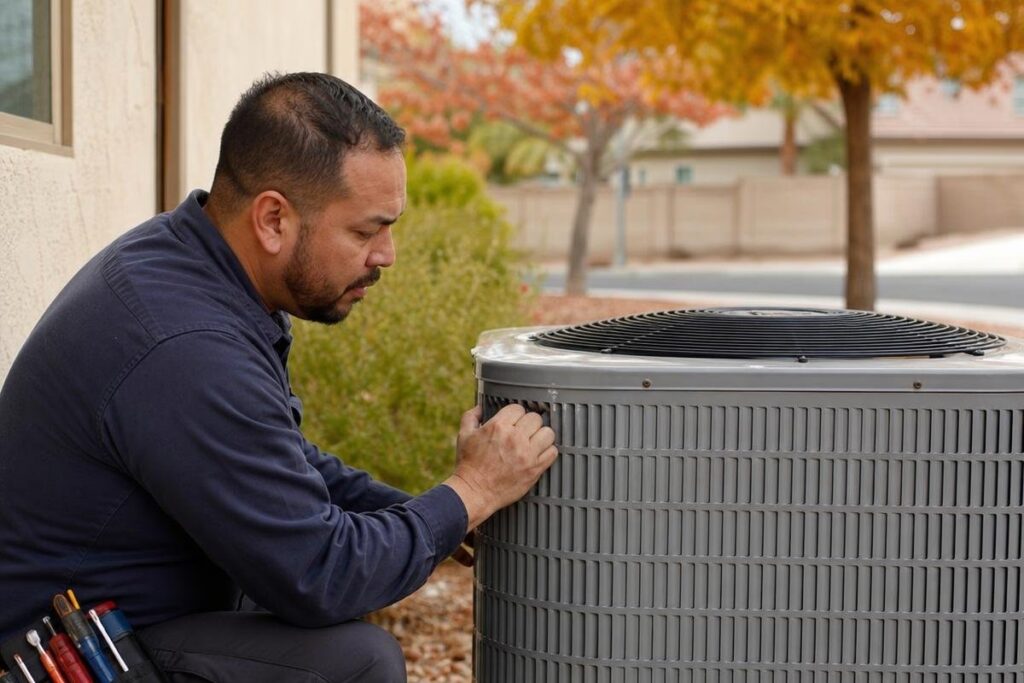
A full summer of running your AC hard leaves your system in rough shape by the time fall arrives. Dust, debris, worn parts, and clogged lines are all waiting to cause problems the moment you switch to heat. Work through each step below and you’ll head into the cooler months with a system that’s ready.
Step 1: Replace Your Air Filter
After a long desert summer, your filter is almost certainly overloaded with dust, cottonwood seeds, and fine particulate. For homes in the 89103 area, we recommend a MERV 8 to 11 rated filter. That range catches the fine desert dust common near W University Ave without choking airflow on a standard residential system. Replacing your filter by September or October is smart regardless of what the package says about filter life, and our guide on why changing your AC filter is important explains the desert-specific reasons in detail.
Step 2: Test and Reprogram Your Thermostat
Switch your thermostat to heat mode and confirm it responds correctly before you actually need it on a cold night. Program a fall and winter schedule that reflects your actual routine. If your current unit is outdated, upgrading to a programmable or smart thermostat can meaningfully cut your NV Energy bill heading into winter. NV Energy periodically offers rebates on qualifying smart thermostats, so it is worth checking their current program before you buy.
Step 3: Clean and Inspect the Outdoor Condenser Unit
Rinse the condenser coils top-down with a garden hose at low pressure to clear out a summer’s worth of dust and debris packed into the fins. Do not cover the unit for winter. Las Vegas’ mild winters mean covers trap moisture and give pests a warm place to nest, which creates bigger problems than the cold ever would.
Step 4: Check Electrical Connections and Lubricate Moving Parts
Loose electrical connections are a leading cause of mid-winter breakdowns and a real fire risk. A technician should inspect the blower motor and lubricate only serviceable bearings according to manufacturer guidance. These two tasks require a licensed technician. If something looks off during your own inspection, contact our team before the problem grows into a full AC repair in Las Vegas.
Step 5: Flush the Condensate Drain Line
Your condensate line runs all summer here, longer than in most U.S. cities, and algae or debris clogs are common by fall. Follow the equipment manufacturer’s drain-cleaning guidance or have a technician clear the line with an approved cleaner. A partial clog can trigger a system shutoff or cause water damage before you notice anything. Learn more about why a clogged condensate drain is a problem and what to watch for.
Step 6: Run a Full Heating Test
Turn your system to heat and let it run for 10 to 15 minutes. Listen for unusual sounds, check every vent for warm airflow, and note any burning smell. A brief dusty odor may occur as residue burns off heating components during the first heating cycle. A persistent smell or no heat at all means it’s time to call us. Our team handles furnace maintenance in Las Vegas and can diagnose the issue before it becomes an emergency. Read our guide on when you need heater repair if you’re unsure what you’re hearing.
Furnace and Heating System Tasks You Should Not Skip
Your air conditioner ran hard all summer. Now your furnace needs attention before the first cold night hits. Skipping heating system checks is where homeowners across the valley run into real trouble, and real expense.
Heat Exchanger and Burners
A cracked heat exchanger is one of the most serious furnace problems you can have. A cracked heat exchanger can allow combustion gases, including carbon monoxide, to enter circulating air. You cannot see a crack with the naked eye, which is exactly why a licensed technician needs to inspect it before the 2026-2027 heating season begins.
Burner flame color tells you a lot. A steady blue flame means your burners are combusting cleanly. Yellow or orange flames mean incomplete combustion. If you see yellow or orange when your furnace fires up, call us. That is not a wait-and-see situation. If your system is aging or failing, read up on three major furnace repairs you cannot avoid, or ask our team about keeping your system running safely this season.
Carbon Monoxide Detectors
Applicable carbon monoxide alarm requirements depend on the property and jurisdiction. Replace each alarm by its manufacturer-listed expiration date.
Test every detector in your home right now. Press the test button. If it does not respond immediately, replace it before you run your furnace for the first time this fall.
Ductwork in Las Vegas Attics
The extreme summer heat in valley attics breaks down duct seals and degrades insulation faster than in moderate climates. By the time fall arrives, your ductwork may be leaking conditioned air into unconditioned attic space. Leaky ducts can waste conditioned air and increase energy use.
Homes built in the 1970s through 1990s are especially vulnerable. If your ductwork has never been inspected, fall is the right time. Our team offers air duct cleaning in Las Vegas and can identify seal failures during a fall tune-up. For more on what separates a thorough duct cleaning from a rushed one, see our guide on proper versus improper duct cleaning.
What a Professional Fall HVAC Tune-Up Includes (and What It Costs)
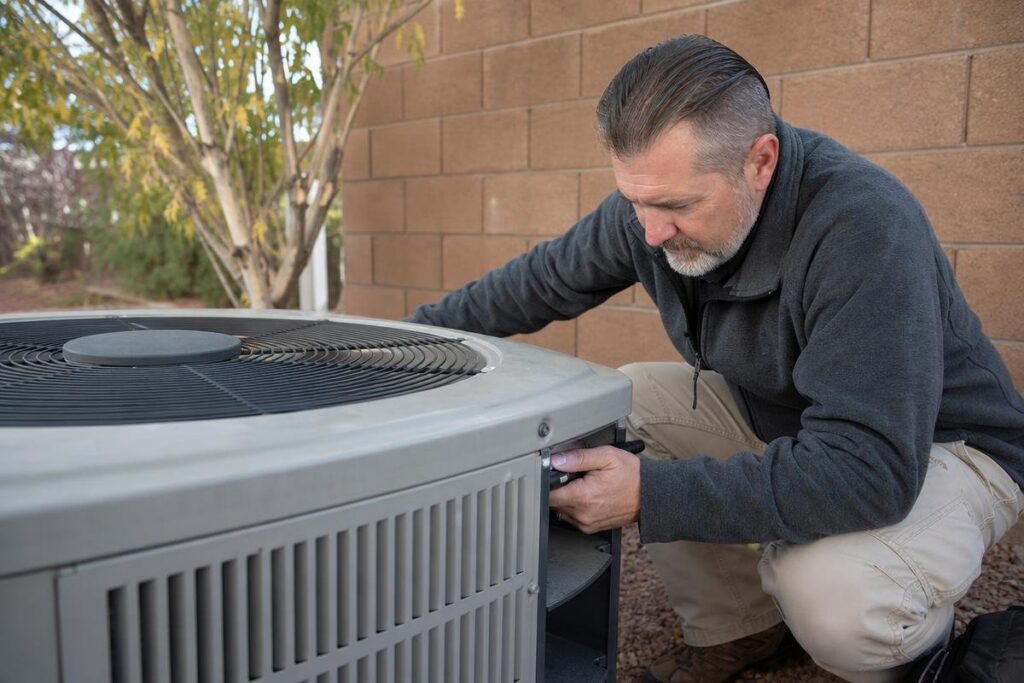
A DIY filter swap is a good start, but it only scratches the surface of what your system needs heading into heating season. A licensed technician goes deeper, checking components you simply cannot access or test safely on your own. Skipping that step is one of the most common reasons valley homeowners end up with a dead furnace on a cold January night.
What Do Technicians Check That You Cannot Do Yourself?
Our technicians run a full system performance test that covers the components most likely to fail under heating load. Here is what that looks like in practice:
- Capacitor and contactor load testing. These parts wear out silently. A failing capacitor will not show symptoms until your system stops starting entirely.
- Blower motor amp draw measurement. A motor pulling too many amps is working too hard and driving up your NV Energy bill before it fails.
- Refrigerant level check. Low refrigerant hurts heat pump heating efficiency, not just summer cooling.
- Flue pipe inspection. For gas furnaces common in the area’s older construction, a cracked or blocked flue is a carbon monoxide risk.
- Electrical connection tightening. Loose connections cause intermittent failures that are hard to diagnose later.
Every finding gets explained to you before we begin the work. That is what good furnace maintenance in Las Vegas looks like, and it is what you should expect from any technician you let into your home.
Is the Cost Worth It?
Seasonal maintenance can identify developing problems before they require emergency repairs. We explain pricing before work begins.
Ready to schedule your fall tune-up? Call our team at (702) 703-1346 or book online today.
Indoor Air Quality Tasks to Add to Your Fall HVAC Routine
What Switches On With Your Heat?
That first blast of heat in October blows months of settled duct dust, Mojave Desert particulate, and construction debris straight into your living space. The Henderson corridor has seen steady development for years, and that construction dust finds its way into outdoor air and, eventually, your ductwork.
If it has been more than two or three years since your last professional duct service, fall is the right time to schedule one. Pairing it with your seasonal tune-up keeps costs down and addresses the problem before you are breathing the results all winter. A fresh filter helps too, and our guide on why changing your AC filter is important covers the why in detail.
Upgrades Worth Discussing With Your Technician
Winter humidity in the valley drops to 20 to 30 percent on average. That dry air causes static electricity, cracked skin, and respiratory irritation, especially in older homes with single-stage furnaces that cycle frequently. A whole-home humidifier is one of the most practical upgrades a valley homeowner can add during a fall visit.
Ask a qualified technician whether an indoor air quality option is appropriate for your system and home. If you are considering a higher-efficiency MERV 13 filter, have your technician verify your system can handle the added airflow resistance before you swap it in. Our indoor air quality services in Las Vegas cover all of these options, and we will give you honest guidance on what actually makes sense for your home.
Las Vegas-Specific Fall HVAC Considerations for the 89103 Area and Beyond
Not every neighborhood in the valley heats up and cools down on the same schedule. Where you live, and when your home was built, both affect what your fall HVAC checklist should look like this year.
Different Neighborhoods, Different Heating Timelines
Summerlin sits at roughly 2,500 feet in elevation near the Red Rock Canyon foothills. That means cooler overnight lows arrive earlier there than in lower-valley neighborhoods, so those homeowners often need to fire up the heat one to two weeks before residents in the rest of the valley.
Homes with zoned systems need each zone’s dampers, sensors, and thermostat settings checked during seasonal transitions.
Older ductwork may benefit from an inspection and sealing assessment before winter.
Older Homes Near W University Ave: What to Watch For
The 89103 zip code around W University Ave is a mix of 1970s through 1990s construction. Some homes may have older single-stage furnaces, which operate at full capacity or not at all. Modern two-stage and variable-speed units are far more efficient and consistent. Permit requirements for furnace replacement vary by jurisdiction and installation scope. A licensed contractor should confirm requirements and obtain permits when needed.
If your furnace is over 15 years old, fall is the right time to ask whether it is worth another repair season. Our furnace maintenance service includes an honest assessment of your system’s condition, so you are not guessing. If replacement makes more sense, we will tell you plainly, before we schedule any work.
Frequently Asked Questions
When is the best time to schedule fall HVAC maintenance in Las Vegas?
October is the sweet spot. The brutal summer cooling season is finally over, but the heating season has not started yet, so our technicians can give your system a thorough look without rushing. Book early in the month if you can. Once cold snaps hit the valley, the schedule fills fast and wait times stretch.
What can I do myself versus what needs a licensed technician?
You can safely swap the air filter, test your thermostat settings, clear debris from around the outdoor unit, and test your CO detectors. Stop there. Refrigerant checks, heat exchanger inspection, electrical connection testing, and motor lubrication all require a licensed technician. Getting those wrong creates safety risks, not just repair bills. Our blog covers why changing your AC filter is important if you want a quick read on that one task you can handle yourself.
Is a heat pump tune-up different from a furnace tune-up?
Yes, and it matters. Heat pumps in the valley run year-round, so they accumulate wear faster than a gas furnace that sits idle all summer. A fall tune-up for a heat pump includes a refrigerant charge check, reversing valve function test, and defrost cycle verification on top of the standard filter and airflow checks. If your home runs on a heat pump, ask specifically about our heat pump services so we scope the visit correctly.
Fall HVAC maintenance in the valley is a short window. October is the month to act, before the heating season starts and the backlog builds. Call Bumble Breeze Plumbing, Heating & Air at (702) 703-1346 or schedule online. We are available 6:45 AM to 10:00 PM, seven days a week, serving the 89103 area and communities across the valley from our base at 4755 W University Ave. We will tell you exactly what we find before we start any work. No surprises.
Ready to Get Started with Bumble Breeze Plumbing, Heating & Air?
Call (702) 703-1346 to speak with our team directly. We’re ready to answer your questions, walk you through your options, and help you find the right solution for your needs. Whether you’re just starting to plan or ready to move forward, we’ll make the process simple and stress-free.
Reach out today and let’s talk about how we can help.