
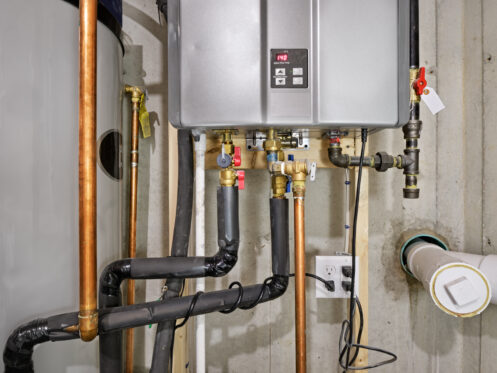
Upgrading your hot water system is a major decision, and choosing the right type can have a lasting impact on comfort, energy costs, and home value. One option that has grown in popularity is the tankless water heater, known for its efficiency, space-saving design, and long-term cost benefits. In this guide, we’ll explore the advantages of a tankless water heater, compare tankless systems to traditional models, and cover key advantages & disadvantages of tankless water heaters so you can make an informed choice for your home.
What Is a Tankless Water Heater?
A tankless water heater — also called an on-demand or instantaneous water heater — heats water only when you need it rather than storing heated water in a large tank. Unlike traditional tank systems that maintain hot water around the clock, tankless models activate the heating element (gas burner or electric coil) when a faucet or appliance calls for hot water. This efficient design eliminates standby heat loss and uses energy only when necessary, which forms the foundation of its many advantages.
Top Advantages of a Tankless Water Heater
Continuous Hot Water on Demand
A major benefit of tankless water heater systems is their ability to provide endless hot water. Since they heat water as it flows through the unit, you’ll never run out of hot water mid-shower or during simultaneous use in different parts of the home — as long as demand doesn’t exceed the unit’s flow capacity.
Energy Efficiency and Lower Operating Costs
Tankless systems are typically more energy efficient than traditional tank units because they avoid the constant reheating of stored water. The U.S. Department of Energy estimates tankless water heaters can be 8–34% more efficient, depending on household usage. This efficiency can translate into lower utility bills over time, making them a cost-effective option for many homeowners.
Longer Lifespan
Tankless water heaters generally last up to 20 years or more, significantly longer than storage tank units, which often wear out in 10–15 years. This extended lifespan means fewer replacements over the life of your home.
Space-Saving Design
Without a large tank taking up floor space, tankless units are compact and can be mounted on walls. This makes them ideal for homes with limited utility room space or utility closets where maximizing square footage matters.
Reduced Risk of Leaks and Water Damage
Traditional tank water heaters can corrode and leak over time, potentially causing flooding or water damage. Tankless models have no tank to rust, reducing the risk of major leaks and associated repair costs.
Tankless vs Tank: How They Compare
Understanding the benefits of a tankless water heater vs tank helps highlight why many homeowners are making the switch.
Efficiency and Energy Use
- Tankless: Heats water only on demand — no standby loss, which improves efficiency and lowers monthly energy costs.
- Tank: Heats and reheats stored water around the clock, which can waste energy and increase bills.
Space and Installation
- Tankless units are far smaller than storage tanks and can be wall-mounted.
- Tank water heaters require dedicated floor space due to their bulky design.
Lifespan and Durability
- Tankless systems usually last longer and are less prone to corrosion because they lack a large storage tank.
- Tank models, while reliable, typically have a shorter lifespan and a higher likelihood of interior tank buildup.
Hot Water Supply
- Tankless units provide continuous hot water for most household uses.
- Tank systems can run out of hot water if demand exceeds stored capacity.
Advantages & Disadvantages of Tankless Water Heaters: What to Consider
While tankless systems offer clear advantages, it’s important to weigh the full picture before making your decision.
Key Advantages
- Lower long-term energy costs thanks to on-demand heating.
- Compact footprint frees up valuable home space.
- Longer service life, reducing replacement frequency.
- Consistent hot water flow for multiple household needs.
Considerations and Disadvantages
- Higher upfront cost: Tankless water heaters typically cost more to purchase and install than traditional tank models.
- Installation complexity: Depending on whether the unit runs on gas or electricity, upgrades to lines, venting, or electrical systems may be required.
- Flow limitations: Extremely high simultaneous demand (like multiple showers and appliances at once) may exceed the unit’s maximum flow rate, potentially requiring multiple units.
- Maintenance requirements: To optimize efficiency and lifespan, tankless units benefit from regular professional maintenance, such as flushing to reduce mineral buildup.
Is a Tankless Water Heater Right for You?
Choosing between a tankless water heater and a traditional storage tank system ultimately depends on your household’s hot water needs, budget, and long-term goals. If you value energy savings, continuous hot water, and a longer-lasting system, the advantages of a tankless water heater make it a compelling choice for many modern homes.
Tankless water heaters represent a smart home upgrade with benefits that extend far beyond convenience. Their energy-efficient operation, compact size, and reduced long-term operating costs make them increasingly popular for homeowners looking to optimize both comfort and value. At the same time, understanding the advantages & disadvantages of tankless water heaters — including installation costs and flow considerations — ensures you make a choice that aligns with your lifestyle and hot water demands.
If you’d like help deciding which system is best for your home, a licensed plumbing professional can provide personalized guidance and accurate sizing recommendations.