
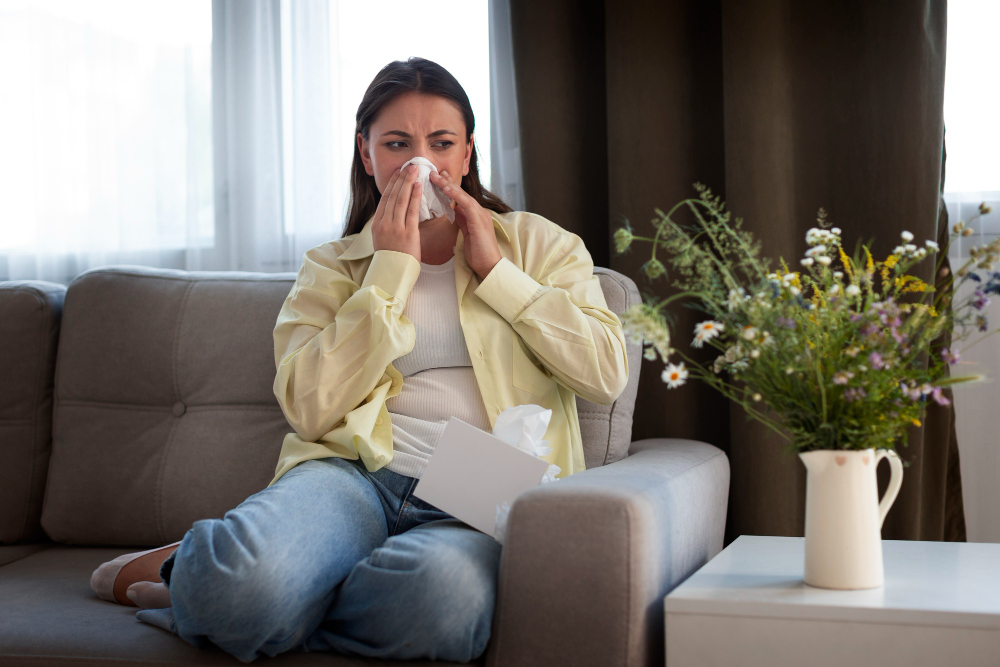
If your home feels stale, dusty, or uncomfortable during these late winter months, it’s not just the Mojave wind. In many Clark County homes, it’s a sign of poor indoor air quality—a problem that often goes unnoticed until the Mulberry trees start blooming or the triple-digit heat arrives. Here in the Las Vegas Valley, these airborne hitchhikers can enter your home and contaminate your air.
Indoor air quality can range from seasonal nuisances to year-round issues that affect how your home feels, how your HVAC system performs, and how your body responds indoors. Winter is especially challenging because our homes stay sealed tight against the desert chill for months, allowing air quality issues to quietly build up.
What Causes Poor Indoor Air Quality?
Modern homes in communities like Summerlin and Henderson are designed to be energy efficient, which means they’re tightly sealed to reduce cooling and heating costs. While that’s great for your energy bill, it also traps airborne pollutants that would otherwise escape, including:
- Fine Desert Dust: Even with the best seals, our Southern Nevada dust finds a way in.
- Pet Dander and Pollen: Trapped inside with your four-legged friends.
- Mold Spores: Common in damp areas like bathrooms or around improperly maintained AC units.
- Bacteria and Viruses: Circulated through the ductwork during flu season.
- Chemical Off-Gassing: The release of Volatile Organic Compounds (VOCs)—typically from household cleaners, furniture, and new flooring—into your indoor air.
As your system runs, these particles circulate throughout your home repeatedly, contributing to irritation, odors, and uneven comfort.
Local Insight: The Southern Nevada Winter Factor
In homes across Enterprise, Spring Valley, and Paradise, we see a noticeable rise in indoor air complaints between January and March. With windows closed for extended periods to keep out the cold, many homes experience a heavy buildup of indoor pollutants.
Whether you are in the established neighborhoods of The Lakes, the newer builds in Anthem, or the sprawling properties in Boulder City, older ductwork can make this worse. It recirculates dust and debris that’s accumulated over multiple seasons rather than removing it from the home. At Bumble Breeze, we see this “closed-box” effect daily as homeowners struggle with sudden allergy-like symptoms mid-winter.
Is Your Home Making You Feel “Under the Weather”?
It’s a common mistake to blame seasonal allergies or a “winter cold” for feeling sluggish, but the culprit is often right under your nose. The U.S. Environmental Protection Agency (EPA) notes that because most people spend about 90% of their time indoors, the quality of that air is a major factor in your daily well-being.
In fact, when indoor air quality is poor, you could feel immediate and long-term negative effects, including these physical and mental symptoms:
- Persistent Physical Irritation: Frequent headaches, dizziness, or irritation of the eyes, nose, and throat.
- The “Home Fatigue” Factor: Feeling unusually tired or experiencing “brain fog” while at home, which often improves shortly after leaving the building.
- Respiratory Triggers: An increase in coughing, sneezing, or sinus congestion that doesn’t seem linked to a specific illness.
- Skin and Sleep Disruptions: Dry, itchy skin or restless sleep caused by the body working harder to breathe through particulate matter.
These symptoms are often “site-specific,” meaning that they flare up when you’re inside a tightly sealed environment and fade when you get fresh air. If you find yourself reaching for the tissues every time the heater or AC kicks on, it’s likely not a coincidence—it’s a sign that your home air could use some professional help.
Myth Busting: What Homeowners Get Wrong About Indoor Air
Many homeowners across Las Vegas and North Las Vegas believe that a standard 1-inch furnace filter is all they need for clean air. The truth? Those filters are designed to protect your HVAC equipment from large debris, not to purify the air you breathe.
- Myth #1: “My air is fine—I don’t see dust.” The most problematic pollutants in Summerlin and Green Valley are often invisible. Fine particles, bacteria, and chemical irritants can still affect comfort and health even when the air looks clean.
- Myth #2: “Indoor air is cleaner than outdoor air.” According to the EPA, indoor air can be 2–5 times more polluted than outdoor air—especially when it comes to VOCs. Dry winter air in cities like Sun City or Aliante can also irritate your nose and throat, making symptoms feel more noticeable.
- Myth #3: “Candles or sprays fix stale air.” Masking odors can often add more chemicals (such as VOCs) to the air. Improving air quality means removing the source of the problem, not covering it up.
How Do You Test Indoor Air Quality in Your Home?
You don’t have to guess what’s in your air. At Bumble Breeze, a professional indoor air quality assessment evaluates your home as a complete system, including:
- Airflow and circulation
- Humidity levels (crucial in our arid desert climate to prevent dry skin and respiratory irritation)
- Filtration effectiveness (including filter type and condition)
- Duct condition and cleanliness
- Potential sources of airborne pollutants
Many homeowners across areas like Blue Diamond and Sloan are surprised to learn their air quality issues are tied to humidity imbalances or leaky ductwork rather than just “dirty air.”
How to Improve Indoor Air Quality Year-Round
Based on the results of an assessment, solutions may include:
- Upgraded filtration to capture airborne particles before they circulate.
- Air purification systems, such as UV-based solutions, designed to reduce contaminants in ductwork.
- Humidity control to combat the bone-dry winter air that plagues the valley.
- Duct repair or improvements to restore airflow and reduce buildup.
Addressing these issues helps your Las Vegas Valley home stay more comfortable and efficient throughout the year—not just in winter.
Why Late Winter Is the Right Time to Act
By late winter, pollutants have been circulating for months while your home remains sealed. With spring allergens (and those famous Vegas winds) fast approaching, this is an ideal time to reset your indoor air and prepare for the next season. Our expert team at Bumble Breeze Plumbing, Heating, & Air is here to help.
Ready to Breathe Easier?
If your home feels dusty, dry, or uncomfortable, indoor air quality may be the missing piece. Don’t wait for allergy season to hit—get a professional look at the quality of your indoor air today.